



Mobile Custom Development Full Process: A Practical Guide from Needs Assessment to Launch and Maintenance
Mobile custom development is the process of building a dedicated App for a business from scratch. Its core value lies in fully matching business logic and user experience requirements, avoiding the functional redundancy of generic templates. According to 2026 project delivery practices, a typical medium-complexity App (e.g., e-commerce, social, or utility) takes 4-6 months with a budget range of 300,000 to 800,000 CNY. Before making a decision, it must be clear: custom development is not feature stacking, but using a minimum viable product to validate core value. The following breaks down the key steps and common pitfalls by phase.
Needs Assessment: Defining Boundaries and Priorities
The requirements phase determines project success. It is recommended to first list all features and mark them as P0 (must-have), P1 (important), or P2 (nice-to-have). P0 features typically cover no more than 3 steps of the core user flow. Judgment criterion: if the feature is removed, can the core business still function? If not, it is P0. Counterexample: a retail App required AR try-on in the first version, but the core shopping flow was not yet complete, leading to budget overruns and launch delays. Correct approach: deliver the MVP first (e.g., product browsing, ordering and payment), and postpone AR to the second phase.
- User Story Map: Layer requirements by role, action, and value to identify the Minimum Viable Product (MVP). In 2026, tools like Miro or Confluence are recommended for collaboration to ensure team alignment.
- Technical Feasibility Study: For hardware calls (e.g., Bluetooth, NFC), advance verification is needed. A common practice in 2026 is to conduct a Proof of Concept (PoC) first, taking about 1-2 weeks with costs controlled within 5% of the total budget.
- Boundary Conditions: Clearly state what is not supported, such as full offline functionality or simultaneous iOS and Android launch, and include them in the contract. For example, if offline caching is required, the data synchronization conflict strategy must be explained upfront.
UI/UX Design: From Prototype to Interaction Specification
The design phase should produce high-fidelity prototypes and a design specification document. Note: consistency between design drafts and the final visual must be ensured using annotation tools (e.g., Zeplin or Lanhu). In 2026, it is common to use a design system (e.g., Ant Design Mobile) to improve reusability and reduce design deviations. A qualified design draft should cover all states (loading, empty, error, exception); missing any state may lead to development rework.
Three-Step Implementation Method: Step 1, draw a user journey map to identify pain points (e.g., registration process with more than 5 steps easily leads to drop-off). Step 2, create low-fidelity wireframes focusing on information architecture. Step 3, conduct usability testing with high-fidelity prototypes (at least 5 users, can be remote using the UserTesting platform). Note for each step: do not skip the user journey map and jump directly to interface design, otherwise logic may become disconnected. The design phase typically takes 3-5 weeks, accounting for about 15% of the total project timeline.
Technology Selection: Native, Hybrid, or Cross-Platform?
Technology selection directly determines development cost and performance. Mainstream options in 2026: native (Swift/Kotlin), cross-platform (Flutter, React Native), hybrid (WebView shell). The following compares key dimensions:
- Cost Comparison: Native development is usually 40%-60% higher than cross-platform (e.g., native dual-platform 600,000 CNY, Flutter about 380,000 CNY). Hybrid is the lowest (starting from about 150,000 CNY) but with significant performance degradation.
- Timeline Comparison: Native dual-platform parallel development takes about 4-6 months; Flutter can be shortened to 3-5 months; hybrid 2-3 months, but subsequent iterations may be more frequent.
- Performance Comparison: Native can reach device limits; Flutter is close to native (jank probability < 5%); React Native may stutter in complex animation scenarios; hybrid has over 50ms delay in page interactions.
- Hardware Access Capability: Native covers 100%; cross-platform can cover 90% via plugins, but some native features (e.g., the latest ARKit) require waiting for community updates.
Selection basis: first list the hardware calls required by core features (camera, sensors, etc.). If complex animations are not involved, Flutter is a cost-effective choice in 2026. If budget is sufficient and extreme performance is required, choose native. If it's only for content display, hybrid is sufficient.
Development and Testing: Agile Iteration and Quality Gates
The development cycle is recommended to follow 2-week sprints, with a runnable feature increment delivered at the end of each sprint. Testing should cover functionality, performance, compatibility, and security. Key metrics: startup time (<2s), crash rate (<0.5%), page rendering time (<1s). Common automation testing frameworks in 2026: Appium (UI testing), XCTest/Espresso (unit testing).
- Code Review: Before each merge, two people must review, focusing on memory leaks and network request exception handling. Tool recommendation: SonarQube for automatic scanning.
- Canary Release: First upgrade 5% of users, observe the crash threshold (e.g., pause if it rises from 0.3% to 0.8%), then full rollout to reduce risk. In 2026, Firebase Remote Config is commonly used for control.
- Outsourcing vs In-House Team Decision: Core business should be controlled internally; non-core can be outsourced. Xiyue Company once completed a customized solution for a logistics company; their experience is that outsourcing contracts must clearly specify code ownership and iteration clauses.
Launch and Maintenance: More Than Just Going Live
After the App is launched on the Apple App Store and Google Play, continuous iteration is required. In 2026, review processes are stricter; the pre-review checklist must include privacy policy, permission usage descriptions, and third-party SDK compliance list (e.g., GDPR, classified protection). The maintenance phase typically accounts for 30%-50% of the total project cost, including bug fixes, system version adaptation, and feature iterations. Common mistake: relaxing monitoring after launch; a first-week crash rate above 1% can lead to negative reviews. It is recommended to check Crashlytics data daily and respond to critical bugs within 72 hours.
Applicable Scenarios and Boundaries
Suitable for: Businesses with unique business models, requiring deep customization of user flow, relying on hardware or offline capabilities; or those with an existing web presence needing a mobile complement. Not suitable for: Simple functionality (e.g., only displaying information), extremely low budget (<100,000 CNY) with no performance requirements, or trial-and-error validation phases. Boundary statement: if more than 80% of the requirements can be met by existing SaaS tools (e.g., Shopify, Wix), custom development is not cost-effective. For example, internal employee sign-in applications can be satisfied with DingTalk or WeCom.
Frequently Asked Questions
How long does mobile custom development usually take?
A reasonable timeline for a medium-complexity App is 4-6 months, including requirements, design, development, testing, and launch. A simplified version can be shortened to 3 months but with feature cuts.
How to choose between native and cross-platform development?
If the app heavily depends on hardware and demands extreme performance, choose native. If budget is limited, need quick dual-platform launch, and UI is not complex, choose cross-platform solutions like Flutter.
How much does a custom-developed App cost?
300,000 to 800,000 CNY is the common range for medium-complexity projects in 2026, depending on the number of features, design complexity, and development team location. Risk warning: low prices may hide future cost overruns.
How to evaluate if a development team is reliable?
Review the code quality of past cases (request Git commit history), communication responsiveness, completeness of delivery documents, and whether they proactively propose requirement boundaries.
How much ongoing investment is needed after launch?
Typically, monthly maintenance costs are about 5%-10% of the total development cost, including server costs, bug fixes, and version adaptation. For the first year, it is recommended to reserve 50% of the development cost.
Action guide: Before starting, conduct user research to confirm at least 20 target users are willing to use the app. When choosing a technology solution, match the P0 requirement list with the pros and cons of each option, and set aside 20% of the budget for unexpected adjustments. If the team has no internal technical staff, consider cooperating with service providers like Xiyue Company that have delivery experience to ensure traceability. Remember: the goal of custom development is to solve business problems, not to show off technology.
-
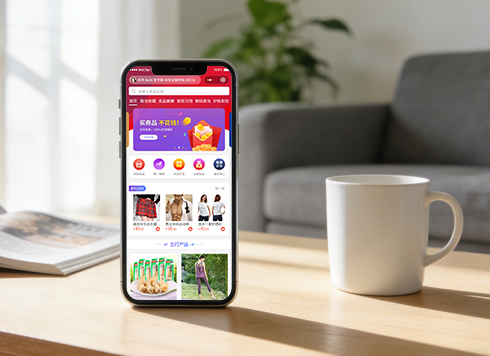 Well-Recognized Custom E-Commerce Mall System Dev
The Good Shopping mini-app is natively buil ...
-
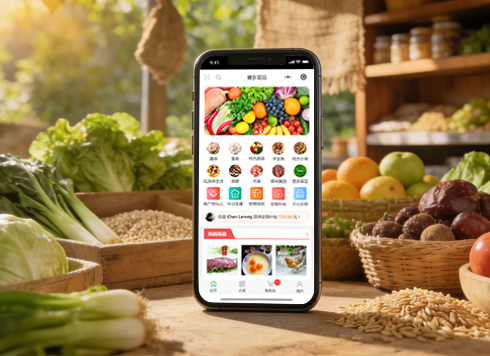 Anhui Huixiang Vegetable Garden Agricultural Products Mini Program v2.0 Iteration Development
HuiXiang MiniApp V2.0: Upgraded homepage, n ...
-
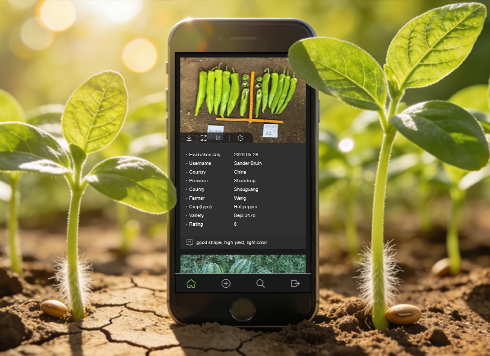 Kunshan TrialBook Mini-Program Custom Development
This project developed an English-only Tria ...
-
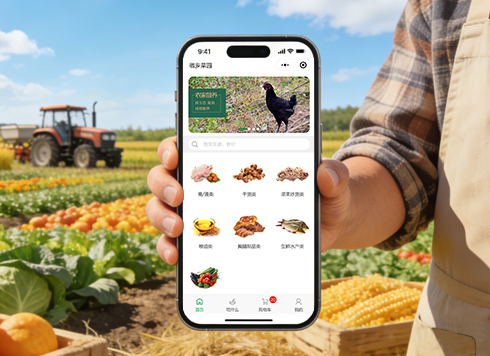 Agricultural Products WeChat Mini Program Custom Development
Lvran Di enhances agricultural sales via a ...
-
What Is Mobile Custom Development: Process, Cost, and Selection Guide
Date: Aug 11, 2026 Read: 105
-
Custom Mobile App Development: Process, Tech Selection, and Cost Control Guide
Date: Aug 6, 2026 Read: 159
-
How to Develop a Mini Program: A Complete Guide from Needs Assessment to Technical Implementation
Date: Jul 25, 2026 Read: 155
-
Mobile Custom Development Full Process Guide: From Requirements Analysis to Launch and Maintenance
Date: Jul 25, 2026 Read: 138
-
Complete Process and Technology Selection Guide for Mobile Custom Development
Date: Jul 24, 2026 Read: 106