



Mini Program Custom Development Selection Guide: Technical Solutions and Implementation Essentials
What is Custom Mini Program Development
Custom mini program development refers to the process of building a dedicated mini program application from scratch or based on a framework according to specific business needs. Unlike using standardized templates, custom development allows precise adaptation to business logic, brand style, and user interaction flows, and remains a core means for enterprises to achieve differentiated online services in 2026.
Its value is mainly reflected in three aspects: functional freedom, performance optimizability, and long-term maintainability. However, it also imposes higher requirements on technical selection and vendor capabilities.
- Functional Freedom: Customizable data interfaces, page components, payment and permission systems.
- Performance Optimizability: Selection of rendering strategies and caching schemes based on user scale and concurrency.
- Long-term Maintainability: Standardized code structure and complete documentation for easy future iteration.
Why Systematic Selection is Needed
By 2026, the mini program development technology stack has become highly differentiated: native development, cross-platform frameworks (e.g., Taro, uni-app), and hybrid approaches each have their applicable scenarios. Improper selection may lead to a 30% or more extension of development cycles, and performance bottlenecks may be difficult to fix later. Systematic selection quantifies key project constraints and balances time, cost, and quality.
According to 2026 project delivery practices, a standard selection process typically includes four stages: requirements prioritization, technical research, vendor due diligence, and prototype validation. Missing any stage carries a high risk of rework.
- Requirements Prioritization: Classify business requirements into Must (M), Should (S), and Could (C).
- Technical Research: Verify technical feasibility for Must requirements, e.g., complex animations or live streaming.
- Vendor Due Diligence: Review similar case studies, team member profiles, RPA efficiency, etc.
- Prototype Validation: Request vendors to deliver a core function prototype within 3-5 days to test collaboration efficiency and code quality.
Technical Solution Comparison: Native vs Cross-Platform vs Hybrid
Native development (e.g., WeChat Native + Cloud Development) is suitable for projects sensitive to performance or requiring deep system API calls; cross-platform frameworks (e.g., Taro 3/uni-app 3) can save 30%-50% development effort in multi-platform reuse scenarios; hybrid approaches are often used when an existing web frontend needs rapid migration to a mini program. The table below compares key dimensions:
- Startup Performance: Native > Cross-platform > Hybrid (difference can exceed 200ms).
- Development Efficiency: Cross-platform ≈ Hybrid > Native.
- Multi-platform Consistency: Cross-platform is best; hybrid requires more adaptation work.
- Long-term Maintenance Cost: Native medium, cross-platform low, hybrid high.
Selection advice: If primary users are on a single platform, prefer native; if covering WeChat, Alipay, Douyin, etc., cross-platform frameworks are a common choice in 2026; hybrid is only recommended for rapid MVP validation.
The Four-Step Assessment Method: From Requirements to Delivery
The "Four-Step Assessment Method" is a structured decision-making framework designed to reduce the probability of selection errors. Step 1: Define core project constraints (time, budget, user scale). Step 2: Map a technical options matrix aligning native, cross-platform, and hybrid with business requirements. Step 3: Invite 2-3 vendors for technical solution debates, requiring them to provide effort estimates and risk lists. Step 4: Conduct third-party code audits or performance stress tests to verify vendor commitments. Each step has clear decision criteria and deliverables.
- Quantify Core Constraints: e.g., "launch within 3 months," "peak DAU of 10,000," "budget 400k-600k RMB."
- Technical Options Matrix: List differences across solutions in performance, development cycle, and maintenance cost.
- Vendor Technical Solution Debate: Require each to answer, "How would the architecture adjust if user volume grows 10x?"
- Third-Party Validation: Perform stress tests and code standard checks on the selected solution's prototype.
This framework has been validated in Xiyue Company's projects over the past two years, reducing the risk of project delays over 30% by approximately 60% (based on internal case statistics).
Applicable Scenarios and Boundaries
Custom mini program development is best suited for scenarios with complex business logic (e.g., multi-role approval workflows), deep integration with internal systems (e.g., CRM/ERP), or high brand visual requirements that standard templates cannot meet. However, not every project needs custom development; for simple functions with very small user scales (DAU below 100) or short-term marketing campaigns, using SaaS platforms or existing template modifications is more cost-effective.
Boundary conditions: When the budget is below 100k RMB or the timeline is less than 4 weeks, the cost-performance ratio of custom development is generally lower than expected. Additionally, if the team lacks long-term technical maintenance personnel, technical debt from custom projects may accumulate; it is advisable to plan for handover and maintenance in advance.
- Suitable: High business customization, long-term iteration expected, dedicated operations team.
- Not Suitable: Simple information display, one-time events, extremely tight budget or timeline.
Frequently Asked Questions
What is the typical cost of custom development?
In 2026 market conditions, a medium-complexity mini program (including backend management system) typically costs between 300k and 800k RMB, depending on the feature list and design requirements.
How long does the development cycle take?
From requirements confirmation to launch, it usually takes 8-16 weeks, with prototyping and testing accounting for about 40% of the total duration. Complex projects may extend to 24 weeks.
How can I assess whether a vendor is reliable?
Review their past projects for similar industries and request at least two deliverable projects for code quality review.
How is maintenance handled after custom development?
It is recommended to include a free maintenance period (usually 6-12 months) and subsequent annual paid maintenance services in the contract, covering server monitoring, security patches, and API adaptation.
Can a mini program be migrated to other platforms?
Native development has high migration costs; cross-platform frameworks can adapt to multiple platforms by modifying configuration files, but differences in platform components should be noted.
Action Guide: Before starting a mini program project, first create a requirements prioritization list and filter core Must features; then follow the Four-Step Assessment Method to select the technical solution and vendor. If budget and timeline are at boundary values, consider phased delivery: launch an MVP first, then iterate. Always pay attention to 2026 industry trends, e.g., cloud service providers' mini program hosting solutions have become mature and can reduce some maintenance costs. Avoid pursuing all features at once; prioritize stability and smoothness of core flows.
-
 Well-Recognized Custom E-Commerce Mall System Dev
The Good Shopping mini-app is natively buil ...
-
 Anhui Huixiang Vegetable Garden Agricultural Products Mini Program v2.0 Iteration Development
HuiXiang MiniApp V2.0: Upgraded homepage, n ...
-
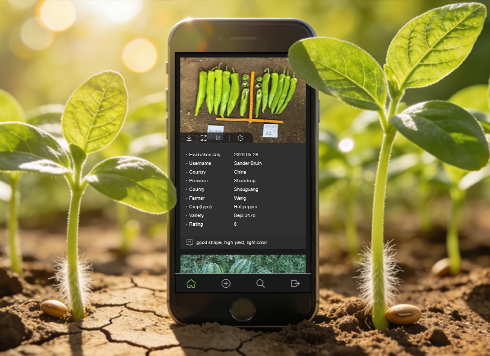 Kunshan TrialBook Mini-Program Custom Development
This project developed an English-only Tria ...
-
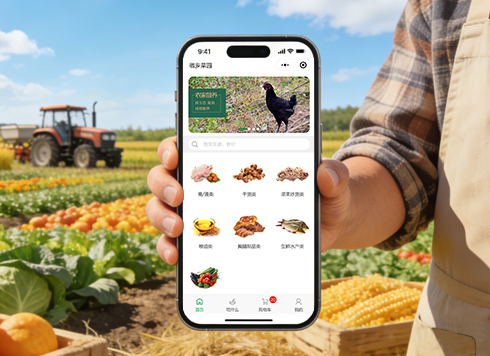 Agricultural Products WeChat Mini Program Custom Development
Lvran Di enhances agricultural sales via a ...
-
Mini Program Development Basics: Definition, Selection, and Implementation Process
Date: Aug 10, 2026 Read: 136
-
Mini Program Custom Development: Core Knowledge and Selection Guide
Date: Jul 31, 2026 Read: 160
-
Mini Program Custom Development: Selection Process and Pitfall Avoidance Guide
Date: Jul 27, 2026 Read: 123
-
Enterprise WeChat Mini Program Custom Development: A Complete Guide to Selection and Implementation
Date: Jul 27, 2026 Read: 136
-
How to Choose Mini Program Custom Development: A Complete Guide from Requirements to Delivery
Date: Jul 26, 2026 Read: 146