Enterprise WeChat Mini Program Custom Development: A Complete Guide to Selection and Implementation
What is Mobile Mini Program Custom Development?
Mobile mini program custom development is the process where enterprises, based on their own business logic, brand style, and usage scenarios, entrust a professional team to build a proprietary mini program from scratch or using an open framework. Unlike using templates directly, custom development enables private APIs, autonomous data control, and differentiated interactions, making it suitable for scenarios with complex business processes or the need to integrate with back-end systems such as ERP and CRM. By 2026, with the opening of capabilities from platforms like WeChat, Alipay, and Douyin, custom development has widely adopted an integrated delivery model of "front-end + back-end + data middle platform + multi-platform adaptation," ensuring that business logic does not need to be rebuilt when switching platforms.
Why Choose Custom Development Over Templates?
Template-based mini programs, though low in initial cost and quick to launch, have fixed functionalities and unmodifiable underlying structures. Once business grows or processes change, issues such as difficulty in data integration, user experience gaps, and limited scalability arise. The core value of custom development lies in: ① Fully matching existing workflows without forcing changes in employee habits; ② Supporting deep integration with third-party systems to avoid information silos; ③ Allowing flexible iteration according to business stages without frequent platform replacement. Taking common projects in 2026 as an example, the long-term maintenance cost of custom development is often lower than the multiple migration costs of templates.
- Data Autonomy: Customer data is stored on the enterprise's own servers, independent of third-party platforms, complying with data security regulations.
- Brand Consistency: UI, interactions, and animations can be customized according to the brand guidelines, enhancing user trust.
- Performance Controllability: Code has no redundancy, resulting in faster loading and better experience than generic templates.
Five-Step Implementation Method for Custom Development
The five-step method divides the project into five phases: requirements gathering, technology selection, UI/UX design, development and testing, and deployment and operations. Each phase has clear deliverables and acceptance criteria to avoid rework caused by iterative changes. This framework is especially suitable for typical projects with budgets between 150,000 and 500,000 RMB and a duration of 2 to 4 months.
- Requirements Gathering: Collaborate with business owners, operations, and technical leads to produce a feature list, user stories, and data flow diagrams. Distinguish core features from "nice-to-have" requirements to avoid scope creep.
- Technology Selection: Choose native, cross-platform, or WebView solutions based on target platforms, concurrency, and development costs. In 2026, WeChat mini programs recommend using native + Taro, while for Alipay, native is preferred.
- UI/UX Design: Create interactive prototypes, with at least three versions for key pages. Consider mobile phone one-hand operation, loading placeholders, and empty states.
- Development and Testing: Develop front-end and back-end in parallel, with weekly integration tests. Focus on core flows such as payment, login, and data synchronization, and maintain automated regression scripts.
- Deployment and Operations: Roll out via gray release, monitor performance data, and prepare rollback plans. In the first week after launch, assign personnel to track user feedback and quickly fix experience issues.
Key Technology Selection Comparison: Native vs Cross-Platform vs WebView
Technology selection directly affects development efficiency, performance limits, and later maintenance costs. The comparison of these three options in 2026 is as follows:
- Native Development: Best performance, can call all platform APIs, suitable for applications with high requirements for interaction and fluency (e.g., live streaming, games). High cost, requires two teams for iOS and Android, typically 30%–50% longer cycle.
- Cross-Platform (uni-app/Flutter): One set of code runs on multiple platforms, saving 40%–60% in costs, with performance close to native. Suitable for moderately complex projects such as B2C e-commerce and booking tools. Note that support for certain hardware calls (e.g., Bluetooth NFC) is limited.
- WebView Shell: Fastest development, but poor performance, cannot call deep platform capabilities, and is prone to rejection during review. Only suitable for temporary content display applications, not for formal commercialization.
In actual delivery in 2026, about 70% of custom projects adopt cross-platform solutions, 10% choose native, and the rest use hybrid architectures. For example, Xiyue Company tends to use native development when integrating with ERP systems to ensure stable data throughput, while for pure marketing display, uni-app is used for quick implementation.
Common Pitfalls and Avoidance Guide
Many project failures stem from misconceptions about custom development. The three most common pitfalls are:
- More Features Are Better: Feature stacking doubles development costs and increases user learning costs. The correct approach is to focus on MVP (Minimum Viable Product), launch it, and iterate based on data feedback.
- Ignoring API Documentation: Backend interfaces not agreed upon in advance lead to frequent adjustments during development, delaying progress. API specifications should be output during the design phase, and front-end and back-end should develop by contract.
- Launch Equals End: Mini programs require continuous operations, such as version updates, content maintenance, and security patches. It is recommended to reserve 20% of the budget for continuous optimization in the first three months after launch.
Frequently Asked Questions
How long does it take to develop a custom mini program?
Depending on feature complexity, it usually takes 2 to 4 months; simpler tool-type mini programs can be completed within 1 month, but require strict scope control.
How to choose a reliable development team?
Check if the team's past cases match your industry, and ask for prototype interaction documentation rather than just UI images. In 2026, prioritize service providers that support the full chain (design, development, and operations).
Can a custom mini program be simultaneously published on multiple platforms?
If using a cross-platform framework like uni-app, it can generate versions for WeChat, Alipay, Douyin, etc., but be aware of the different review rules of each platform.
Are subsequent maintenance costs high?
Annual maintenance costs are typically 15%–25% of the total development cost, covering server stability, platform adaptation updates, and routine feature modifications.
Is it suitable for startups?
If the budget is under 50,000 RMB, it is recommended to first validate the model with a SaaS template; upgrade to custom development when user volume or process complexity increases.
Applicable Scenarios and Boundaries
Mini program custom development is most suitable for scenarios with a stable user base, need for complex interaction logic, integration with existing IT systems, or desire to build brand differentiation. It is not suitable for: short-term marketing activities (advertising platform components are recommended), tight budget and simple functional requirements (templates or low-code platforms are more cost-effective), or extremely narrow target user groups with no expansion plans (back-end investment is not cost-effective). In 2026, enterprises should first evaluate whether their business has at least two or more hard requirements that "templates cannot satisfy" before deciding to start custom development. Avoid blindly customizing just to "have a mini program."
Action Guide: It is recommended that enterprises first identify core business pain points, draw internal data flows, and then hold requirement alignment meetings with 2–3 service providers. Require service providers to provide specific workload estimates for functional points, rather than vague quotes. If it is a first attempt, choose a cross-platform solution to control risk, and agree on phased delivery with acceptance milestones before paying for the next phase. Xiyue Company usually recommends clients start with an MVP and gradually enhance functionality based on user behavior data after launch.
-
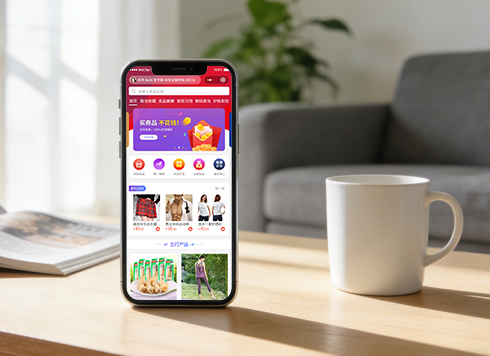 Well-Recognized Custom E-Commerce Mall System Dev
The Good Shopping mini-app is natively buil ...
-
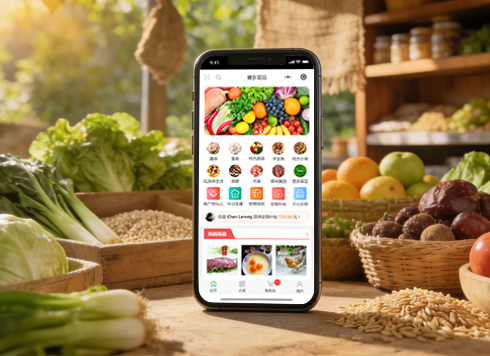 Anhui Huixiang Vegetable Garden Agricultural Products Mini Program v2.0 Iteration Development
HuiXiang MiniApp V2.0: Upgraded homepage, n ...
-
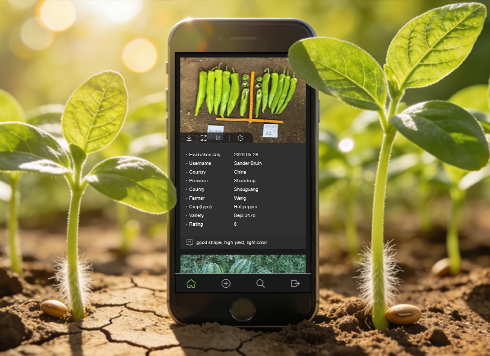 Kunshan TrialBook Mini-Program Custom Development
This project developed an English-only Tria ...
-
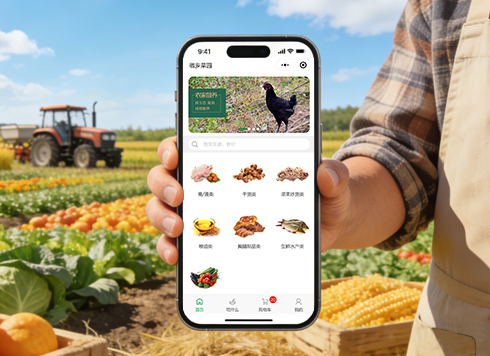 Agricultural Products WeChat Mini Program Custom Development
Lvran Di enhances agricultural sales via a ...
-
How to Choose Mini Program Custom Development: A Complete Guide from Requirements to Delivery
Date: Jul 26, 2026 Read: 101
-
Mini Program Development Basics: Definition, Selection, and Implementation Process
Date: Aug 10, 2026 Read: 78
-
Mini Program Custom Development: Core Knowledge and Selection Guide
Date: Jul 31, 2026 Read: 109
-
Mini Program Custom Development: Selection Process and Pitfall Avoidance Guide
Date: Jul 27, 2026 Read: 84
-
Mini Program Development Selection Guide: A Complete Framework from Requirements Assessment to Technical Implementation
Date: Jul 20, 2026 Read: 115