Mini Program Custom Development: Selection Process and Pitfall Avoidance Guide
Definition and Core Value of Mini Program Custom Development
Mini program custom development refers to the process of building a dedicated mini program based on specific business requirements, from product planning and UI design to front-end and back-end coding. In 2026, a common practice is to use cross-platform frameworks like Uniapp or Taro to achieve multi-platform release with a single codebase. Unlike directly using SaaS templates, the core value of custom development lies in functional controllability, data independence, and brand consistency, making it especially suitable for enterprises with complex business logic or differentiated operational needs.
- Functional Controllability: Modules can be freely added or modified without template limitations.
- Data Independence: The server and database are managed by the enterprise, ensuring user data security and auditability.
- Brand Consistency: UI and interactions are fully customized according to brand guidelines, enhancing user trust.
Why Custom Mini Program Development Is Needed
Many enterprises initially choose SaaS templates for quick launch, but as user bases grow, they often encounter issues such as inability to extend functionality, inability to export data, and high costs of secondary development. In 2026, the mini program ecosystem is more mature, and enterprises place greater emphasis on private traffic and long-term operations. Custom development avoids future migration risks. According to industry feedback, custom development is almost the only viable solution when dealing with multi-store management, membership systems, payment splitting, or hardware integration.
It is not suitable in the following cases: pure brand display, content publishing, or one-time events. In these cases, SaaS templates or single-page H5 are more cost-effective and faster to launch. Custom development costs between 50,000 and 300,000 CNY, with a timeline of 1 to 3 months. A clear ROI assessment is required.
Four-Dimensional Selection Method for Mini Program Custom Development
Selection decisions should be made based on four dimensions, avoiding any single factor:
- Business Complexity: Number of core features and degree of customization. SaaS is acceptable for up to 10 standard features; custom development is needed beyond that.
- Data Sovereignty: Whether an independent database is needed or sensitive information is involved. If yes, choose custom development.
- Update Frequency: If features are expected to be updated 2 or more times per month, custom development offers more flexibility.
- Budget and Timeline: Custom development starts at around 50,000 CNY with a minimum of 1 month; SaaS templates cost 2,000–5,000 CNY annually and can be launched in 1 week.
When business complexity is high or data sovereignty is required, custom development should be prioritized; if budget is tight and features are standard, a SaaS template can serve as a transitional solution.
Three-Step Implementation Process for Mini Program Custom Development
Step 1: Requirements Gathering and Prototype Confirmation
The enterprise provides business flow diagrams and a feature list, and the developer outputs interactive prototypes. In 2026, collaboration tools like Axure or Figma are common, with a timeline of about 1 week. Key deliverables: feature list, user flow diagrams, and high-fidelity prototypes.
Step 2: Technology Selection and Architecture Design
Front-end selection: Uniapp is suitable for releasing to WeChat, Alipay, and Douyin simultaneously; Taro has advantages in performance and component ecosystem. Back-end selection: Node.js, PHP, or Java, paired with MySQL/PostgreSQL. Note: if real-time communication is involved, a WebSocket solution is needed. Extension interfaces should be reserved during architecture design.
Step 3: Development, Testing, and Release
Follow agile development with a two-week iteration cycle. Testing covers functionality, performance, and compatibility (different phone models and mini program versions). Before release, submit for mini program review; in 2026, WeChat review takes about 1–3 business days. After launch, monitor data and collect user feedback.
Comparison of SaaS Templates and Custom Development
- Cost: SaaS: 2,000–8,000 CNY/year; Custom: 50,000–300,000 CNY one-time.
- Timeline: SaaS: 1 day–1 week; Custom: 1–3 months.
- Feature Flexibility: SaaS: limited; Custom: fully autonomous.
- Data Ownership: SaaS: data hosted by third party; Custom: enterprise manages its own data.
- Maintenance Cost: SaaS: included; Custom: self-managed or outsourced.
- Use Cases: SaaS: simple features, no customization; Custom: complex business, high brand requirements.
Selection criteria: if the enterprise may expand its business in the future or has deep operational needs, custom development should be chosen even with higher initial cost; otherwise, SaaS is more efficient.
Common Misconceptions and Pitfall Avoidance
Myth 1: Custom development is always more expensive than templates. In reality, custom development avoids recurring costs later, and long-term costs are controllable. Myth 2: More features are always better. Redundant features increase development and testing costs and degrade user experience. Myth 3: Ignoring third-party dependencies. For example, if a specific map SDK is used, confirm that it supports mini programs and licensing fees are reasonable. Myth 4: Not performing performance testing. Mini programs demand fast startup and page rendering; real-device benchmarking is recommended before launch.
FAQ
How long does custom development take to launch?
A medium-sized project takes about 2 months, including requirements, design, development, testing, and release. It can be compressed to 1 month in urgent cases, but additional development resources are required.
Who is responsible for subsequent maintenance after custom development?
Typically, the developer provides 3–6 months of free maintenance, followed by an annual maintenance contract of 10%–15% of the development cost.
Can a SaaS template be later converted to custom development?
Yes, but data migration is costly, and some SaaS platforms do not allow data export. It is recommended to decide at the outset whether customization is needed.
What materials are needed for custom development?
Business license, mini program AppID, functional requirements document, UI design references, server and domain name (optional, can be purchased by developer).
How to evaluate whether a development company is reliable?
Review their case mini programs and test them, request a project quotation list and milestone plan, and confirm they use code repository management.
Action guide: First, use the four-dimensional selection method to determine if custom development is needed; then follow the three-step process. Reserve at least 20% of the budget for requirement changes. If the business is in the validation phase, consider running a SaaS template for 3 months before deciding on customization. For custom development, choose a team with vertical experience in e-commerce, O2O, or education, such as Xiyue Company, which has mature solutions for multi-store management projects. The final decision should balance business, budget, and time, avoiding an all-at-once mindset.
-
 Well-Recognized Custom E-Commerce Mall System Dev
The Good Shopping mini-app is natively buil ...
-
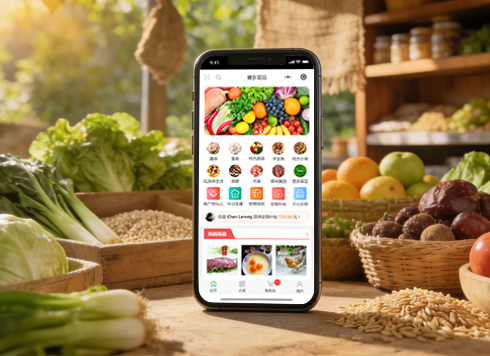 Anhui Huixiang Vegetable Garden Agricultural Products Mini Program v2.0 Iteration Development
HuiXiang MiniApp V2.0: Upgraded homepage, n ...
-
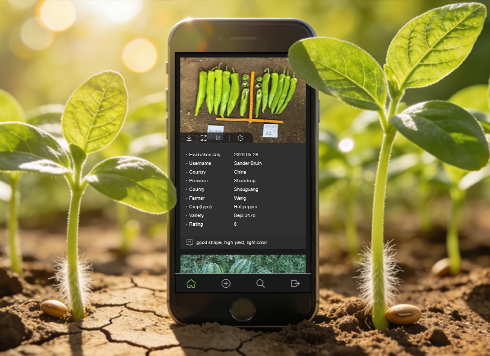 Kunshan TrialBook Mini-Program Custom Development
This project developed an English-only Tria ...
-
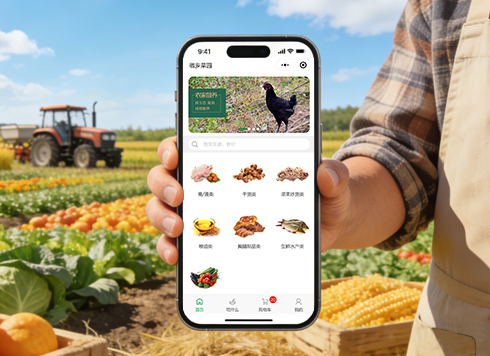 Agricultural Products WeChat Mini Program Custom Development
Lvran Di enhances agricultural sales via a ...
-
Enterprise WeChat Mini Program Custom Development: A Complete Guide to Selection and Implementation
Date: Jul 27, 2026 Read: 106
-
How to Choose Mini Program Custom Development: A Complete Guide from Requirements to Delivery
Date: Jul 26, 2026 Read: 101
-
Mini Program Development Basics: Definition, Selection, and Implementation Process
Date: Aug 10, 2026 Read: 78
-
Mini Program Custom Development: Core Knowledge and Selection Guide
Date: Jul 31, 2026 Read: 109
-
Mini Program Custom Development Selection Guide: Technical Solutions and Implementation Essentials
Date: Jul 28, 2026 Read: 101