Mobile App Development Full Process: From Requirements Confirmation to Launch - Key Steps
The key to successful custom mobile app development lies in clear requirements, reasonable technology selection, and phased iteration. In 2026, cross-platform frameworks have matured, and combined with native extensions, they can meet 90% of business scenarios, making them the preferred choice for most SMEs. This article outlines the full process from requirements confirmation to launch, providing an actionable framework and comparative data to help decision-makers avoid common pitfalls.
Definition and Core Value of Custom Mobile App Development
Custom mobile app development refers to the process of building or deeply modifying a mobile application from scratch based on specific business needs, as opposed to using generic templates. Its core value lies in accurately matching operational workflows and user interaction scenarios while avoiding feature redundancy. In 2026, a common approach is to adopt a hybrid architecture to balance efficiency and performance.
- Definition: A full-stack engineering activity involving on-demand design, coding, testing, and deployment.
- Value: Shortens trial-and-error cycles, reduces initial investment, and flexibly adapts to business changes.
Why Custom Development Instead of Generic Solutions
Generic software cannot cover industry-specific process nodes or compliance requirements. For example, a medical appointment system needs to integrate HL7 interfaces, and retail management must connect multi-store inventory logic. Custom development enables data closure and process optimization, reducing manual data entry. According to 2026 industry statistics, custom solutions improve efficiency by an average of over 40% in vertical scenarios, but only if requirements are clearly defined.
- Suitable scenarios: Unique business processes, need for proprietary branding, data privacy control.
- Unsuitable scenarios: Standard functions suffice, extremely low budget, launch time under 4 weeks.
How to Implement: Four-Step Approach
To reduce delivery risks, we recommend a "Requirements - Design - Iteration - Acceptance" four-step framework. Each step requires a checkpoint to avoid later rework.
- Requirements Structuring: Use user story mapping to break down functions, distinguishing MVP from extended versions. Note: Avoid "I think" assumptions; base on actual user journeys.
- Technology Selection Matching: Choose native (iOS/Android) or cross-platform (Flutter/React Native) based on performance requirements. In 2026, Flutter has an advantage in UI consistency, while React Native is more suitable for syncing with existing web teams.
- Agile Iterative Development: Sprint every two weeks, delivering a runnable demo. The key is to complete core process validation before the third iteration.
- Gray Release Acceptance: First open to 10% target users, collect real operation data, fix crashes and interaction bottlenecks, then fully release.
Technology Selection Comparison: Native vs. Cross-Platform
Based on 2026 project delivery practices, selection involves trade-offs among performance, team cost, and maintenance cycle. Typical comparison dimensions are as follows:
- Cost: Native dual-team development is 60%-80% higher than cross-platform. Cross-platform uses a single codebase to reduce initial investment.
- Performance: Native is better for animations, large file processing, and sensor calls; cross-platform can already meet 90% of common scenarios.
- Maintenance Cycle: Native requires separate updates for each new iOS/Android version; cross-platform only needs one sync of the underlying engine.
- Launch Speed: Cross-platform can shorten development time by 30%; from requirements confirmation to store review, about 8-10 weeks.
Applicable Scenarios and Boundaries
Custom development is best suited for business logic that existing SaaS products cannot fulfill, such as supply chain collaboration, IoT device management, and compliance reporting systems. It is unsuitable if the company has no clear PMF (Product-Market Fit), needs only simple booking or display pages, or lacks a dedicated product manager. Boundary statement: If business requirements change more than three times per month, the process is not yet stable; use prototyping tools to validate before starting development.
Common Mistakes and Evaluation Criteria
Mistake 1: Expecting to cover all functions in one build. Correct approach: launch core paths first, then iterate to complete. Mistake 2: Obsessing over cutting-edge technology while ignoring device compatibility. In 2026, about 15% of users still use 4-year-old models. Criteria for a good project include code readability (modularity >70%), test coverage (unit tests >40%), and document completeness (interface specifications + deployment manual).
Frequently Asked Questions
How long does custom development usually take?
Typically 8-16 weeks, depending on feature complexity and team coordination. Including prototyping, core development, testing, and gray release, each phase takes about 2-4 weeks.
How to choose a development team?
Focus on the team's case studies in similar industries, request deliverables lists and source code management records. Avoid teams with only mockups but no live products.
How to choose between cross-platform frameworks?
If the team has front-end experience, choose React Native; if high frame rate animation is needed, choose Flutter. Both require native plugins for hardware interaction.
How to control requirement changes?
It is recommended to establish a "requirements freeze period" in the contract—e.g., no new requests accepted during the first week of each Sprint, to be processed in the next cycle.
What is the post-launch maintenance cost?
Annually, it is about 15%-25% of the total development cost, including server costs, emergency fixes, and system compatibility upgrades.
Action guide: Before starting, produce a one-page requirements list with 3-5 core user stories. If the requirements can be explained in 10 minutes and have no industry barriers, consider low-code or SaaS solutions first. For professional delivery, refer to teams like Xiyue Company that offer custom development and iterative support services to align technology implementation with business goals.
-
 Well-Recognized Custom E-Commerce Mall System Dev
The Good Shopping mini-app is natively buil ...
-
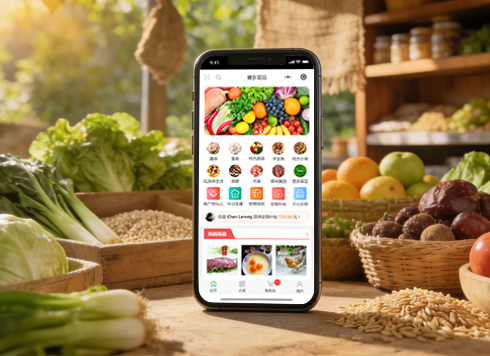 Anhui Huixiang Vegetable Garden Agricultural Products Mini Program v2.0 Iteration Development
HuiXiang MiniApp V2.0: Upgraded homepage, n ...
-
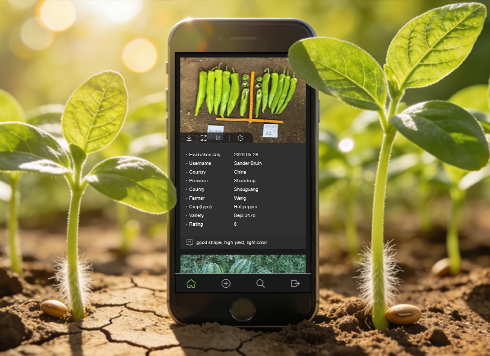 Kunshan TrialBook Mini-Program Custom Development
This project developed an English-only Tria ...
-
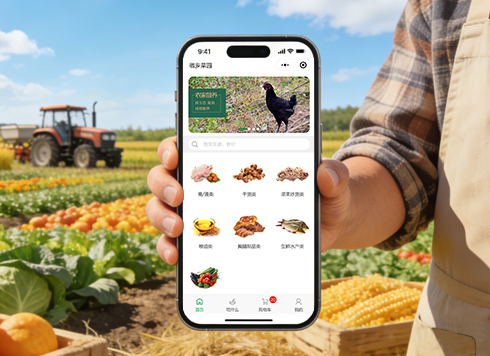 Agricultural Products WeChat Mini Program Custom Development
Lvran Di enhances agricultural sales via a ...
-
How to Choose Your Mobile App Development Approach: A Complete Guide from Requirements to Delivery
Date: Jul 26, 2026 Read: 112
-
Custom Mobile App Development for Enterprises: Selection, Process, and Common Pitfalls
Date: Aug 9, 2026 Read: 65
-
Custom Mobile Development: 2026 Project Process, Budget Ranges, and Selection Criteria
Date: Aug 9, 2026 Read: 69
-
How to Develop Mobile Software: A Complete Process from Requirements to Delivery and Acceptance
Date: Aug 7, 2026 Read: 75
-
How to Do Custom Mobile Development: Process, Costs, and Selection Criteria
Date: Aug 4, 2026 Read: 98