




How to Choose Your Mobile App Development Approach: A Complete Guide from Requirements to Delivery
The core of mobile app development is delivering an application that meets business needs, provides a smooth user experience, and is maintainable, within a limited budget and timeline. The mainstream approach in 2026 is: first define the functional boundaries and performance requirements, then choose between native (iOS/Android) or cross-platform (React Native/Flutter/uni-app) solutions, and control risk through agile iterations. The following sections will cover five dimensions—requirements, technology, team, testing, and boundaries—to help decision-makers systematically implement their projects.
Requirements Analysis: Define "What to Do" and "What Not to Do"
Requirements analysis is the foundation of development, but a common mistake is trying to cover all features. According to project delivery practices in 2026, requirements should be divided into "core features" (must implement) and "bonus features" (can be iterated later). For example, in an e-commerce app, the payment process is core, while AR try-on can be a bonus. It is recommended to explicitly document "what not to do" in the requirements specification to prevent scope creep.
- User Persona: Identify target users' device models, OS versions, and network environments, which influence technology selection. For instance, if users are concentrated on iOS 15 and above, you can reduce effort on low-version adaptation.
- Feature Prioritization: Use the MoSCoW method (Must/Should/Could/Won't) to prioritize, ensuring Must features are implemented first. A common mistake is including too many Should items in the MVP, leading to delays.
- Non-Functional Requirements: Quantify items such as startup time (should be within 2 seconds), offline caching support, and concurrent user numbers. In 2026, users have lower tolerance for poor performance; it is recommended that cold start time not exceed 1.5 seconds.
- Boundary Judgment: If the business logic is extremely simple (e.g., pure information display), consider using a PWA instead of a native app to save costs. PWAs require no installation but need a strong network connection.
Technology Selection: Native vs. Cross-Platform vs. Hybrid
Choosing a technology stack requires balancing performance, development efficiency, and maintenance costs. Common options in 2026 are compared below:
- Native Development (Swift/Kotlin): Best performance, suitable for apps with high interaction and heavy reliance on system APIs, such as AR/VR and audio/video editing. Development cycle is longer, requiring maintenance of two codebases. Cost is higher, typically above 300,000 CNY.
- Cross-Platform (Flutter/React Native): One codebase covers both platforms, with near-native performance. Flutter offers better UI consistency, while React Native has a more mature ecosystem. Suitable for most commercial applications, costing about 200,000-400,000 CNY with a cycle of 4-6 months.
- Hybrid (uni-app/Mini Programs): Based on web technologies, quick to launch, but limited performance. Suitable for lightweight, content-display apps. Cost is about 100,000-200,000 CNY with a cycle of 2-3 months.
Selection Recommendation: If the budget is under 300,000 CNY and the product must go live within six months, prioritize cross-platform; if the product requires an exceptional experience and long-term iteration, native is more appropriate. Note: Cross-platform solutions may encounter issues when handling complex animations or low-level hardware; technical verification is needed in advance. For example, Flutter requires plugin support when calling Bluetooth on iOS.
Development Process and Team Management
The mainstream development process in 2026 uses Scrum or Kanban, with two-week sprints. Key points include:
- Prototyping: Use Figma/Axure to create interactive prototypes, conduct user testing before development to reduce rework. It typically takes 1-2 weeks to complete the prototype.
- Code Management: Git branching strategy (e.g., Git Flow) combined with CI/CD for automated builds and tests. Integrate code at least once a day to avoid conflict accumulation.
- Team Composition: At least a product manager, UI/UX designer, front-end (iOS/Android/cross-platform), back-end, tester, and operations. For smaller projects, roles can be shared, but testing must not be omitted. Recommended team size: 4-8 people.
- Communication Mechanism: Daily stand-up meetings (15 minutes), weekly demos to show progress, and sprint retrospectives. Use Jira or Notion for task management.
- Boundary Judgment: If the team lacks cross-platform experience, it is advisable to first find a partner with relevant cases, such as Xiyue Company, which has delivered multiple Flutter projects and can get started quickly.
Testing and Quality Assurance
Mobile app testing must cover device adaptation, network environments, and abnormal scenarios. Common practices in 2026 include:
- Functional Testing: Write test cases covering all functional points and manage them with TestRail. It is recommended to automate testing for core processes such as login and payment.
- Compatibility Testing: Verify on mainstream devices (iPhone 14–17, Huawei/Xiaomi/OV high-end models), preferably using cloud testing platforms like Testin. Coverage should exceed 80% of user devices.
- Performance Testing: Use Xcode Instruments/Android Profiler to detect memory leaks, CPU usage, and startup time. Standards: cold start <2 seconds, peak memory <300MB. In 2026, user tolerance for lag is low; repeated optimization is needed.
- Security Testing: Check network transmission encryption, local storage security, and permission minimization. OWASP Mobile Top 10 is the reference benchmark. Pay special attention to security vulnerabilities in third-party libraries.
- Boundary Judgment: If the app is only for internal enterprise distribution, the scope of device adaptation can be reduced, but security testing must still be emphasized.
Suitable Scenarios and Boundaries
Custom mobile app development is most suitable for enterprises that need unique business logic, specific interaction experiences, or brand image. Specific conditions for suitability:
- Complex business logic involving multi-step processes (e.g., insurance claims, medical appointments).
- Need for high-performance animations or hardware calls (e.g., photography, gaming).
- Requires long-term maintenance and continuous iteration, demanding a flexible technology system.
Scenarios where it is not suitable include:
- Only simple information display is needed; use mini-programs or PWAs instead, reducing costs by over 60%.
- Extremely low budget (under 100,000 CNY) that cannot guarantee basic quality; forced development may lead to technical debt.
- Business model not yet validated; it is recommended to test the market with a low-code MVP first before investing in custom development.
Frequently Asked Questions
How much does it cost to develop a mobile app?
Market rates in 2026: basic feature apps range from 150,000 to 300,000 CNY; medium complexity (e-commerce/social) ranges from 300,000 to 800,000 CNY; highly customized (e.g., AR/video editing) costs above 800,000 CNY. Specific evaluation depends on the feature list; it is advisable to get multiple quotes.
How to tell if an outsourcing team is reliable?
Check if their case studies are relevant to your domain, ask to review code quality (request partial source code), communication responsiveness, and contract terms for iterations and acceptance. It is best to visit the office or have video interviews with core members.
Can cross-platform solutions fully replace native?
No. When deep calls to system functions (e.g., Bluetooth, NFC, sensors) or extreme animations are required, native is still the better choice. Cross-platform is suitable for 80% of commercial apps, but complex scenarios require caution.
How long is the typical development cycle?
An MVP (Minimum Viable Product) usually takes 4–6 months, including requirements, design, development, and testing. Subsequent iterations release a version every 2–4 weeks. If time is tight, you can compress scope but not testing; otherwise, bugs will slow down progress.
How to ensure on-time delivery?
Adopt agile development, clearly prioritize requirements, and check progress weekly. Set milestones and acceptance criteria in the contract, and allow a 10% buffer time. The key to on-time delivery is managing scope creep and rejecting mid-project feature additions.
Action Guide: The key to successful mobile app development is early definition of boundaries, selection of the right technical solution, and establishment of actionable quality standards. If your business scenario requires deep customization or complex interactions, it is recommended to choose native or Flutter first, and collaborate with teams that have relevant experience (e.g., Xiyue Company has multiple cases in finance and education). A common pitfall is trying to achieve all features on a low budget; prioritize core value. The technical environment in 2026 is more mature; leveraging automation tools and agile methods can significantly improve success rates.
-
 Well-Recognized Custom E-Commerce Mall System Dev
The Good Shopping mini-app is natively buil ...
-
 Anhui Huixiang Vegetable Garden Agricultural Products Mini Program v2.0 Iteration Development
HuiXiang MiniApp V2.0: Upgraded homepage, n ...
-
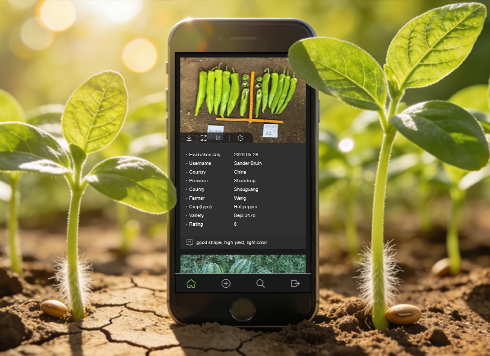 Kunshan TrialBook Mini-Program Custom Development
This project developed an English-only Tria ...
-
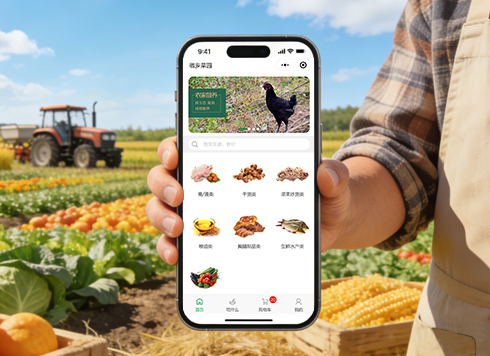 Agricultural Products WeChat Mini Program Custom Development
Lvran Di enhances agricultural sales via a ...
-
Custom Mobile App Development for Enterprises: Selection, Process, and Common Pitfalls
Date: Aug 9, 2026 Read: 65
-
How to Approach Custom Mobile Development: Requirements Assessment, Technology Selection, and Implementation Essentials
Date: Aug 2, 2026 Read: 131
-
Mobile App Development Full Process: From Requirements Confirmation to Launch - Key Steps
Date: Jul 27, 2026 Read: 76
-
Mini Program Development Basics: Definition, Selection, and Implementation Process
Date: Aug 10, 2026 Read: 78
-
How to Develop Mobile Software: A Complete Process from Requirements to Delivery and Acceptance
Date: Aug 7, 2026 Read: 75