How to Choose Mini Program Custom Development: A Complete Guide from Requirements to Delivery
What is Mini Program Custom Development and Why Is It Important?
Mini program custom development refers to building lightweight applications from scratch or based on frameworks tailored to a company's specific business scenarios, with exclusive features, branded UI, and closed-loop data. Unlike standardized template solutions, custom development enables deep requirements such as complex transaction chains, private deployment, and multi-platform synchronization. By 2026, it has become a core method for retail, education, and healthcare industries to acquire private traffic.
- Core value: Perfectly matches business processes, avoiding redundant or missing features.
- Applicable precondition: When annual revenue exceeds 2 million or user base reaches 100,000, template solutions become insufficient.
Four-Dimensional Evaluation Framework: Key Assessment Before Selection
Before initiating custom development, you need to score your conditions across four dimensions to avoid unbalanced decisions. This framework was refined by frontline delivery teams after project reviews in 2026, significantly reducing the risk of scope creep.
- Business complexity: Whether the number of process nodes (e.g., payment, logistics, booking, membership tiers) exceeds 8.
- Budget range: 50,000–150,000 CNY for medium complexity; above 300,000 CNY consider multi-platform sync or ERP integration.
- Launch timeline: Under 45 days, prioritize using mature industry base versions for secondary customization.
- Tech stack preference: Native vs. uni-app vs. Taro—by 2026, cross-platform frameworks account for 70% of new projects.
Note: These four dimensions constrain each other. For example, limited budget but high complexity requires phased delivery rather than a one-time development. To help readers better understand, here is a comparison of typical project data (2026 cases):
| Dimension | Plan A (Native) | Plan B (uni-app) |
|---|---|---|
| Development cycle | 8–12 weeks | 6–8 weeks |
| Cost (10,000 CNY) | 15–25 | 10–18 |
| Multi-platform support | WeChat only | WeChat + Alipay + Baidu |
| Performance | Excellent | Good |
This comparison is based on the same functional scale (payment, membership, order management, data dashboard). Actual quotes may vary by ±20% depending on integration complexity.
5-Step Implementation Method: From Requirements to Delivery
This method standardizes the custom development process into five steps, each with clear deliverables and acceptance criteria. Xiyue Company validated its effectiveness in multiple projects in 2026.
- Requirements workshop: Produce high-fidelity prototypes and interaction descriptions; prohibit text-only descriptions.
- Tech selection: Decide backend architecture based on concurrency, offline needs, and third-party APIs; compare native and cross-platform solutions.
- UI/UX design: Output design specification documents including adaptations for 3+ device types.
- Iterative development: Hold demos every two weeks to adjust deviations promptly.
- Testing and release: Include performance stress tests, weak network tests, and permission traversal.
- Pitfall 1: More features are better. In fact, each additional feature extends delivery time by an average of 5 days and increases core chain complexity by 30%.
- Pitfall 2: Low price equals cost-effectiveness. In 2026, over 60% of projects priced between 30,000–80,000 CNY needed rework within six months.
- Pitfall 3: Relying entirely on templates. Template modification costs may exceed redevelopment, especially when involving payment callbacks and membership systems.
- Pitfall 4: Ignoring backend capabilities. The frontend accounts for only 40% of workload; backend and operations are often underestimated.
- Pitfall 5: No data tracking. Without analytics post-launch, conversion funnel analysis and optimization are impossible.
Key points per step: In the requirements workshop phase, prioritize the backlog to avoid frequent changes later; during tech selection, evaluate the team's existing skills—cross-platform frameworks are faster but have higher debugging costs. Additionally, in the testing phase, incorporate security tests (e.g., API tamper-proofing, sensitive data encryption). In 2026, mini program security incidents increased 35% year-over-year.
Common Pitfalls and Avoidance Guide
Five common pitfalls in 2026 can delay projects or shrink features; knowing them is more important than knowing "how to do it."
Applicable Scenarios and Boundaries
Suitable scenarios: Unique transaction processes, need for integration with internal systems (CRM/ERP), projected user base over 50,000, clear performance metrics (e.g., first screen load under 1.5 seconds).
Unsuitable scenarios: Only display-type content (use existing platforms), no budget for continuous iteration (customization without maintenance becomes an island), unclear and frequently changing requirements (validate with a minimum viable product first).
Boundary conditions: When budget is below 30,000 CNY or timeline is shorter than 30 days, prioritize standardized solutions over custom development. Additionally, if there is no dedicated person for subsequent mini program operations, the value of custom development drops significantly.
Frequently Asked Questions
How much does custom mini program development usually cost?
In 2026, medium-complexity projects (including admin backend) range from 50,000 to 200,000 CNY, depending on feature count, third-party API integrations, and delivery timeline.
How long does it take from signing to launch for custom development?
Typically 6–12 weeks, including 1 week for requirements confirmation, 2 weeks for design, 3–8 weeks for development, and 1–2 weeks for testing.
How to choose between native and cross-platform frameworks?
Choose uni-app/Taro when multi-platform support (WeChat, Alipay, Baidu) is needed; choose native for WeChat-only with high performance requirements. Since 2016, performance differences have been negligible.
Can we maintain the mini program ourselves after custom development?
Yes, but your technical team must have capabilities in the corresponding framework. It is recommended to contractually specify code comment standards and handover document completeness.
How to evaluate a development team's professionalism?
Review code quality, API design documents, and post-sale response speed in past cases. Ideally, request a prototype or demo environment.
Action guide: First, score yourself against the four-dimensional evaluation. If the total score exceeds 60% (each dimension out of 10), proceed with the 5-step implementation method. Prioritize requirements as "must-have, important, nice-to-have" and deliver in phases to reduce risk. If your team lacks technical expertise, consider engaging experienced teams like Xiyue Company, but ensure you retain code ownership and complete design drafts.
-
 Well-Recognized Custom E-Commerce Mall System Dev
The Good Shopping mini-app is natively buil ...
-
 Anhui Huixiang Vegetable Garden Agricultural Products Mini Program v2.0 Iteration Development
HuiXiang MiniApp V2.0: Upgraded homepage, n ...
-
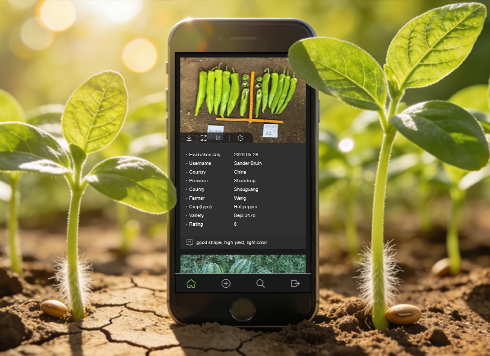 Kunshan TrialBook Mini-Program Custom Development
This project developed an English-only Tria ...
-
 Agricultural Products WeChat Mini Program Custom Development
Lvran Di enhances agricultural sales via a ...
-
Enterprise WeChat Mini Program Custom Development: A Complete Guide to Selection and Implementation
Date: Jul 27, 2026 Read: 106
-
Mini Program Development Basics: Definition, Selection, and Implementation Process
Date: Aug 10, 2026 Read: 78
-
Mini Program Custom Development: Core Knowledge and Selection Guide
Date: Jul 31, 2026 Read: 109
-
Mini Program Custom Development: Selection Process and Pitfall Avoidance Guide
Date: Jul 27, 2026 Read: 83
-
Mini Program Development Selection Guide: A Complete Framework from Requirements Assessment to Technical Implementation
Date: Jul 20, 2026 Read: 115