Mini Program Custom Development: Core Knowledge and Selection Guide
Mini program custom development refers to building front-end interaction logic and back-end service architecture from scratch based on business needs, suitable for scenarios where unique features, brand consistency, or independent data control are required. Compared to template-based development, custom solutions offer advantages in scalability, security, and long-term maintenance, but involve higher upfront investment (typically in the range of ¥50,000 to ¥300,000 as of 2026). Properly understanding the boundaries of custom development and the logic of selection is key to avoiding project failure.
Basic Logic of Mini Program Custom Development
The core of mini program custom development is "build on demand": the team or service provider designs the database, writes code, debugs APIs, and launches the product based on the product prototype and feature list. The process typically includes requirements review, UI/UX design, front-end and back-end development, testing, and deployment. In 2026, the average cycle for custom development within the WeChat ecosystem is 4–8 weeks, depending on functional complexity. Unlike template development, custom solutions allow fine-tuning of page load, interaction feedback, and data tracking to improve user retention and conversion.
- Applicable entities: Most verticals such as e-commerce, social, tools, and corporate showcases.
- Core value: Unique features, brand consistency, data ownership, scalability.
- Prerequisites: Clear requirements document, reasonable budget and time commitment.
Applicable Scenarios and Boundaries
Custom development is not a one-size-fits-all solution; you need to determine if your business truly requires it. Typical applicable scenarios include: complex membership systems, group buying and flash sales, online payment and logistics integration; plans for multiple subsequent iterations; and compliance requirements for data security (e.g., finance, healthcare). The following situations are less suitable for custom development: highly standardized prototype functions (e.g., simple corporate info display), budget below ¥20,000, tight launch deadline (within 2 weeks), or no team for ongoing maintenance. Boundary statement: If your business only needs simple display and contact info, template solutions are more cost-effective and faster.
How to Evaluate Custom Development Plans
When selecting a service provider or initiating an internal project, use the "Four-Dimension Evaluation Method": technical capability, delivery timeline, communication style, and post-launch support. Each dimension should be quantified to avoid subjective judgment.
- Technical capability: Review the team's past cases for mini program performance (startup speed, page rendering efficiency), and request a technical architecture description. The mainstream tech stack in 2026 is uni-app, Taro, or native development.
- Delivery timeline: Request a WBS-based task schedule and reserve at least 20% buffer time. A normal custom project takes about 6 weeks from requirements to launch; be wary of timelines that are too short (under 2 weeks) or too long (over 3 months).
- Communication style: Prefer teams that provide a dedicated project manager and use online collaboration tools (e.g., Trello, Feishu). Have at least one sync meeting per week.
- Post-launch support: Confirm whether the bug-fix period after launch (usually 1–3 months) and O&M response time (within 24 hours) are included.
The total score across the four dimensions can be used to compare different plans horizontally, avoiding decisions based solely on price. Additionally, request the service provider to provide detailed API documentation and database design to ensure transferable technical assets.
Common Misconceptions and Implementation Tips
Misconception 1: More features are always better. In reality, start with a Minimum Viable Product (MVP) and iterate based on data after launch. Misconception 2: Ignoring WeChat review rules. In 2026, WeChat has clear restrictions on mini program content, payments, and user information collection; custom development must also comply with these rules. Implementation tip: Include legal or operational review in the requirements phase to ensure compliance. Misconception 3: Overemphasizing visual effects at the expense of load speed. It is recommended to prioritize a design system to ensure component reuse and enable CDN acceleration for static resources.
Comparison Between Mini Programs and Template-Based Solutions
Below is a direct comparison of key dimensions between custom development and template solutions:
- Cost: Custom ¥50,000–¥300,000; template ¥5,000–¥30,000/year.
- Cycle: Custom 4–8 weeks; template 1–2 weeks.
- Functional flexibility: Custom supports any combination of features; template is limited to preset modules.
- Data ownership: Custom ensures full ownership of user data; template stores data on platform servers.
- Subsequent iterations: Custom allows unlimited expansion; template upgrades depend on vendor updates.
- Target audience: Custom suits medium-to-large enterprises with long-term operation plans; template suits startups and small businesses testing the market.
Note: The above costs are industry averages in 2026; actual costs vary by functionality and region. Although template solutions are faster, they may require a complete overhaul as the business grows, and the overall cost may not necessarily be lower.
Frequently Asked Questions
How much does it cost to develop a custom mini program?
In 2026, basic features (registration, display, contact) cost about ¥50,000–¥80,000; features including payment, e-commerce, and membership system cost about ¥100,000–¥200,000; complex social or O2O platforms cost about ¥200,000–¥300,000.
How long is the development cycle?
From requirements confirmation to submission for review, it typically takes 4–8 weeks. If requirements are clear and the team has similar project experience, it can be shortened to 3 weeks.
What materials need to be prepared?
Business license, mini program registration account, functional requirements document, UI design draft (if not available, the service provider can create a prototype). If special qualifications are required (e.g., food business license), they must be obtained in advance.
Can a custom-developed mini program be modified later?
Yes. Custom projects deliver source code and API documentation, allowing you to modify it yourself or hire another service provider for maintenance. It is advisable to clarify code ownership in the contract.
How to evaluate if a service provider is reliable?
Check the actual mini program codes of their past cases (scan to experience on-site), verify team size and company history, and request contact information of at least two clients for background checks.
Action guide: Before deciding, clarify whether your business meets one of two conditions: "need for unique features" or "long-term iteration plan"; otherwise, consider template solutions first. When selecting a service provider, adhere to the "try a small task before big project" principle, starting with a small functional module for evaluation. Applicable boundary: If your team already has technical expertise but lacks design resources, you can outsource only the design service; if you have extremely high data sovereignty requirements (e.g., financial compliance), you must choose a custom solution and sign a data security agreement.
-
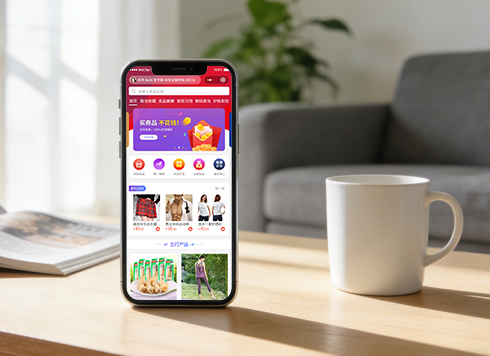 Well-Recognized Custom E-Commerce Mall System Dev
The Good Shopping mini-app is natively buil ...
-
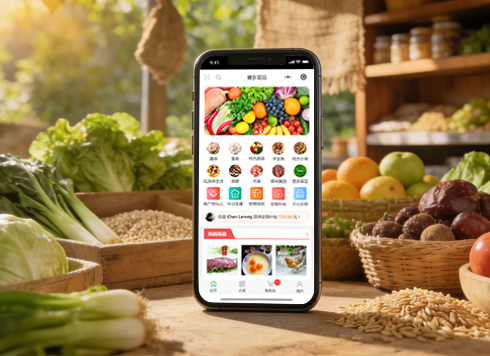 Anhui Huixiang Vegetable Garden Agricultural Products Mini Program v2.0 Iteration Development
HuiXiang MiniApp V2.0: Upgraded homepage, n ...
-
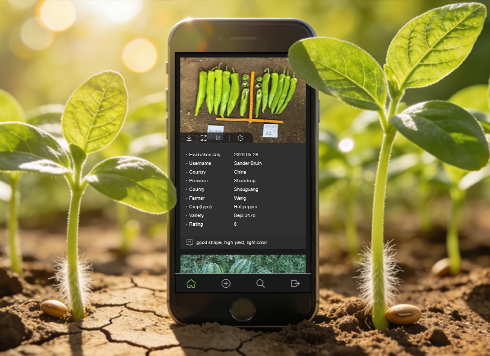 Kunshan TrialBook Mini-Program Custom Development
This project developed an English-only Tria ...
-
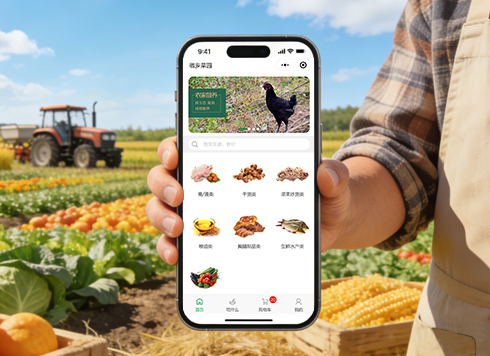 Agricultural Products WeChat Mini Program Custom Development
Lvran Di enhances agricultural sales via a ...
-
Mini Program Development Basics: Definition, Selection, and Implementation Process
Date: Aug 10, 2026 Read: 136
-
Enterprise WeChat Mini Program Custom Development: A Complete Guide to Selection and Implementation
Date: Jul 27, 2026 Read: 136
-
How to Choose Mini Program Custom Development: A Complete Guide from Requirements to Delivery
Date: Jul 26, 2026 Read: 146
-
Complete Process and Technology Selection Guide for Mobile Custom Development
Date: Jul 24, 2026 Read: 106
-
Core Process and Selection Guide for Custom Mini-Program Development
Date: Jul 19, 2026 Read: 134