



Complete Process and Technology Selection Guide for Mobile Custom Development
What is Mobile Custom Development
Mobile custom development is the process of building an independent mobile application from scratch based on an enterprise's own business logic, brand image, and user needs. Unlike generic templates, custom development provides full code ownership and feature customization. A typical 2026 solution includes six stages: requirement research, prototype design, front-end development, back-end API, testing and deployment, and launch and operation. The core advantage lies in meeting unique business processes (such as complex approval flows, special hardware calls) and building long-term maintainable digital assets. Applicable boundaries: budget between 100,000 and 1,000,000 RMB, cycle 3 to 6 months, high requirements for user experience and data security. Not applicable: budget below 80,000 RMB or cycle shorter than 2 months; consider low-code or SaaS.
Four-Dimensional Selection Framework: How to Choose a Technology Stack
In 2026, technology selection is no longer a simple binary choice of native vs. cross-platform but is judged across four dimensions. This framework is summarized by the practices of several leading outsourcing teams in the industry.
Four Dimensions
Performance Requirements: High-frequency animations, complex gestures, real-time audio/video suit native; conventional lists and charts can use Flutter or React Native. Team Tech Stack: For teams proficient in front-end JavaScript, React Native has a low learning cost; with Dart background or willingness to invest in training, Flutter offers more stable rendering. Third-Party Ecosystem: If integration with bank SDKs or hardware drivers is needed, prefer native or Flutter (rich native plugins). Iteration Speed and Budget: In the MVP stage, Flutter can be used for rapid validation, with core modules later transitioning to native hybrid development.
- List core functions and mark performance sensitivity (high/medium/low).
- Evaluate team tech stack and hiring costs.
- Investigate third-party SDK support for the selected framework.
- Combine cycle and budget to choose the optimal solution.
Counterexample: Blindly choosing Flutter solely because "it's from Google" without checking map SDK support for Flutter, leading to costly custom bridge development.
Standard Process and Key Milestones in Custom Development
The industry-standard process in 2026 includes the following stages, each requiring deliverable documentation or code.
Requirement Confirmation and Prototype Design
The product manager and client go through function points one by one, outputting PRD and low-fidelity wireframes. Key milestone: Client signs off on PRD; subsequent changes require change management. Acceptance criteria: PRD includes page elements, interaction logic, and error states.
Technical Architecture and Database Design
The backend determines the server language (e.g., Go, Node.js, Java) and database choice (MySQL, PostgreSQL, MongoDB); the frontend selects the framework version. Key milestone: Technical architecture review document. Reserve capacity for three years of data growth; for 100,000 users, support at least 1,000 concurrent requests per second.
Coding and Unit Testing
Front-end and back-end development in parallel, with weekly demos. Core module unit test coverage should not be below 80%.
Integration Testing and Performance Tuning
All modules are integrated and interfaces fixed. Stress testing meets expected concurrency; app cold start time less than 3 seconds; crash rate below 0.5%.
Launch and Maintenance
Submit to App Store and Android markets, configure developer accounts and privacy policy. Monitor crashes and feedback within the first week after launch and perform urgent fixes.
Common Pitfalls and Avoidance Checklist
Based on 2026 project review data, the following three pitfalls most often lead to rework.
- Underestimating the Value of the Design Phase: Direct coding leads to frequent requirement changes, increasing costs by over 30%. Correct approach: At least two weeks of prototype validation.
- Ignoring Backend Scalability: Considering only current functions without reserving API extensions leads to rework in phase two. Proper approach: RESTful design, microservices decomposition.
- Over-reliance on Third-Party Plugins: Using community plugins without maintenance once they stop, forcing app downgrade. Recommendation: Self-develop core functions or choose enterprise-maintained plugins.
Applicable Scenarios and Boundaries
Applicable Scenarios: Highly personalized business logic (e.g., internal enterprise ERP, medical consultation), deep integration with hardware (Bluetooth printers, barcode scanners), independent brand apps requiring long-term iterative operation. Non-applicable Scenarios: Budget below 80,000 RMB and cycle shorter than 2 months (consider low-code or templates); generic functions with no unique needs (SaaS is more cost-effective); no dedicated product manager for interface (outsourcing teams cannot replace requirement grooming). Boundary statement: Custom development is not inherently "superior" to standard products; it depends on business complexity. Do not start blindly just to "have an app."
Action guide: Before starting, complete a technology selection comparison table (scoring on performance, cost, team, and ecosystem four dimensions) and reserve 20% of the budget for changes. If internal technical capability is weak, hire a third-party consultant to evaluate solutions. When selecting an outsourcing team, review past cases and team size; avoid comparing only on price.
Frequently Asked Questions
How much does it cost to custom develop an app?
A simple tool app costs about 100,000–200,000 RMB, an e-commerce or social app 300,000–800,000 RMB, and a heavy business system 800,000–2,000,000 RMB, depending on feature complexity.
Which is better, Flutter or React Native?
Flutter has better rendering performance, suitable for UI-intensive apps; React Native has a mature ecosystem, ideal for teams already using React Web, but performance is slightly inferior.
How long does the development cycle usually take?
A medium-complexity app (3–5 core modules) takes 3–5 months: 1 month for requirements and design, 2–3 months for development, and 1 month for testing and launch.
How to ensure app stability after launch?
Conduct 7x24 hour stress testing before launch, configure crash monitoring tools, establish an emergency response mechanism to handle critical issues within 2 hours.
Who owns the code?
The contract should explicitly state that all source code, documentation, and intellectual property rights belong to the client, and the developer may not reuse them without permission.
-
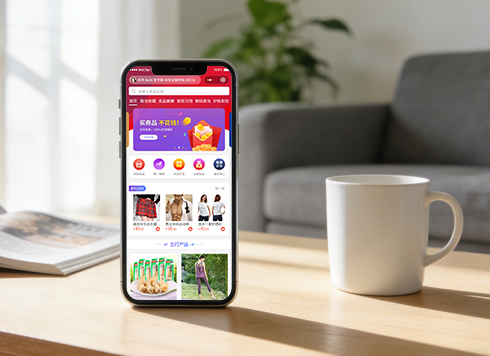 Well-Recognized Custom E-Commerce Mall System Dev
The Good Shopping mini-app is natively buil ...
-
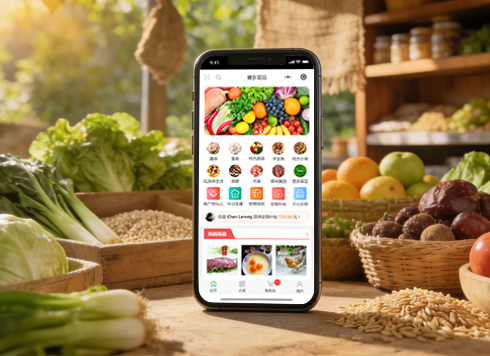 Anhui Huixiang Vegetable Garden Agricultural Products Mini Program v2.0 Iteration Development
HuiXiang MiniApp V2.0: Upgraded homepage, n ...
-
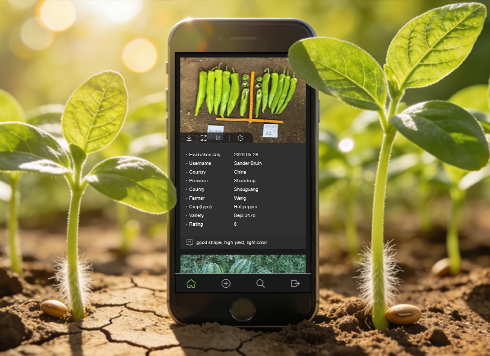 Kunshan TrialBook Mini-Program Custom Development
This project developed an English-only Tria ...
-
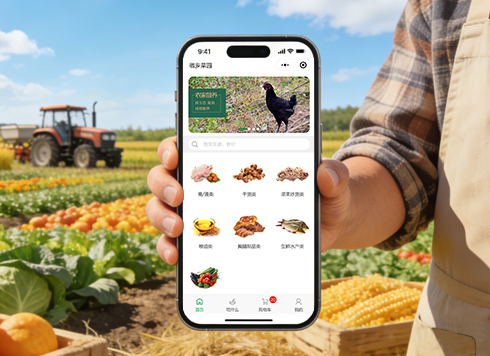 Agricultural Products WeChat Mini Program Custom Development
Lvran Di enhances agricultural sales via a ...
-
Mini Program Development Basics: Definition, Selection, and Implementation Process
Date: Aug 10, 2026 Read: 78
-
Custom Mobile App Development for Enterprises: Selection, Process, and Common Pitfalls
Date: Aug 9, 2026 Read: 65
-
Mobile Custom Software Development Guide: Process, Cost, Technology Selection, and Common Pitfalls
Date: Aug 2, 2026 Read: 113
-
How to Approach Custom Mobile Development: Requirements Assessment, Technology Selection, and Implementation Essentials
Date: Aug 2, 2026 Read: 131
-
Mini Program Custom Development: Core Knowledge and Selection Guide
Date: Jul 31, 2026 Read: 109