Complete Process and Selection Guide for Custom Mobile App Development
Custom mobile app development refers to designing and delivering a standalone mobile application from scratch based on specific business needs. In 2026, mainstream development approaches include native (Swift/Kotlin), hybrid (WebView wrapper), and cross-platform (Flutter/React Native). The choice depends on budget, timeline, performance, and technology stack. Below is a guide on process, selection, and boundaries.
Why Custom Development Instead of Template Solutions
Template apps are low-cost and quick to launch, but struggle to meet differentiated workflows, personalized UI, and scalability needs. Custom development is suitable for scenarios requiring integration with internal systems, complex interactions, or data security compliance. In 2026, over 70% of B2C e-commerce and social apps use custom development to build brand identity. Judgment criteria: If the business involves more than 3 non-standard processes or the expected user base exceeds 100,000, custom development yields better ROI.
- Template suitable for: MVP validation, internal tools, event pages (1-3 months to launch).
- Custom suitable for: Long-term operations, iterative updates, reliance on device native features.
Standard Process of Custom Development
The full cycle usually takes 3-6 months (common in 2026 projects), divided into six phases, each with deliverables.
Phase 1: Requirements Analysis & Planning (2-4 weeks)
Output: PRD and technical feasibility assessment. Confirm feature list, user flow diagrams, third-party integrations. Common mistake: Ignoring non-functional requirements (concurrency, offline support).
- Must-do: Draw core business process flow, distinguish "must-have" from "nice-to-have" features.
- Acceptance: PRD signed off by business and technical lead.
Phase 2: UI/UX Design (2-4 weeks)
Deliver high-fidelity prototypes and design specifications. In 2026, Figma + Zeplin is commonly used to reduce communication overhead.
Phase 3: Technology Selection & Architecture Design (1-2 weeks)
Determine frontend framework, backend services, database, and cloud deployment plan. Detailed comparison below.
Phase 4: Iterative Development & Testing (6-12 weeks)
Agile development (2-week sprints), testing strategy: unit + automated UI + real device compatibility (top 30 models).
Phase 5: Release & Deployment (1-2 weeks)
Submit to app stores, complete account registration, privacy compliance. In 2026, Apple review average is 2-3 days.
Phase 6: Post-launch Operations (ongoing)
Monitor crash rate, retention, and release at least one maintenance version per month.
In-depth Comparison of Three Major Technology Approaches
Common approaches in 2026 compared as follows.
- Native Development (Swift+Kotlin): Best performance, full API access, suitable for graphics-intensive apps. Cost: Requires two teams, 40%-60% higher than cross-platform. Timeline: Initial version 4-6 months.
- Hybrid Development (Ionic/Cordova): WebView-based, updates skip review, suitable for content-based apps. Performance: Lag with complex animations. Cost: 30%-50% lower than native.
- Cross-Platform Frameworks (Flutter/React Native): Single codebase for both platforms, performance close to native. Applicable: E-commerce, social, utility apps. Note: Flutter had heating issues on low-end devices (gradually optimized by 2026).
Selection suggestion: If dual platforms are needed with standardized features, prioritize cross-platform; for a single platform or extreme performance, native is more efficient.
Three-Dimensional Selection Method
- Functional Depth: If more than 6 native APIs are needed, prioritize native or cross-platform; if fewer than 3, hybrid suffices.
- User Scale: If target installs exceed 500,000 or offline experience is required, choose native or cross-platform; below 100,000, hybrid is acceptable.
- Team Expertise: Java/OC teams go native; React frontend can switch to React Native; no experience, consider outsourcing.
These three dimensions directly affect cost and risk. In 2026, statistics show that improper technology selection leads to delays in over 35% of projects.
Applicable Scenarios and Boundaries
Suitable for custom development: Clearly differentiated business, need for deep integration, building an independent brand traffic pool. Examples: online education live streaming module, healthcare system HIS integration. Not suitable for custom development: Pure content display, internal H5 activities, validation projects with lifecycle shorter than 6 months. In such cases, WeChat mini-programs or web pages are more economical. Boundary judgment: If the business logic is within 10 steps and no offline operation is needed, custom development's ROI is lower than reusing SaaS.
Frequently Asked Questions
How much does custom app development cost?
In 2026 market rates: Light (news + registration) 80,000-150,000 CNY, Medium (e-commerce + payment) 250,000-500,000 CNY, Heavy (social + live streaming) 600,000+ CNY.
How long does development take?
Light: 1-2 months, Medium: 3-4 months, Heavy: 5-7 months. Low-code platforms can shorten by 20%, but with reduced flexibility.
How to evaluate a development company's technical capability?
Check case technical fit, request architecture documents, conduct technical interviews (exception handling, performance optimization). Avoid judging by UI screenshots alone.
Why is native update slower than cross-platform?
Native requires maintaining separate codebases for both platforms, with double development per version; cross-platform uses one codebase adapted for both, but platform differences must be handled.
What if a critical bug occurs after launch?
Hot fix (native requires app store, cross-platform can use CodePush etc.), emergency JS patches can be issued, ensuring compliance.
Action guide: Before starting a project, complete the requirements document and technical feasibility report, clarifying core features, user volume, and launch timeline. If inexperienced, commission a professional company to review. Leverage open-source components in custom development to shorten the timeline by 30%. Reserve at least 15% of the total budget for operations and iteration costs.
-
 Well-Recognized Custom E-Commerce Mall System Dev
The Good Shopping mini-app is natively buil ...
-
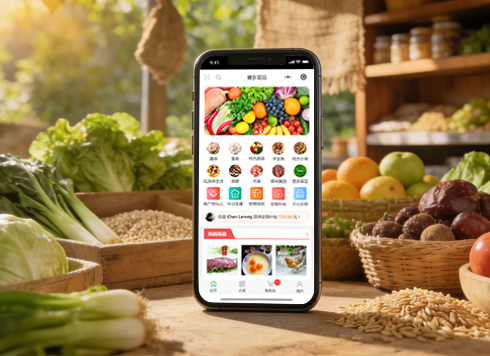 Anhui Huixiang Vegetable Garden Agricultural Products Mini Program v2.0 Iteration Development
HuiXiang MiniApp V2.0: Upgraded homepage, n ...
-
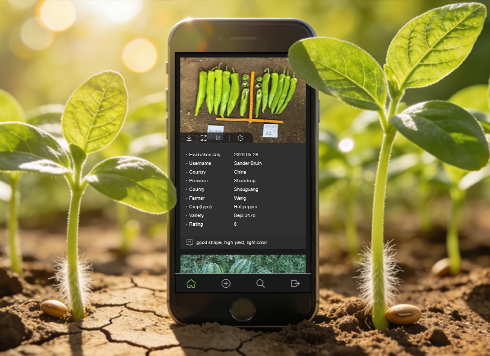 Kunshan TrialBook Mini-Program Custom Development
This project developed an English-only Tria ...
-
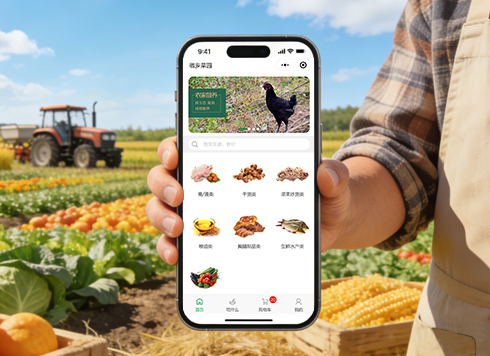 Agricultural Products WeChat Mini Program Custom Development
Lvran Di enhances agricultural sales via a ...
-
Custom Mobile Development: Complete Guide to Process, Selection, and Common Pitfalls
Date: Aug 1, 2026 Read: 119
-
Mobile App Development Full Process: From Requirements Confirmation to Launch - Key Steps
Date: Jul 27, 2026 Read: 76
-
How to Choose Your Mobile App Development Approach: A Complete Guide from Requirements to Delivery
Date: Jul 26, 2026 Read: 111
-
Mobile App Development Always Delayed? Three Key Strategies for Efficient Custom Delivery
Date: Jul 7, 2026 Read: 84
-
Custom mobile app development done but can't be listed? What review requirements usually block it?
Date: Sep 2, 2026 Read: 45