



Custom Mobile Development: Complete Guide to Process, Selection, and Common Pitfalls
Custom mobile development refers to an engineering service that builds an application tailored to a company's specific business logic and user profiles, covering the entire process from architecture design and feature development to deployment and maintenance. Compared with template-based development, custom development places greater emphasis on business process alignment and scalability, making it suitable for scenarios with complex workflows, high interaction requirements, or the need to integrate with existing systems.
What is Custom Mobile Development and Why Does It Matter?
The core of custom mobile development is being "business-centered." It does not copy generic templates; instead, it first maps out real needs such as enterprise roles, permissions, approval workflows, and data analytics, then selects the appropriate technology stack (native, cross-platform, or hybrid) to complete design, development, and delivery. By 2026, mainstream enterprises are placing greater emphasis on integrating applications with backends, IoT, and AI capabilities, and the scope of custom development has expanded from a single app to multi-platform collaboration.
From an economic perspective, the investment in custom development is amortized over the application's lifecycle. For example, a mobile app that handles complex approval workflows might save each user half an hour per day in process time. When the user base or business frequency is large enough, the returns will exceed the development cost. Therefore, evaluating custom development should consider not only the initial cost but also the maintenance and upgrade expenses over the next three years.
Deciding whether custom development is worthwhile depends on three conditions: whether the business process has industry-specific characteristics, whether existing software can meet core needs, and whether future feature iterations are frequent. If all three apply, custom development can bring long-term value; conversely, if the needs are simple and workflows are generic, using mature SaaS or low-code platforms may be more appropriate.
- It solves the problem that "generic solutions cannot cover," such as complex permissions, offline transactions, and device integration.
- It requires the team to have simultaneous capabilities in product management, design, development, and testing, rather than just coding.
- It emphasizes documentation and acceptance criteria to avoid uncontrolled costs from "changing as you go."
The Four-Step Implementation Method for Custom Mobile Development
Breaking custom development into four executable steps can effectively reduce communication costs. Each step has clear inputs and outputs, suitable for the project delivery pace of 2026.
- Requirements Abstraction and Priority Sorting: First, map out the user journey and core business flow, distinguishing "must-have" from "nice-to-have" features. The output of this step is a requirements list, recommended to be sorted as P0/P1/P2. If P0 items are missing, the project cannot be accepted.
- Technical Solution and Workload Estimation: Based on the requirements list, choose a native, cross-platform (e.g., Flutter/React Native), or hybrid solution. Cross-platform suits projects with limited budgets and low sensitivity to performance; native suits scenarios like complex animations or hardware calls.
- Iterative Development and Milestone Acceptance: Use two-week or three-week iterations, delivering a runnable test build each time. During acceptance, focus on verifying that critical paths are unblocked, not just on the visual appearance.
- Launch and Operations Handover: This involves app store review, monitoring, crash fixes, and permission updates. If the contract does not stipulate code handover and defect repair periods, subsequent maintenance may become passive.
The value of this framework lies in turning "uncontrollable creativity" into "measurable processes." For example, if P0/P1 sorting is not done during the requirements abstraction phase, the development team will allocate effort equally to every feature, causing delays in core workflows. It is recommended to conduct a workload review by a third party or internally between the first and second steps to prevent estimation deviations from exceeding 20%.
The difference between milestone acceptance and final acceptance is that milestone acceptance only confirms whether features meet expectations, while final acceptance also checks performance, crash rates, and security vulnerabilities. If all acceptance is postponed to the end, rework costs will rise significantly.
How to Evaluate Whether a Custom Development Proposal Is Good?
A good proposal is not one that "piles up features," but one with "clear boundaries and explicit trade-offs." You can compare across five dimensions; here are the common criteria.
- Requirements Completeness: Does it cover user scenarios, exception handling, and data permissions? A good proposal will typically answer "what happens if the network is down."
- Technology Selection Rationality: Is the choice based on team familiarity and ecosystem maturity? Avoid taking risks just to adopt "new technology."
- Cost Structure Transparency: Does it distinguish between one-time development fees, server costs, and maintenance fees? According to 2026 market practices, custom app pricing varies widely and is usually determined by the number of features, design complexity, and backend interfaces, rather than simply quoted by "number of pages."
- Delivery Timeline Credibility: Are there obvious risks of aggressive timeline compression? A reasonable timeline should include a buffer of three to five days for requirements freezing, development, testing, and app store review.
- After-Sales Support and Source Code Ownership: Does the contract specify source code delivery, server account transfer, and defect repair timelines? These terms are more important than verbal promises.
Some companies lower their quotes to win bids and then add extra costs during implementation. To avoid such pitfalls, it is recommended to clearly define the "requirements change process" and "billing standards for work exceeding a certain amount" in the contract. If the other party cannot clearly state their technology stack versions or cannot provide demos of past modules, you should evaluate them cautiously.
Additionally, does the proposal include a user feedback loop? The effectiveness of custom development needs data evidence, such as whether the analytics tracking plan and reporting backend are included in the plan. A custom application without data support is difficult to continuously optimize. Professional development teams (such as Xiyue Company) typically clarify source code delivery and knowledge transfer in the contract, which effectively reduces uncertainty after launch.
Applicable Scenarios and Boundaries
Custom development is suitable for the following situations: industry-specific processes (e.g., medical, engineering approval), the need to integrate with existing systems (e.g., ERP, SRM), significant offline data requiring digitalization, and the need to keep brand experiences controllable. In these scenarios, the investment in custom development can improve process efficiency or customer experience.
On the other hand, cases that are not suitable for custom development are also clear: the requirement is merely "an information display page," the budget is far below the industry's reasonable cost, the launch timeline is unrealistic (e.g., must be published within one or two weeks), or no one on the team is accountable for product acceptance. In such cases, using a template app or an H5 page is often more reliable, and there is no need to force custom development.
There is a simple principle for determining boundaries: the budget for custom development usually needs to cover "development plus at least one year of server and operations costs." If the company's annual revenue or project returns cannot support this investment, priorities should be reassessed. Additionally, the capabilities of low-code platforms have improved in 2026, allowing high-frequency business modules to be reused, so there is no need to start from zero for everything.
Frequently Asked Questions
How long does it usually take to build a custom app?
For medium-complexity projects, following 2026 delivery practices, it generally takes eight to twelve weeks from requirement confirmation to launch, including at least two weeks of buffer for testing and app store review.
What is the core difference between custom development and template development?
Template development uses existing frameworks with modified configurations and usually cannot deeply modify closed-loop logic; custom development starts from architecture design and can match special business flows, but with longer timelines and higher costs.
How can you prevent custom development from exceeding budget?
Specify in the contract the pricing method for requirement changes, and lock in P0/P1 features. Estimate workload and costs for every change before proceeding, and avoid verbal promises.
After custom development is completed, who owns the code and server?
This should be stipulated in the contract. In paid projects, the enterprise usually owns the source code and deployment accounts, but it is necessary to confirm whether third-party component licenses are included.
How to choose between cross-platform development and native development?
Choose native when there are requirements for hardware calls, high-performance graphics, or complex animations; if the budget is limited, both iOS and Android need coverage, and performance sensitivity is low, consider cross-platform solutions like Flutter.
Action Guide: If your enterprise has special processes, a reasonable budget, and someone willing to take responsibility for requirement acceptance, you can start custom development using the four-step method. Be sure to prioritize P0 requirements first before discussing price and timeline. If the needs are simple or the budget is limited, consider validating with SaaS or low-code products first.
-
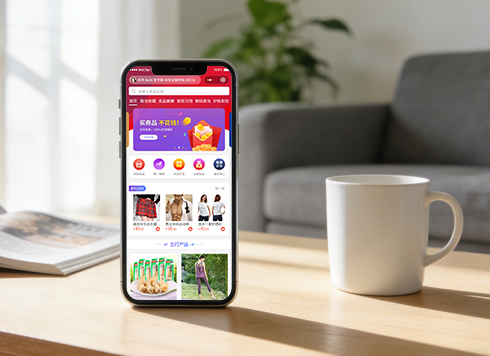 Well-Recognized Custom E-Commerce Mall System Dev
The Good Shopping mini-app is natively buil ...
-
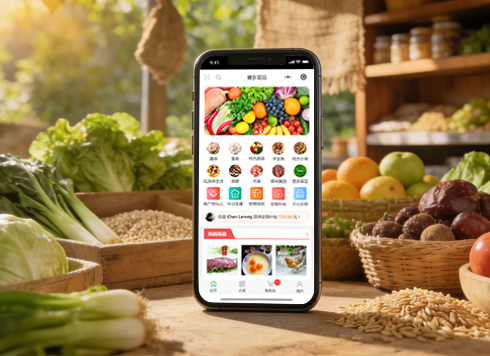 Anhui Huixiang Vegetable Garden Agricultural Products Mini Program v2.0 Iteration Development
HuiXiang MiniApp V2.0: Upgraded homepage, n ...
-
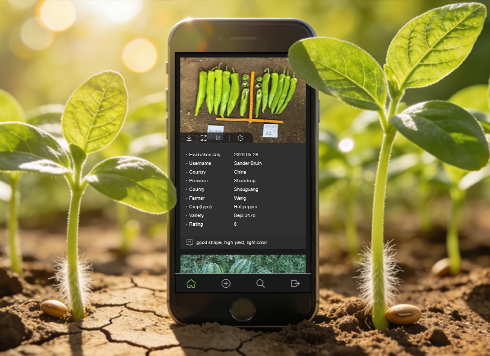 Kunshan TrialBook Mini-Program Custom Development
This project developed an English-only Tria ...
-
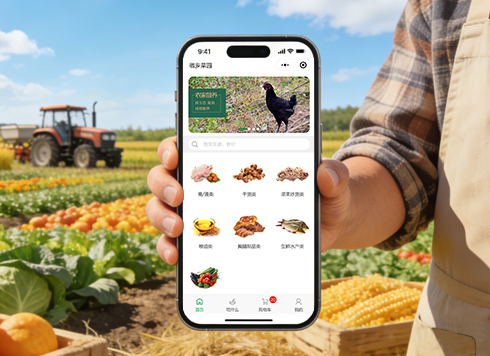 Agricultural Products WeChat Mini Program Custom Development
Lvran Di enhances agricultural sales via a ...
-
Mobile Custom Development Selection and Implementation Guide
Date: Aug 8, 2026 Read: 106
-
How to Ensure a Reliable Custom Mobile App Development Process from Requirements to Launch
Date: Aug 6, 2026 Read: 137
-
How to Do Custom Mobile Development: Process, Costs, and Selection Criteria
Date: Aug 4, 2026 Read: 144
-
How to Approach Custom Mobile Development: Requirements Assessment, Technology Selection, and Implementation Essentials
Date: Aug 2, 2026 Read: 182
-
How to Develop a Mobile App: A Complete Process Guide from Requirements Confirmation to Delivery and Acceptance
Date: Aug 1, 2026 Read: 149