




How to Develop a Mobile App: A Complete Process Guide from Requirements Confirmation to Delivery and Acceptance
The core of mobile app development is not writing code directly, but first clarifying business goals and user scenarios, then choosing the development approach. A common practice in 2026 is: first, use a requirements document to lock down functional boundaries; second, choose native, cross-platform, or low-code solutions based on team size and budget; third, complete delivery through testing and launch acceptance. This article breaks down the key points and judgment criteria for each step according to this process.
Why Requirements Confirmation is Necessary
Requirements confirmation determines the magnitude of development costs. The same app may go live in two to three weeks if it only displays information; but if it involves payments, real-time communication, or complex animations, the timeline and budget can multiply. In 2026 project delivery practices, the requirements document is considered part of the contract because it reduces disputes later.
Three things must be accomplished during requirements confirmation: map out user journeys, list core feature inventory, and specify non-functional requirements (e.g., performance metrics, security levels). What qualifies as done? If the development team can directly estimate work hours after receiving the document, and you as the requester can check off functional priorities item by item, this phase is complete.
- User journey mapping: Outline the key steps from download, registration, to core actions, with each page keeping only one primary action.
- Feature prioritization: Use three levels—must-have, should-have, and could-have—to avoid frequent requirement changes during development.
- Non-functional requirements: Define quantifiable metrics such as concurrent user support, crash rate tolerance, and loading time requirements.
How to Choose Among Three Mainstream Development Approaches
In 2026, the three common mobile app development approaches are native development, cross-platform development, and low-code (or no-code) platforms. They mainly differ in performance, development efficiency, and maintenance costs. Native development means using Swift for iOS and Kotlin for Android separately, offering the best performance and user experience, but requiring two teams or double the work hours. Cross-platform solutions like Flutter or React Native allow one codebase to run on both platforms, improving development efficiency, but complex animations and hardware access may be slightly inferior to native. Low-code platforms are suitable for rapidly building apps with simple business processes, but customization is limited by platform rules.
A simple dimension for selection: if the app involves heavy graphics rendering, real-time audio/video, or deep system hardware calls, native is the safe choice; if business logic is clear and rapid launch is a priority, cross-platform is more suitable; if it is just an internal tool or prototype validation, low-code platforms can significantly reduce costs.
- Native development: Suitable for products with high demands on performance, animations, and system integration, such as social communication, map navigation, and financial trading apps.
- Cross-platform development: Suitable for content, e-commerce, and utility apps. Development cost is about half of native, but attention must be paid to third-party SDK compatibility.
- Low-code platforms: Suitable for lightweight apps like admin dashboards, appointment booking, and information registration. Iteration is fast, but later migration is difficult.
Regardless of the chosen approach, conduct a proof of concept (POC). Spend a week implementing a prototype of a key feature to verify the smoothness of the cross-platform solution on target devices; this is a way to avoid choosing the wrong tech stack.
Quality Dashboard During Development Implementation
Development is not about coding in a vacuum; it requires establishing a visible progress and quality feedback mechanism. Following common agile practices in 2026, projects run in two-week iterations, and a new version should be runnable at the end of each iteration. You need to track three metrics: requirement completion rate, defect density, and critical path delay.
To judge whether development quality is up to standard, examine both code standards and automated testing. Ask the development team to provide static code analysis reports and unit test coverage, with a baseline of no less than 60% coverage. At the UI level, use design mockup comparison tools to check restoration page by page, with clear acceptance criteria for colors, spacing, and interaction states.
- Daily builds: Require the development environment to produce an installable test package every day for easy progress review.
- Defect management: Use a public defect tracking system (e.g., Jira or Tapd), classify all issues by severity, and block critical defects should be fixed the same day.
- Code review: Every merge request should be reviewed by at least one colleague to avoid single points of knowledge loss.
Testing, Launch, and Acceptance Delivery
Testing is an easily compressed but indispensable step in mobile app development. The industry consensus in 2026 is that mobile apps must cover four types of testing: functional, compatibility, performance, and security. Functional testing ensures every use case in the requirements document passes; compatibility testing covers mainstream devices, screen sizes, and OS versions from the past three years; performance testing focuses on startup time, memory usage, and CPU peak; security testing checks whether data transmission is encrypted and permission usage is compliant.
Launch is another common bottleneck. The App Store review cycle is typically 1 to 3 days, but privacy policies, user agreements, and permission descriptions are indispensable; Android app stores require the software copyright certificate, and applying in advance avoids delays. During acceptance, you should receive the complete app package, source code, deployment documents, and operation manuals, and confirm the scope of post-maintenance.
For custom development, acceptance criteria should be written into the contract, including item-by-item feature checklist, performance metrics, and pass rate on specified device models. Here is a counterexample: a team tested on simulators without real-device verification, resulting in crashes after launch—this is the cost of missing acceptance criteria.
Applicable Scenarios and Boundaries
Mobile app development is suitable for the following situations: products with clear business logic and long-term iteration needs, applications requiring deep integration with backend systems, and commercial services with high user experience demands. Conversely, if you only need internal information collection or a one-off activity page, do not resort to custom development; using a low-code platform or a web app can go live in three days.
Moreover, if your requirements are extremely unclear and unstable in the short term, custom development will cause frequent requirement changes and uncontrollable costs. In this case, first validate the market with a minimum viable product (MVP) before committing to full development. Xiyue Company, when undertaking custom projects, first assesses requirement maturity to avoid mid-project direction changes.
FAQ
How long does mobile app development take?
Simple apps take about two to three months, while complex apps take six months or more, depending on team configuration and feature scope; a schedule should be provided after requirements confirmation.
Which is more cost-effective: native or cross-platform?
Initial development cost for cross-platform is about half of native, but native has fewer issues in long-term maintenance and hardware adaptation; evaluate the total three-year cost comprehensively.
How to assess a development team's technical capability?
Ask for real case studies of past projects, inquire about test coverage and code review mechanisms, and arrange a technical interview—this is more useful than looking at marketing materials.
How are bugs handled after development completes?
Regular projects provide a free maintenance period of three to six months, after which billing is by the hour; response times and repair cycles should be defined in the contract.
Action suggestion: Spend the first week completing the requirements document and technology evaluation, then choose the development approach based on budget and launch timeline. In 2026, cross-platform solutions have matured enough for most business scenarios, but native should still be prioritized for critical hardware calls. If your requirements are not yet finalized, consider an MVP first rather than aiming for a full build at once. At project delivery, ensure you receive the complete source code and documentation for future self-maintenance or switching partners.
-
 Well-Recognized Custom E-Commerce Mall System Dev
The Good Shopping mini-app is natively buil ...
-
 Anhui Huixiang Vegetable Garden Agricultural Products Mini Program v2.0 Iteration Development
HuiXiang MiniApp V2.0: Upgraded homepage, n ...
-
 Kunshan TrialBook Mini-Program Custom Development
This project developed an English-only Tria ...
-
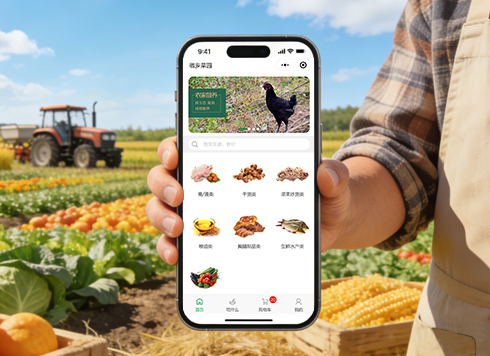 Agricultural Products WeChat Mini Program Custom Development
Lvran Di enhances agricultural sales via a ...
-
How to Approach Custom Mobile Development: Requirements Assessment, Technology Selection, and Implementation Essentials
Date: Aug 2, 2026 Read: 183
-
Complete Process and Technology Selection Guide for Mobile App Development from Requirements to Launch
Date: Jul 25, 2026 Read: 155
-
Custom Mobile App Development for Enterprises: Selection, Process, and Common Pitfalls
Date: Aug 9, 2026 Read: 111
-
How to Do Custom Mobile Development: Process, Costs, and Selection Criteria
Date: Aug 4, 2026 Read: 145
-
How to Develop a Custom Mini Program? A Guide to Process, Tech Selection, and Evaluation
Date: Aug 4, 2026 Read: 151