The Complete Guide to Custom Mini Program Development: From Requirements Confirmation to Launch Acceptance
Custom Mini Program development refers to the complete development process from design, coding, to deployment and delivery, tailored to an enterprise's specific business needs. In 2026, the typical delivery cycle for Mini Program projects is 6-12 weeks, with key milestones including requirements confirmation, UI design, development and joint debugging, testing and acceptance, and launch iteration. To obtain a Mini Program that deeply aligns with business needs, enterprises should first clarify their requirements boundaries, then choose a development approach, and finally complete acceptance using quantifiable standards.
What Is Custom Mini Program Development and Why Does It Matter?
Custom Mini Program development differs from template-based development. It re-plans information architecture, interaction flows, and data models around specific business logic. Because each enterprise has different membership systems, order statuses, and permission rules, generic templates often require secondary modification, which can be even more costly. According to 2026 project delivery practices, custom development typically includes proprietary backend APIs, an independent database, and a personalized front-end interface.
The necessity of custom development lies in business fit and long-term maintainability. When enterprises need to integrate internal ERP, CRM, or offline devices, custom APIs are a common choice. In addition, custom code allows deep performance optimization, avoiding redundant template features that slow down loading speeds. For products planned for long-term operation with clear traffic expectations, custom solutions have an advantage in iteration efficiency.
- Business alignment: Features and processes fully fit requirements without unnecessary modules.
- Data independence: Data is stored on the enterprise's own servers, meeting compliance requirements.
- Scalability: Clean code structure facilitates future module additions or third-party integrations.
The Four-Step Method for Custom Development: From Requirements to Launch Acceptance
The four-step method divides the development process into four phases: requirements confirmation, solution selection, development delivery, and acceptance & launch. Each phase has clear checkpoints. This division is necessary because most project failures stem from vague requirements or missing acceptance criteria. Stage-by-stage review helps cut losses and control budget in time.
- Requirements confirmation: List core features, user roles, and business flow diagrams. Avoid generic descriptions like 'build a mall.' The acceptance criterion is that each feature has input, operation, and output specifications.
- Solution selection: Decide whether to use native development or cross-platform frameworks (e.g., uni-app, Taro) based on requirements. Native offers better performance but higher dual-platform costs; cross-platform is more efficient and suits tool-type apps. By 2026, cross-platform frameworks have matured and can cover most scenarios.
- Development delivery: Develop and integrate according to iteration plans. Pay attention to code readability, API documentation, and comprehensive comments. It is recommended to review runnable versions weekly rather than waiting until everything is complete.
- Acceptance & launch: Test item by item based on the requirements specification, including abnormal scenarios and edge cases. After acceptance, submit for review and prepare online monitoring.
Each step's deliverables should be documented in writing to avoid communication gaps. Especially in the requirements confirmation phase, if the output exceeds 20 pages of requirements documentation, it indicates thorough thinking; if only one page, the risk of later changes is higher.
Template Development vs. Custom Development
Template development suits display-oriented Mini Programs with limited budgets and simple business logic; custom development suits products with complex business needs, deep integration requirements, or long-term iteration. The two differ significantly in cost, timeline, and functional flexibility.
- Cost: Template annual fees are about RMB 3,000-10,000, while custom development typically ranges from RMB 30,000-300,000 depending on feature complexity.
- Timeline: Templates can go live within 1-3 days; custom development takes 6-12 weeks, including testing.
- Flexibility: Templates only allow modifying preset styles and fields; custom development can design any interaction and data flow as needed.
- Licensing restrictions: Templates usually provide only usage rights, while custom development grants full source code and independent deployment.
With rising development labor costs in 2026, custom quotes have also increased. Enterprises need to assess their business lifecycle: if it's just for promotional pages, templates suffice; if it serves as a core business entry point, custom development better aligns with long-term interests.
Applicable Scenarios and Boundaries
Custom development is especially suitable for the following scenarios: when enterprises need to connect the Mini Program with existing systems, such as order management systems or membership points systems; when the business is unique with no ready-made templates available; when the plan includes membership fees or online transactions requiring high security and stability. Additionally, when the projected user scale exceeds 100,000 and requires detailed data analysis and performance optimization, custom code offers better scalability.
Cases that do not require custom development include: purely displaying company profiles or product lists with no special interaction; promotional pages for campaigns with a short lifespan and no transactions; or merely serving as a content-sharing entry point without relying on independent business logic. For these, using platform free tools or templates is sufficient, saving costs while enabling rapid launch.
- Suitable for: Integration with internal systems, unique business models, large user bases, and long-term operations.
- Not suitable for: Simple displays, short-term campaigns, and no transaction settlement needs.
There's a practical rule for judging the boundary: if the requirements specification can be clearly expressed in one page and there are no real-time computation or third-party system integrations required, then a template solution may be more appropriate.
Frequently Asked Questions
How much does custom Mini Program development usually cost?
Depending on complexity, the price typically ranges from RMB 30,000 to 300,000, including design, development, testing, and launch guidance. Simple display projects cost about 30,000-80,000, e-commerce projects about 80,000-150,000, and complex business systems about 150,000-300,000.
How long does it take to develop a mall Mini Program?
A standard mall with shopping cart, orders, payments, and backend management takes about 8-12 weeks. If existing components are reused or the team is experienced, it can be shortened to 6-8 weeks.
How can I tell if a development vendor is reliable?
Check whether they provide source code or demo Mini Programs from past cases, confirm they have a professional testing process, and ensure the contract clearly specifies acceptance criteria, defect repair timelines, and source code delivery format.
What preparations are needed before launching a Mini Program?
You need to complete WeChat Mini Program certification (annual fee RMB 300), a server and an ICP-registered domain, and a WeChat Pay merchant account. These preparations do not affect development but can impact the review timeline.
Action guide: Before starting a Mini Program project, complete a requirements list and budget range first, then decide between template and custom development. If you choose custom development, be sure to use the four-step method for phased acceptance. Custom development suits businesses with long-term operation plans, not short-term campaigns or pure display scenarios. If your enterprise faces complex system integration or demanding scalability requirements, partnering with an experienced development team (such as Xiyue Company) can reduce communication costs.
-
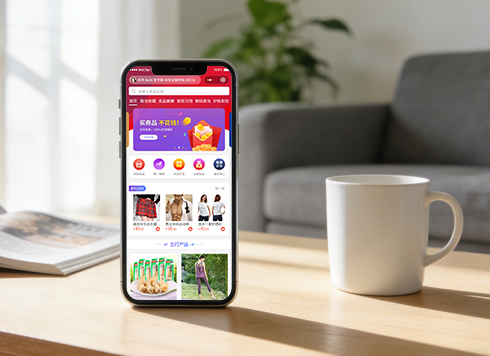 Well-Recognized Custom E-Commerce Mall System Dev
The Good Shopping mini-app is natively buil ...
-
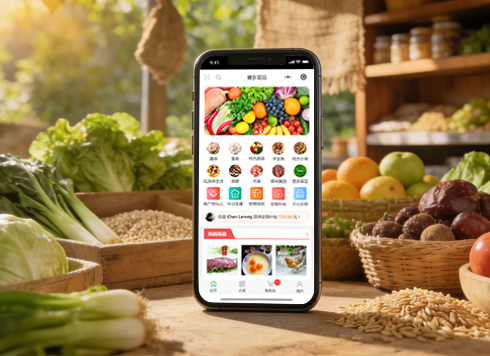 Anhui Huixiang Vegetable Garden Agricultural Products Mini Program v2.0 Iteration Development
HuiXiang MiniApp V2.0: Upgraded homepage, n ...
-
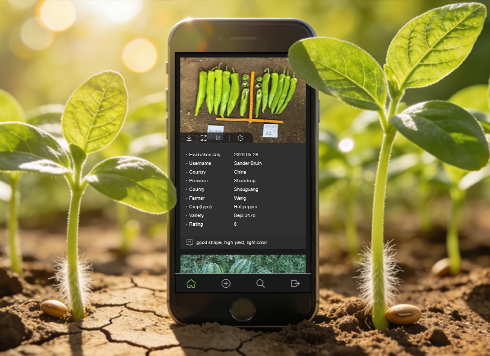 Kunshan TrialBook Mini-Program Custom Development
This project developed an English-only Tria ...
-
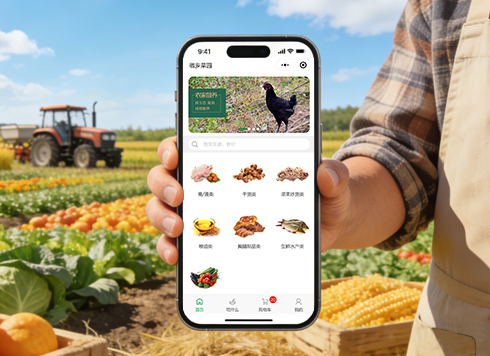 Agricultural Products WeChat Mini Program Custom Development
Lvran Di enhances agricultural sales via a ...
-
Custom Mini Program Development: A Full-Process Guide from Requirements to Launch
Date: Aug 6, 2026 Read: 146
-
What Is Custom Mini Program Development? Selection Process and Implementation Key Points
Date: Aug 3, 2026 Read: 146
-
How to Choose Custom Mini Program Development: Evaluation Process, Cost Structure, and Common Pitfalls
Date: Aug 9, 2026 Read: 112
-
How to Develop a Custom Mini Program: A Process Guide from Requirements Assessment to Launch
Date: Aug 5, 2026 Read: 129
-
How to Do Custom Mini Program Development: Process, Selection, and Applicable Boundaries
Date: Aug 2, 2026 Read: 156