




How to Do Custom Mini Program Development: Process, Selection, and Applicable Boundaries
1. What is Custom Mini Program Development?
Custom Mini Program development is a process of individualized construction from feature design to code implementation, based on the enterprise's specific business logic, visual standards, and system integration requirements, as opposed to template-based development. Unlike using ready-made templates, custom development involves a full team and produces the enterprise's own code and data assets.
The core characteristics of custom development include: on-demand feature design, independent UI design, autonomous data permissions, and the ability to iterate and expand with the business. These features make it suitable for use when the business has matured and entered a phase of refined operations.
2. Why Custom Development? Comparison with Template-Based Development
Template-based development suits standardized scenarios such as simple bookings or information display, offering low cost and quick launch. However, when business processes are complex, require internal system integration, or demand brand quality, templates fall short. As enterprise digitalization deepens in 2026, the value of custom development lies in using code to address process differences that templates cannot cover.
- Template-based development: Costs range from thousands to tens of thousands of yuan, with a timeline of 1-2 weeks, fixed features, and limited extensibility, suitable for validating concepts.
- Custom development: Costs typically range from tens of thousands to hundreds of thousands of yuan, with a timeline of 1-3 months, features built on demand, and integration with APIs and databases, suitable for deep business usage.
The key to the choice is whether the business needs "personalization." If core processes are generic, templates can reduce costs; if multiple customized logic points exist in the business flow, the cost of modifying a template often exceeds rebuilding from scratch.
3. Implementing Custom Development: A Three-Step Framework
To keep custom development under control, here is a "three-step implementation approach": first clarify the business, then align technology selection with the business, and finally use iteration to manage risk.
- Business analysis and requirements documentation: Identify core users and core paths, and produce a prioritized feature list.
- Technology selection and solution design: Choose a development framework based on the user base and system integration requirements, and define the data model and API approach.
- Prototype validation and iterative development: First, validate the flow with a clickable prototype, then deliver a runnable version in two-week sprints.
Each step has acceptance criteria. The requirements document should answer "who does this feature solve a problem for and what problem"; the technology selection should provide rationale, such as team tech stack and cross-platform needs; during iteration, each release should be demonstrable to avoid the risk of a final one-time delivery gone wrong.
4. How to Evaluate the Quality of a Development Proposal
Judging the quality of a custom development proposal requires more than just looking at the price and timeline; it also depends on the proposal's understanding of the business. A high-quality proposal will proactively ask about edge cases and provide data and permission design.
- Clear permission design: Are data and operational scopes for different roles well-defined?
- Performance boundaries: Are caching or pagination plans in place for expected user volume and peak times?
- API documentation: Is documentation complete for integration with external systems?
- Test cases: Are there automated tests or acceptance checklists for core flows?
- Post-launch support: How are bug fixes and feature adjustments billed after launch?
In 2026, a common practice is to ask the development vendor for a "technical solution specification" that includes at least an architecture diagram, database design, and API list. If they cannot provide it, subsequent communication is likely to involve repeated rework.
5. Applicable Scenarios and Boundaries
Custom development is suitable for the following cases: complex business processes, proprietary business logic, integration with internal systems such as ERP/CRM, data ownership requirements, or long-term iteration plans. It is not suitable when the business is extremely simple, budgets are limited, launch timelines are tight, and features are generic.
A boundary judgment sentence that can be quoted independently: If you only need to display store information or collect registrations, ready-made templates or lightweight SaaS tools are often more economical; consider custom development only when the flow involves more than five status nodes or depends on specific offline rules.
Another boundary is technical. If your team has strong development capabilities, you may consider modifying open-source Mini Program frameworks yourself; otherwise, handing it to a professional development company offers more assurance. In 2026, cross-platform frameworks such as Taro and UniApp have matured, so you can consider your team's familiarity when making a choice.
Frequently Asked Questions
How long does custom Mini Program development usually take?
Based on 2026 delivery practices, a medium-complexity Mini Program typically takes 4-8 weeks from requirements confirmation to launch. A simple version can be compressed to 3 weeks, while a complex system may exceed 3 months.
What is the price difference between custom development and template-based development?
Template-based development typically costs from several thousand to twenty thousand yuan, while custom development starts from tens of thousands of yuan, depending on feature complexity and design depth. Do not just look at the total price; compare the service details.
What materials do enterprises need to prepare for custom Mini Program development?
At minimum, you need to prepare your business license, business process diagrams, existing system API documentation (if any), and a description of expected core features. The more complete the materials, the more accurate the proposal quote.
Who owns a custom-developed Mini Program?
The ownership of source code and accounts should be clearly defined in the contract. In proper custom development, the source code and server permissions should be handed over to the enterprise, along with assistance in completing entity verification and filing.
Can a custom-developed Mini Program be modified later?
Yes. Custom development usually leaves maintainable code structures, allowing future feature iterations on the existing base. However, it is recommended to agree on the change process and fee standards in the contract.
If your business has clear differentiation needs, it is recommended to first conduct requirements analysis and prototyping, then compare technical proposals from 2-3 development vendors. Custom development suits long-term investment, but you should not pursue a complete and all-encompassing solution from the start. For this type of project delivery, Xiyue Company typically begins with a business diagnosis before finalizing the solution, which helps reduce rework.
-
 Well-Recognized Custom E-Commerce Mall System Dev
The Good Shopping mini-app is natively buil ...
-
 Anhui Huixiang Vegetable Garden Agricultural Products Mini Program v2.0 Iteration Development
HuiXiang MiniApp V2.0: Upgraded homepage, n ...
-
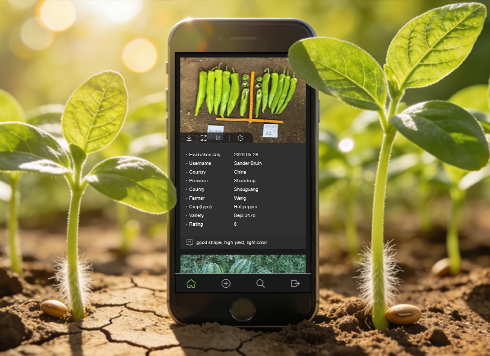 Kunshan TrialBook Mini-Program Custom Development
This project developed an English-only Tria ...
-
 Agricultural Products WeChat Mini Program Custom Development
Lvran Di enhances agricultural sales via a ...
-
Custom Mini Program Development: A Full-Process Guide from Requirements to Launch
Date: Aug 6, 2026 Read: 146
-
How to Develop a Custom Mini Program: A Process Guide from Requirements Assessment to Launch
Date: Aug 5, 2026 Read: 129
-
How to Choose Custom Mini Program Development: Evaluation Process, Cost Structure, and Common Pitfalls
Date: Aug 9, 2026 Read: 112
-
What Is Custom Mini Program Development? Selection Process and Implementation Key Points
Date: Aug 3, 2026 Read: 146
-
How to Develop a Custom Mini Program? Process, Selection, and Common Pitfalls
Date: Aug 1, 2026 Read: 144