




What Is Custom Mini Program Development? Selection Process and Implementation Key Points
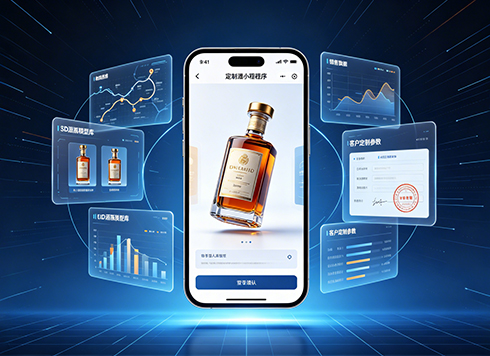
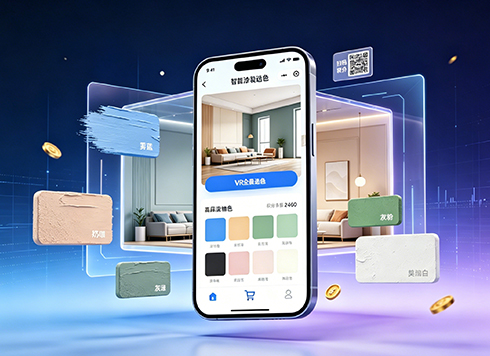
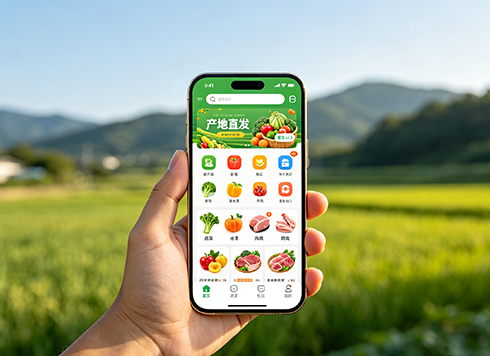
Custom mini program development is a service that builds a mini program from scratch using native code or cross-platform frameworks, tailored to specific business needs. Unlike using ready-made templates, it enables personalized interfaces, complex business logic, and private data management, making it especially suitable for enterprises with long-term operational plans. The criterion for deciding whether customization is needed: if the business requires integration with existing systems, localized data storage, or highly non-standardized processes, custom development is a reasonable choice; conversely, simple display-type mini programs can be built with templates.
What is Custom Mini Program Development: What Problems Does It Solve
Custom mini program development is essentially the application of software engineering on mini program platforms. It requires the demand side and the development team to jointly sort out business rules and digitize offline processes. Its core value lies not in "large code volume" but in "controllable logic." By 2026, mini program capabilities on mainstream platforms (WeChat, Alipay, Douyin, etc.) have become quite mature, and custom development focuses more on vertical scenarios such as viral marketing campaigns, membership systems, and appointment transactions.
Compared with template development, custom development requires a higher initial investment but clears obstacles for subsequent iterations. For example, templates often limit data tables and caching strategies, and performance bottlenecks are likely when user volume grows. Custom development can design architecture on demand, making it easier to scale under multi-user and high-concurrency scenarios. This is why medium and large enterprises tend to choose custom solutions.
- Extensible functionality: Feature modules can be added incrementally as the business grows, without template constraints.
- Controllable data privacy: You can deploy your own servers and retain ownership of user data.
- Unified brand experience: Interface and interaction design can fully align with VI (visual identity) standards, avoiding a one-size-fits-all look.
Custom Development vs. Template Development: A Four-Dimensional Selection Method
A common misconception is the black-and-white view that "template development is cheap, custom development is expensive." In practice, choices should be made based on a comprehensive evaluation of four dimensions, which we call the "Four-Dimensional Selection Method": functional complexity, data security level, iteration frequency, and budget range.
These four dimensions determine whether a project is "assembling with ready-made parts" or "reinventing the wheel." Templates suit standardized scenarios, while customization suits scenarios that require unique competitiveness. The details are explained below.
- Functional complexity: Are multi-role permissions, payment splitting, or complex forms required? If yes, go custom.
- Data security level: Does it involve customer privacy or transaction records? If private deployment is needed, go custom.
- Iteration frequency: Are there new activities or features every quarter? Template-based secondary development is constrained by the underlying architecture, and the cost of frequent changes may exceed rewriting.
- Budget range: A one-time budget below RMB 20,000 usually only allows templates. Custom development generally starts around RMB 50,000 (market rate in 2026), but when amortized over three years, the cost of customization may not be higher.
In real projects, these four dimensions often exist simultaneously. For example, an appointment service mini program may have medium functional complexity, but it involves user phone numbers and payment data, and requires monthly activity updates—this makes customization worthwhile. Conversely, for a static promotional page, all four dimensions point to a template.
The Complete Custom Mini Program Development Process (How to Do It)
A standardized custom development process typically includes five stages: requirements analysis → prototype review → UI design → development and testing → launch and operations. Each stage has clear deliverables and acceptance criteria, significantly reducing the risk of rework.
Among these five stages, requirements analysis is the most error-prone. Many projects suffer extended timelines and budget overruns due to vague requirements or uncontrolled changes. Therefore, it is recommended to specify in the contract that "requirement changes must go through written approval, not verbal communication." Some mature teams (such as Xiyue Company) enforce this rule in project management to ensure aligned expectations between both parties.
- Requirements analysis: Produce a functional list and priorities, and clarify core user paths. The acceptance criterion is the ability to answer three questions: "Who uses it, what problem does it solve, and what is the success metric?"
- Prototype review: Create a clickable prototype using Axure or Figma and walk through the interactive flow. It is essential to involve business stakeholders at this step, as modification costs are the lowest here.
- UI design: Based on the prototype, deliver visual mockups and specify adaptation rules. You need to hand off sliced assets and design specifications for development to reproduce.
- Development and testing: Front-end and back-end development, API integration, and real-device testing. Focus on high-frequency paths such as payment, sharing, and login, and run self-tests before submitting to the platform for review.
- Launch and operations: Submit for review, publish, and configure monitoring alerts and event tracking. After launch, it is recommended to maintain at least one month of continuous optimization.
The entire cycle usually takes 4-12 weeks, depending on the amount of functionality and team size. Based on 2026 project delivery practices, it is recommended to reserve 15% buffer time before launch to handle unforeseen third-party reviews and compatibility issues.
How to Assess Custom Development Quality and Common Pitfalls
To judge whether a custom development project is good, you cannot only look at whether the final software runs; you also need to consider code maintainability, documentation completeness, and response speed. During acceptance, you can ask for source code, database design documents, and API documentation, and try having another developer read the code. If they cannot explain it clearly, subsequent iterations will be difficult.
Here are some actionable quality assessment criteria, along with pitfalls that remain common in 2026.
- Completeness of deliverables: Source code, deployment documentation, and an account permission list are all indispensable.
- Degree of privatization: Whether data is stored on your own server and whether third-party dependencies are controllable.
- Iteration cost: How long does it take to add a field or a page? If it takes more than two days, the architecture is redundant.
- Post-launch support: Whether there is a clear maintenance period (e.g., three months of free bug fixing) and the charging standard for services beyond that period.
- Quoting without clear requirements: Always clarify requirements before quoting; low prices are often followed by price increases later.
- Focusing only on price and ignoring the tech stack: Different tech stacks (native, uni-app, Taro) affect performance and cross-platform capabilities, and must match the target platform.
- Ignoring review rules: Mini program platforms have strict review processes, so you need to avoid violations such as induced sharing and virtual payments during the design phase.
One way to avoid these pitfalls is to adopt a "contract + requirements confirmation document" dual-file management approach, and pay corresponding amounts at each milestone instead of paying all at once. In this way, even if problems arise, the losses can be controlled.
Applicable Scenarios and Boundaries
Custom mini program development is suitable for scenarios involving complex logic such as customer management, appointments, and payment splitting; integration with existing enterprise systems (such as ERP or CRM); and high requirements for brand image and data security. Conversely, if you are building a simple promotional page or static display, template development (or even free build tools) is generally sufficient.
Scenarios where custom development is not suitable or unnecessary include: a project budget below RMB 30,000 with vague requirements; a short lifecycle (e.g., a one-time promotional campaign); or a team without subsequent operational capabilities. Forcing customization often results in a lose-lose situation because software requires long-term maintenance; a custom build without operations is better not done.
Custom development is not a must for all mini programs; it suits scenarios of "long-term operation + complex logic," while templates suit "short-term validation + standardized display." This criterion holds across different years, but it is especially emphasized in 2026 because low-code tools can already cover more simple needs, and custom development should focus on differentiated competitiveness.
Frequently Asked Questions
How much does custom mini program development usually cost?
In 2026, the common custom development price ranges from RMB 50,000 to RMB 300,000, depending on functional complexity, UI requirements, and the number of third-party services integrated. It is recommended to clarify the feature list first and then obtain quotes from multiple teams for comparison.
How long does custom development take?
A lean version of a mini program typically takes 4-8 weeks, including requirements, UI, development, testing, and launch. If it involves multiple platforms or a complex backend, the timeline may extend to around 12 weeks.
How can I ensure the developed mini program meets expectations?
The key is to repeatedly confirm with the development team during the prototype and UI stages, and do not take verbal promises at face value. Require a runnable real-device demo before delivery and create a detailed acceptance checklist.
What about post-launch maintenance after custom development is completed?
The developer should deliver source code and deployment documentation, and agree on at least one month of free bug-fixing period. After that, you can sign an annual maintenance contract or commission a third-party operations company.
If you are considering custom mini program development, it is recommended to first complete internal requirements analysis, list core feature priorities and expected budget. Then select 2-3 development teams for a proposal comparison, focusing on their prototype capabilities and the industry relevance of their case studies. Remember, the upper limit of custom development is determined by the clarity of requirements, and the lower limit is safeguarded by contract terms. If you confirm that your requirements are complex and for long-term operation, custom development is a worthwhile path; if you are only testing the waters short-term, it is better to use a template.
-
 Well-Recognized Custom E-Commerce Mall System Dev
The Good Shopping mini-app is natively buil ...
-
 Anhui Huixiang Vegetable Garden Agricultural Products Mini Program v2.0 Iteration Development
HuiXiang MiniApp V2.0: Upgraded homepage, n ...
-
 Kunshan TrialBook Mini-Program Custom Development
This project developed an English-only Tria ...
-
 Agricultural Products WeChat Mini Program Custom Development
Lvran Di enhances agricultural sales via a ...
-
Custom Mini Program Development: A Full-Process Guide from Requirements to Launch
Date: Aug 6, 2026 Read: 147
-
The Complete Guide to Custom Mini Program Development: From Requirements Confirmation to Launch Acceptance
Date: Aug 1, 2026 Read: 155
-
How to Choose Custom Mini Program Development: Evaluation Process, Cost Structure, and Common Pitfalls
Date: Aug 9, 2026 Read: 113
-
How to Develop a Custom Mini Program: A Process Guide from Requirements Assessment to Launch
Date: Aug 5, 2026 Read: 129
-
How to Do Custom Mini Program Development: Process, Selection, and Applicable Boundaries
Date: Aug 2, 2026 Read: 156