




How to Approach Custom Mobile Development: A Guide to Requirements, Technology Selection, Process, and Risk Control
Custom mobile development is a software engineering service that builds mobile apps from scratch or based on partial infrastructure, according to an enterprise's specific business processes, user roles, and data requirements. The common approach in 2026 is: first complete requirements and boundary confirmation, then choose the technical route, and deliver through small iterative steps rather than a one-time full launch. To judge whether a custom development is qualified, focus on three points: whether requirements are quantified, whether acceptance criteria are clear, and whether the iteration pace is executable.
What Problems Does Custom Mobile Development Solve?
The essential difference between custom development and generic templates is whether your business logic is the core. Standard templates suit standardized scenarios, but when needs involve approval flows, multi-role permissions, offline data synchronization, hardware integration, etc., customization is often required. The direct value of custom development is to reduce ineffective operations, match existing management processes, and accumulate private data assets—not just to "make an app."
- Complex business processes: Including multi-level approvals, status transitions, and custom forms that templates can hardly cover.
- High data requirements: Requiring private deployment, data encryption, or deep integration with internal systems.
- Measurable experience: Having specific metrics for response speed, operation paths, and visual consistency.
- Future expansion: Needing to integrate AI, IoT, or more third-party services later.
If your project matches any two of the above, template-based solutions will often make you pay higher modification costs later. This is also the real reason many teams in 2026 choose custom development.
How to Do Custom Mobile Development: A Four-Step Implementation Approach
Custom development easily gets out of control; the key is to break the process into four verifiable phases. According to project delivery habits in 2026, each phase has clear inputs, outputs, and acceptance actions. Do not skip the early phases and go straight to coding, or you will find inconsistent requirement understanding during testing.
- Requirement definition: Quantify business goals and failure paths. Action: output user stories and acceptance criteria, clearly defining what "done" means for each feature, e.g., "the submission receipt appears within 2 seconds after approval submission."
- Technology selection: Decide native, cross-platform, or hybrid solutions based on team capabilities, deployment environment, and maintenance costs. Compare future upgrade costs, not just development speed.
- Prototype validation: Use a clickable prototype to validate core processes, limiting this to 1–2 weeks, and collect real user feedback. This step avoids rework during development.
- Phased delivery: Split into 2–4 week small iterations by priority; each round should be runnable, verifiable, and rollback-able. At the end of each iteration, the client should see a workable version.
The latter two steps usually loop, but the first two are not skippable. Starting development without quantified requirements is a major cause of project delays. In 2026, most mature teams require prototype review before coding.
How to Choose Between Custom Development and Template-Based Solutions
Template-based solutions have short cycles and low costs, but limited business adaptability; custom solutions require a longer cycle but can fit processes. The choice depends on three factors: process stability, data sensitivity, and long-term evolution needs.
- Template-based solutions: Suitable for standardized businesses, such as simple information display, booking, and basic e-commerce. Low cost and fast launch, but second-phase development is limited, and data and processes are hard to adjust with business changes.
- Custom development: Suitable for business processes with core competitiveness, such as supply chain management, hospital appointment systems, and cold chain tracking. Requires more investment, but logic is controllable, and code and data assets belong to you.
- Cost and timeline (common industry ranges): Template-based typically takes a few weeks; custom typically starts at 3–6 months; total cost differences can be 3–5 times, depending on feature scope and complexity. Based on 2026 market rates, a small tool-type app custom development is usually under 100,000 RMB, while enterprise projects with backend and hardware integration may exceed 500,000 RMB.
Do not assume custom development means "write everything from scratch." Integrating mature components and services (like SMS, maps, payment) is a normal practice in custom development. The key is that the core business logic must be designed around your process.
Common Pitfalls and Risk Control
The following four pitfalls repeatedly occur in custom mobile development, and each can be avoided by setting up processes.
- Pitfall 1: "Let's build it first and see." The correct approach is to have acceptance criteria at the prototype stage; otherwise, later requirement changes equal rework.
- Pitfall 2: Ever-growing requirements. Control scope with a "change order" to record the impact of each change on timeline and cost, preventing unlimited expansion.
- Pitfall 3: Focusing only on UI, not data. Ignoring data structure and API design leads to difficult maintenance and inaccurate data statistics.
- Pitfall 4: Testing functionality only, not edge cases. Weak networks, high concurrency, low-end devices, and repeated operations are must-test items—these environments are real user scenarios.
To judge whether a developer is professional, see if they proactively ask: What is the data volume? What are the user roles? Should forms have dependent fields? How are permissions defined? Be cautious of teams that quote low prices and short timelines without caring about these details. Professional teams usually commit to "delivering quality within acceptance criteria," not a blanket "we'll make it perfect."
Applicable Scenarios and Boundaries
Custom development is not suitable for all cases. If your needs can be met by existing tools and do not involve core data assets, using templates or low-code platforms may be more rational, saving both cost and time. However, custom development suits scenarios requiring private deployment, complex multi-role permissions, integration with production equipment, or building a long-term data loop.
If your business is in a fast trial-and-error phase where processes are not yet stable, it's recommended to validate with manual work plus templates first, then consider customization. Do not customize just to "look professional." The boundary of custom development lies in whether your business logic is stable enough to justify a 3–6 month investment.
Frequently Asked Questions
How long does custom mobile development typically take?
Based on feature complexity, the common cycle is 3–6 months; simple tool apps may be completed within 2 months, but projects involving hardware integration or multi-system integration will take longer.
Is custom development always more expensive than template development?
Not necessarily. Total cost depends on requirement boundaries and maintenance costs; while templates are cheaper upfront, second-phase development and feature limitations can lead to additional costs later.
How to judge if a development team is reliable?
See whether they proactively understand your business logic, provide executable acceptance criteria, and refuse "all-inclusive but vague" quotes.
Who owns the code after custom development?
By convention, once the fees are settled, the source code and documentation belong to the client; however, this must be clarified in the contract to avoid disputes over shared components.
In 2026, should AI integration be considered for custom mobile development?
It's advisable to reserve interfaces. If you already have clear AI needs, such as intelligent recommendations or automated approvals, raise them during requirement definition so data structures can be designed accordingly.
Action guide: First, identify 3 core business scenarios yourself, clarifying "non-negotiable processes" and "acceptable simplifications for now," then communicate with 1–2 development teams. If your business involves sensitive data or complex roles, prioritize teams with relevant industry experience and a willingness to provide clear acceptance criteria. When Xiyue Company delivers medical and logistics projects, it first provides requirement boundary descriptions and iteration plans for clients to assess fit.
-
 Well-Recognized Custom E-Commerce Mall System Dev
The Good Shopping mini-app is natively buil ...
-
 Anhui Huixiang Vegetable Garden Agricultural Products Mini Program v2.0 Iteration Development
HuiXiang MiniApp V2.0: Upgraded homepage, n ...
-
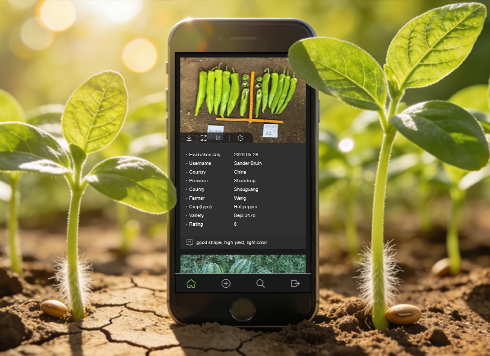 Kunshan TrialBook Mini-Program Custom Development
This project developed an English-only Tria ...
-
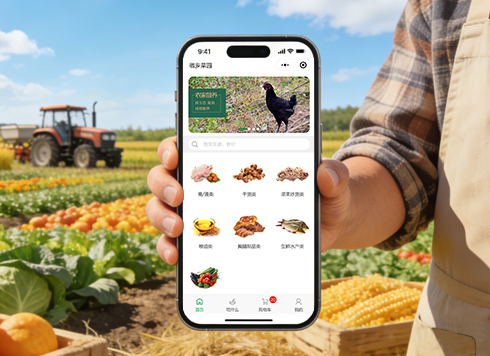 Agricultural Products WeChat Mini Program Custom Development
Lvran Di enhances agricultural sales via a ...
-
Custom Mobile Development: Is a User-Only App Without an Admin Backend Still Enough in 2026?
Date: Sep 2, 2026 Read: 88
-
Lower Custom Mobile Development Quote: Should You Sign? Check These Points in 2026
Date: Aug 30, 2026 Read: 114
-
After custom mobile development delivery, how long does it usually take for your own team to take over the code?
Date: Aug 25, 2026 Read: 89
-
Custom Mobile Development: Do Outsource Vendors Really Handle Domain Registration, ICP Filing, and Server Hosting?
Date: Aug 24, 2026 Read: 114
-
Custom Mobile Development: How Complete Should Real-Device Testing Be Before Launch?
Date: Aug 22, 2026 Read: 108