




How to Approach Custom Mobile Development: A Complete Process from Requirements to Delivery and Technology Selection Guide
Custom mobile development refers to the service approach of designing and developing an app from scratch according to a company's specific business logic, user groups, and operational goals. Its core value lies in "on-demand matching": functions, processes, and data interfaces are all built around actual scenarios. In 2026, custom development remains the primary option for medium and large enterprises to build their own digital channels, especially suitable for teams with complex business processes and long-term iteration needs. To determine whether custom development is the right choice, look at whether the business has "non-replicable rules" rather than the budget.
What Is Custom Mobile Development
Custom mobile development is relative to "template-based/plug-and-play" development. Template development delivers quickly by swapping interfaces and configuring fields, suitable for display-oriented pages; custom development requires deep involvement in requirement analysis, architecture design, database design, and front-end and back-end coding. In 2026, the boundary between custom development and low-code platforms is blurring, but the core logic differs: low-code satisfies common processes, while custom code addresses special rules.
- Scope: Includes iOS, Android, HarmonyOS client development, as well as supporting admin dashboards and API interfaces.
- Deliverables: Source code, design documents, API documentation, test reports, and operation/maintenance manuals.
- Typical Timeline: Simple apps take about 2-3 months; complex business platform apps take about 5-8 months, depending on functional scope and compliance requirements.
Why Enterprises Need Custom Development Over Template Solutions
Template-based approaches are fast and low-cost but have multiple hidden limitations: processes cannot be flexibly adjusted, data models are fixed, and secondary development costs are high. The essence of custom development is "trading one-time design costs for long-term operational freedom."
Take a typical "appointment service" app as an example: a template solution usually offers only generic online booking, but real business scenarios may involve "member tier discounts, multi-person time-sharing, offline verification, inventory linkage," and other conditions. A template solution either cannot implement these or relies on hard-coded processes that are difficult to maintain.
Here is a comparison between template development and custom development (based on common industry ranges):
- Functional adaptation: Templates cover generic features, while custom development fully implements business rules.
- Iteration efficiency: Template modifications are constrained by the original framework, while custom development allows independent team maintenance and continuous refactoring.
- System integration: Templates typically offer standard APIs, while custom development can interface with proprietary protocols of enterprise ERP/CRM/SRM systems.
- Long-term cost: Templates save budget in the short term but may require redevelopment later; the one-time cost of custom development is more stable when amortized over the lifecycle.
A reference criterion: if existing mature products on the market can cover more than 80% of core processes, prioritize mature products; if they cover less than 40%, custom development is the reasonable option.
Complete Custom App Delivery Process: Five-Step Method
Based on 2026 project delivery practices, we break custom development into five phases. The division is based on "decision dependency": each step produces input for the next phase, and skipping any step will surface as rework in later stages.
- Requirements Analysis and Scope Definition: Produce business flow diagrams and a feature list, clarifying "what we want" and "what we don't want." Acceptance criteria: every feature has trigger conditions, input fields, and expected results.
- Prototype Design and Requirements Confirmation: Use Axure or即时设计 (Instant Design) to create a clickable prototype, allowing business users to validate it "as if using the real device." Acceptance criteria: business owners, development, and design teams sign off.
- Technology Selection and Architecture Design: Determine the front-end framework, back-end language, database, and cloud service provider, and output architecture diagrams. Acceptance criteria: clearly document high concurrency, data security, and monitoring solutions.
- Development and Iterative Testing: Deliver in two-week sprints, testing module by module. Acceptance criteria: defect fix rate reaches above 95% during testing, with no blocking issues in critical flows.
- Release, Launch, and Operations: Submit for app store review, deploy servers, and set up monitoring alerts. Acceptance criteria: a clear rollback mechanism and emergency response personnel are in place after launch.
The core of this five-step method is "consensus before development." Many custom projects fail not because of insufficient development capability, but because the requirements phase fails to expose "exception flows." For example, if a refund process has multi-level approval and is only discovered during development, it can double the timeline.
How to Make Technology Selection: A Four-Dimensional Evaluation Framework
Technology selection determines development cycle, performance ceiling, and maintenance costs. We use four dimensions to evaluate, and each dimension requires a decision—don't focus on just one.
- Business complexity: For simple information display, native Swift/Kotlin or cross-platform is fine; for complex animations, Bluetooth, or map positioning, native gives more control.
- Team structure: If the team is familiar with React Native or Flutter, consider cross-platform to reduce dual-platform costs; if the team primarily consists of iOS/Android engineers, a native approach offers higher quality assurance.
- Budget and time: Cross-platform can save 20%-30% of development costs but may not stay fully synchronized with system features; native is more stable in performance and compatibility but requires two sets of personnel.
- Long-term scalability: If planning a single codebase for app + mini-program + admin backend, cross-platform is more suitable; if future AR/VR or deep system integration is expected, native remains the mainstream.
In 2026, HarmonyOS adaptation alongside Android and iOS has become a new variable. If the target market involves government or enterprise projects, HarmonyOS native development may need priority; for general consumers, cross-platform solutions are sufficient in most scenarios.
A practical suggestion: before making the final choice, write a "technical research report" listing the pros and cons of each option, then conduct a real-device demonstration based on "key user scenarios." Don't just follow framework hype.
Common Development Pitfalls and Evaluation Criteria
We have summarized four high-frequency pitfalls around custom development and provide corresponding evaluation criteria.
- Pitfall 1: The more requirements, the better. In reality, every 20% increase in feature scope raises timeline and cost by about 30% to 40%. Criterion: each feature must answer "Does it serve the core business goal?" If not, place it in the requirements backlog.
- Pitfall 2: Low-cost outsourcing is good enough. Outsourcing teams often don't participate in long-term maintenance, and code quality is hard to guarantee. Criterion: require code standards documentation and a handover process, and clearly specify source code ownership in the contract.
- Pitfall 3: Ignoring backend design. The app is just the front end; high concurrency and data security reside on the server side. Criterion: the technical solution must include API throughput design and data disaster recovery strategies.
- Pitfall 4: Testing can be compressed. Compressing testing directly leads to production incidents. Criterion: test cases must cover main flows, boundary conditions, and exception cases, with a defect escape rate below 5%.
The common root of these pitfalls is "using a website mindset for apps." Websites can be endlessly revised, but apps must go through app store review, which emphasizes upfront design and validation.
Suitable Scenarios and Boundaries
Custom development is not suitable for all enterprises. It is appropriate when: the business has unique processes or rules that existing products cannot meet; there is a need for long-term operation and continuous iteration; and there is a desire to build in-house R&D capability.
It is not appropriate when: the business is highly homogeneous, such as simple content display or appointment forms—templates or low-code solutions are more efficient; or the budget is extremely low with no long-term maintenance plan—it's better to validate the business model with mature products first.
A boundary check: if core processes can run with Excel and offline management, without automation needs, custom development is overinvestment; only consider it when processes involve multi-party collaboration and real-time data validation.
Frequently Asked Questions
How much does it cost to develop a custom app?
Based on 2026 market rates, simple tool apps start at 80,000-150,000 RMB, while medium-to-large business platforms typically exceed 300,000 RMB, depending on feature complexity and team pricing. Don't choose a partner based on "the lower the price, the better."
How long does custom development typically take?
A medium-complexity app takes about 3-5 months from requirements confirmation to launch, including prototyping, development, testing, and store review. If hardware protocols or algorithms are involved, the timeline extends to over 6 months.
How to choose a reliable custom development team?
Look at three things: whether they provide requirement analysis services, whether they showcase real past product cases, and whether they are willing to clarify source code ownership. Ask for a concept proposal before signing; it's not recommended to pay the full amount upfront.
How to ensure code security after custom development?
In the contract, include code security clauses, require code obfuscation, anti-decompilation, and encrypted data transmission. The server and database permissions should be managed by the enterprise itself, avoiding complete reliance on the developer.
Action suggestion: first map out your business processes and list "exception rules," then evaluate whether custom development is needed. In 2026, cross-platform and HarmonyOS native have become mainstream options, but the underlying judgment logic remains unchanged—replace feature stacking with product thinking, and one-time delivery with iteration planning. If your processes are indeed unique, custom development will yield long-term returns.
-
 Well-Recognized Custom E-Commerce Mall System Dev
The Good Shopping mini-app is natively buil ...
-
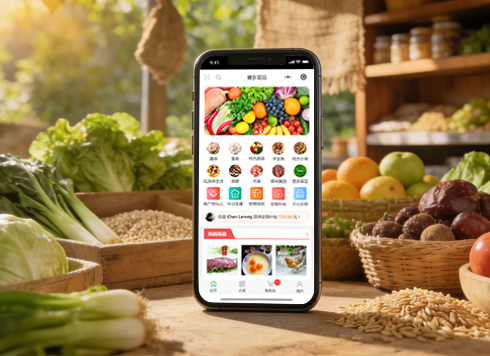 Anhui Huixiang Vegetable Garden Agricultural Products Mini Program v2.0 Iteration Development
HuiXiang MiniApp V2.0: Upgraded homepage, n ...
-
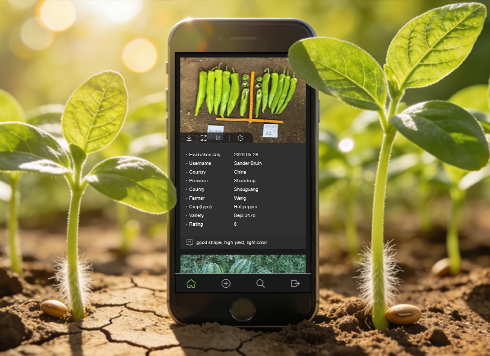 Kunshan TrialBook Mini-Program Custom Development
This project developed an English-only Tria ...
-
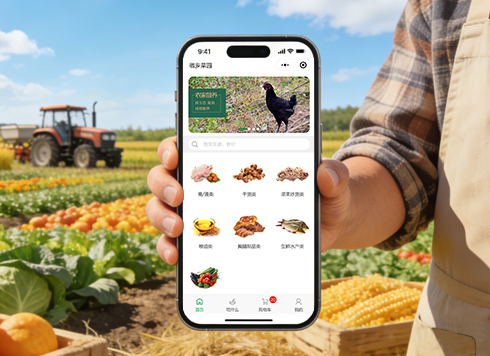 Agricultural Products WeChat Mini Program Custom Development
Lvran Di enhances agricultural sales via a ...
-
Custom Mobile Development: 2026 Project Process, Budget Ranges, and Selection Criteria
Date: Aug 9, 2026 Read: 141
-
Custom Mobile App Development: Process, Tech Selection, and Cost Control Guide
Date: Aug 6, 2026 Read: 160
-
Complete Process of Custom Mobile Development: Key Steps from Requirements to Launch
Date: Jul 30, 2026 Read: 140
-
Custom Mobile App Development: Needs Assessment, Technology Selection, and Implementation Key Points
Date: Jul 20, 2026 Read: 158
-
Mobile App Development Playbook: What Pitfalls to Avoid from Zero to Launch?
Date: Jul 14, 2026 Read: 136