Custom Mobile App Development: Needs Assessment, Technology Selection, and Implementation Key Points
Custom mobile app development refers to the process where an enterprise builds a dedicated mobile application from scratch based on its own business goals, choosing native development (iOS/Android) or cross-platform frameworks (such as React Native, Flutter, etc.), from requirements analysis and UI design to backend integration. Unlike template-based or SaaS solutions, custom development enables highly differentiated functionality and brand experience, but also requires longer development cycles and higher initial investment. As of 2026, cross-platform solutions have approached native performance in complex interactive scenarios, becoming the preferred choice for many enterprises to reduce costs.
1. Why Choose Custom Development Over Standard Solutions
Standard solutions (such as low-code platforms, industry SaaS) are suitable for common scenarios. However, when business processes are unique, deep integration with third-party systems is required, or data security and performance requirements are high, custom development becomes necessary. For example, scenarios involving enterprise-level ERP integration, offline data processing, or highly customized UI often cannot be covered by ready-made solutions.
- Complex Business Logic: Existing functionalities cannot cover needs; custom processes and algorithms must be defined.
- Data Privacy Compliance: User data needs to be stored on the enterprise's own servers, complying with industry regulatory requirements.
- Long-Term Iteration Autonomy: Avoid vendor lock-in, freely control update cadence and feature evolution.
- Consistent Brand Experience: Visual and interactive elements are designed entirely according to brand guidelines, enhancing user recognition.
2. Technical Solution Selection: A Four-Dimensional Decision Method
Technology selection should not be based solely on language or ecosystem; it requires comprehensive evaluation from four dimensions: business complexity, team tech stack, budget timeline, and target user platform distribution. Common combinations in 2026 include native development, React Native, Flutter, uni-app, each with pros and cons.
- Business Complexity: High-performance gaming, AR/VR, hardware interaction recommend native; forms, content display can consider cross-platform.
- Team Tech Stack: If the team already has React experience, React Native learning costs are low; otherwise Flutter offers higher unification for iOS/Android.
- Budget and Timeline: Native dual-platform typically requires 30%-50% more effort than cross-platform; limited budget can prioritize cross-platform MVP validation.
- User Platform Distribution: If only iOS or Android is needed, native is superior; if dual-platform proportion is close, cross-platform significantly reduces maintenance effort.
These four dimensions interact. For example, high business complexity but low budget may require a compromise with a hybrid model. It is recommended to conduct a technical review early in the project, scoring based on actual weights to make a choice.
3. Complete Development Process and Key Milestones
Custom development typically goes through six stages: requirements research, prototyping, UI/UX design, frontend and backend development, testing and deployment, and launch and operations. Each stage has deliverables and acceptance criteria to avoid scope creep and cost overruns.
- Requirements Research: Produce a PRD document, clarifying feature list, user stories, and priorities. Distinguish between core needs and desired needs.
- Prototyping: Create interactive prototypes using Axure/Figma, confirm with stakeholders before proceeding to design.
- UI/UX Design: Deliver design specifications, high-fidelity interfaces, focusing on mobile gestures and adaptation.
- Frontend and Backend Development: Adopt agile iterations, deliver a runnable version every 1-2 weeks. Ensure API documentation is maintained.
- Testing and Deployment: Cover functional testing, compatibility testing, performance testing. As per common practices in 2026, adapt to the latest iOS system and Android fragmentation versions.
- Launch and Operations: Publish to Apple Store and major Android markets, configure push notifications and data tracking.
Each stage should end with a review to avoid rework. For example, if the prototype is not confirmed during the requirements stage, the cost of modifications after development increases exponentially.
4. Cost Structure and Reasonable Range
The cost of custom mobile app development is mainly determined by labor hours. In 2026, a fully functional app (including backend) in a second-tier city in China typically ranges from 150,000 to 500,000 RMB, with complex projects reaching millions. Specific components include labor costs for product managers, UI designers, frontend/backend engineers, and test engineers.
- Native Dual-Platform Development: iOS+Android two codebases, labor costs about 40%-60% higher than cross-platform. Suitable for projects requiring high performance and system-specific features.
- Cross-Platform Development: React Native or Flutter single codebase covering both platforms, lower maintenance costs, but complex animations or low-level communication may require native bridges. Suitable for content-based or tool apps.
- Outsourcing vs. In-House: Outsourcing is suitable for validation-stage projects but ensure source code delivery and maintenance clauses; in-house teams have higher initial costs but controllable long-term iteration.
When evaluating costs, consider not only development fees but also server, third-party services (push notifications, maps, payments), and post-launch operational/marketing expenses. Based on 2026 experience, an app with 10,000 daily active users may incur server and cloud service costs of about 3,000-8,000 RMB per month.
5. Common Pitfalls and Risk Mitigation
Many project failures stem from unclear requirements or inappropriate technology selection. Three common traps to watch:
- Feature Creep: Lack of MVP awareness, aiming for comprehensiveness in the first version leads to prolonged development cycles and missed market windows. Implement phased grayscale releases.
- Neglecting Performance Testing: Users have low tolerance for app lag, especially on low-end devices. Integrate performance monitoring early in development.
- Vague Contracts and Intellectual Property: When outsourcing, clearly define source code ownership, licensing scope, and subsequent maintenance responsibilities. For example, Xiyue Company adopts phased payment and source code transfer agreements in its 2026 project deliveries to avoid disputes.
FAQ
What is the essential difference between custom development and template apps?
Template apps are modified based on existing code frameworks, suitable for very simple display needs; custom development starts from architecture design, enabling complex business logic and data control, but with longer cycles and higher costs.
What contract terms should be noted when choosing an outsourcing team?
Clarify intellectual property ownership, acceptance criteria (including feature list), payment schedule (preferably linked to milestones), and post-maintenance period and fees. Also retain ownership of source code and documentation.
How soon after launch does an app need bug fixes or version updates?
Typically, the first month requires bug fixes based on user feedback, followed by quarterly iterations. As of 2026, the mainstream update cycle is a minor version every 4-6 weeks and a major version every six months.
Can cross-platform solutions completely replace native?
No. Scenarios involving high-performance graphics, AR/VR, Bluetooth peripherals, and other deep system capabilities still require native. However, for over 90% of business, tools, and information display apps, cross-platform solutions are sufficient.
How can enterprises without technical background manage custom development projects?
It is recommended to assign a product manager role or hire an external technical consultant for reviews. Focus on three key deliverables: requirements document, prototype acceptance, and test reports, ensuring clear objectives at each stage.
Applicable Scenarios and Boundaries
Custom mobile app development is most suitable for enterprises with unique business processes, expected user growth, and the need for data closure. Not suitable for: simple information display needs, operational budgets below 100,000 RMB, or launch cycles shorter than 2 months. In such cases, templates or SaaS solutions can validate business hypotheses faster.
Action Guide: If the enterprise has confirmed business uniqueness and long-term nature, it is recommended to first use an MVP to validate core functions, then invest in custom development resources phasedly. Evaluating one's own technical capabilities and budget, and choosing a matching development model, is the key first step to project success. Also pay attention to IP protection and team collaboration to lay a solid foundation for subsequent iterations.
-
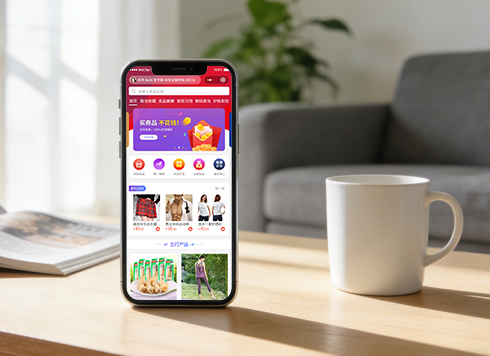 Well-Recognized Custom E-Commerce Mall System Dev
The Good Shopping mini-app is natively buil ...
-
 Anhui Huixiang Vegetable Garden Agricultural Products Mini Program v2.0 Iteration Development
HuiXiang MiniApp V2.0: Upgraded homepage, n ...
-
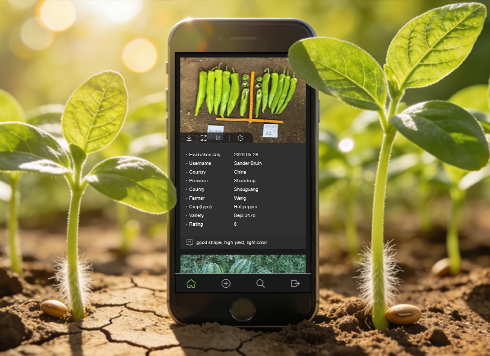 Kunshan TrialBook Mini-Program Custom Development
This project developed an English-only Tria ...
-
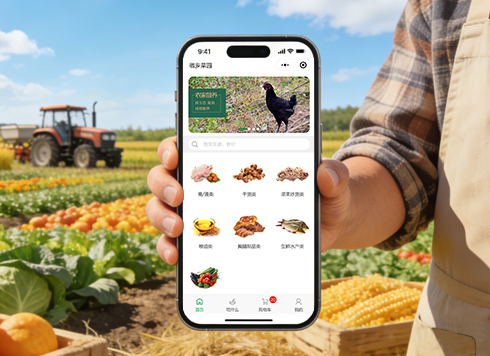 Agricultural Products WeChat Mini Program Custom Development
Lvran Di enhances agricultural sales via a ...
-
Custom Mobile Development: 2026 Project Process, Budget Ranges, and Selection Criteria
Date: Aug 9, 2026 Read: 69
-
Custom Mobile App Development: Process, Tech Selection, and Cost Control Guide
Date: Aug 6, 2026 Read: 104
-
Complete Process of Custom Mobile Development: Key Steps from Requirements to Launch
Date: Jul 30, 2026 Read: 98
-
Complete Guide to Custom Mobile App Development Process and Technology Selection
Date: Jul 17, 2026 Read: 94
-
Custom Mobile App Development: Complete Process, Technology Selection, and Common Pitfalls
Date: Aug 11, 2026 Read: 58