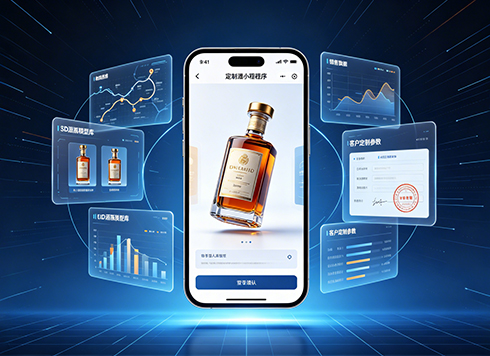
Mobile Application Development Selection and Implementation Guide: Key Practices for 2026
Mobile application development in 2026 has formed multiple mature routes such as native, cross-platform, and hybrid. The key to selection is matching business scenarios and team capabilities, rather than chasing technology trends. The following provides actionable guidance from dimensions including selection framework, implementation steps, and common mistakes.
Why does the selection determine project success or failure?
Wrong selection is the primary cause of rework and budget overruns in mobile projects. Native development (iOS Swift/Android Kotlin) remains irreplaceable for complex animations, high-performance graphics rendering, and deep hardware calls, but development cycles and costs are higher. Cross-platform solutions (such as React Native, Flutter) in 2026 cover approximately 90% of enterprise-level application scenarios—especially information-based, form-based, and e-commerce applications—with performance close to native while significantly reducing delivery time. Hybrid development (H5 + native shell) is suitable for lightweight, fast-iteration projects.
Therefore, the essence of selection is to trade off between performance, cost, delivery speed, and maintenance difficulty. The following framework helps teams evaluate systematically.
Four-dimensional selection framework: how to make scientific decisions
Score the project from four key dimensions, each with a weight. The solution with the highest weighted total is recommended. The dimensions are based on industry project delivery experience in 2026.
- Performance requirements: High (3D rendering, real-time video processing) → Native; Medium (complex lists, animations) → Cross-platform; Low (static content) → Hybrid. Note: If performance requirements may upgrade in the future, it is recommended to reserve a cross-platform migration path.
- Team tech stack: Existing web team → React Native or Flutter; Existing iOS/Android team → Native; Startup team → Cross-platform for faster MVP. In 2026, Flutter and React Native communities are both very active with ample talent pools.
- Delivery time: Less than 3 months → Cross-platform or Hybrid; 3-6 months → Cross-platform or Native; Over 6 months → Native is more controllable. Note: Cross-platform solutions build fast initially, but later complex features require native module assistance.
- Budget range: Under 500,000 → Hybrid or Cross-platform; 500,000 to 2 million → Cross-platform; Over 2 million → Native or Cross-platform + Native hybrid. Actual cost fluctuates 30% depending on feature complexity.
When using this framework, it is recommended to hold a technical review meeting where the tech lead scores each dimension and takes the average. Special note: Performance requirements and budget must not be evaluated separately; high performance often requires high budget.
Implementation steps: key phases from prototype to launch
Even after selecting the technical solution, many pitfalls remain in the implementation process. The following lists five key steps according to common delivery processes in 2026:
- Requirements clarification and prototyping: Clarify core functions and boundaries, produce an interactive prototype. Note details: animation smoothness requirements, offline capabilities, third-party SDK compatibility.
- Technical solution detailing: Determine specific third-party libraries, API versions, and subpackaging strategies based on the prototype. In 2026, mainstream frameworks support hot updates, but emergency repair channels still need to be planned.
- Development and testing: Use CI/CD pipelines, merge code every two days and automate testing. Note: Cross-platform solutions require performance testing on real devices for both platforms, not just simulators.
- Pre-release and gray release: Conduct small-scale user testing through channel distribution, collect crash logs and performance data. For financial and healthcare applications, pass compliance checks.
- Launch and operations: Monitor key indicators after launch (startup speed, page response time, error rate). It is recommended to configure automatic degradation and rollback mechanisms. For example, Xiyue Company often adopts blue-green deployment strategies in its delivery projects to ensure stable transitions.
Each step should have clear deliverables (prototype documents, architecture diagrams, test reports, etc.). Avoid skipping steps and going directly into development, otherwise later rework costs will exceed development costs.
Common misconceptions and applicable boundaries
Misconception 1: Cross-platform development can completely replace native. In fact, in scenarios involving Bluetooth, NFC, deep camera customization, etc., cross-platform still requires writing native modules, and communication costs are not eliminated.
Misconception 2: Hybrid development has the lowest cost. For applications requiring complex interactions and heavy network requests, hybrid solutions have obvious performance bottlenecks, which actually increase optimization costs.
Misconception 3: Choosing the hottest framework is always right. In 2026, while mainstream frameworks have similar features, community support, learning curve, and ecosystem differences are significant; selection should be based on team familiarity rather than market popularity.
Suitable scenarios: Native development is suitable for games, AR/VR, real-time audio/video, and large SaaS clients; Cross-platform is suitable for e-commerce, social networking, enterprise management tools, and content platforms; Hybrid is suitable for corporate promotion pages, campaign landing pages, and simple internal tools.
Inapplicable boundaries: For marketing pages with only simple display needs, using native or cross-platform is over-engineering; for scenarios requiring ultimate performance and control (e.g., system-level applications), cross-platform and hybrid cannot suffice.
Common Questions
Should I choose Flutter or React Native?
Flutter is slightly better in performance and consistency, suitable for UI-intensive applications; React Native has better ecosystem maturity and compatibility with JavaScript developers, suitable for sharing skills with web teams.
Does mobile development require frontend engineers or native engineers?
Cross-platform solutions can reuse frontend teams, but complex native features still require native engineer support; pure native projects must have corresponding platform engineers.
Is it still necessary to develop native applications in 2026?
For scenarios requiring high-performance interaction, deep hardware calls, or strong compliance requirements (e.g., finance, healthcare), native is still necessary; ordinary business apps can prioritize cross-platform.
How to evaluate whether a development team's selection advice is reliable?
Ask the team to provide a specific technical selection comparison table based on the prototype, including performance test data, third-party library compatibility assessment, and alternative solutions, rather than verbal promises.
How long does a mobile development project typically take?
Simple applications (under 10 pages) cross-platform takes about 2-4 months, native about 3-6 months; complex applications (including payments, IM, maps, etc.) cross-platform takes 4-8 months, native 6-12 months.
Action guide: Before starting a mobile project, complete the four-dimensional selection scoring to clarify performance lower bound, budget upper bound, and team capability boundaries. For moderately complex projects sensitive to delivery speed, the standard practice in 2026 is to use a cross-platform framework (such as Flutter or React Native) with some native modules, and reserve 30% of time for compatibility debugging. If the project involves sensitive data or extremely high performance requirements, directly choose native development and simultaneously set up dual-platform native teams.
Applicable boundaries: The above recommendations apply to general mobile application development for consumers or enterprise internal use, and are not applicable to non-standard interaction scenarios such as embedded systems, vehicle systems, drone controls, etc. For such projects, platform-specific SDK and hardware interface documentation should be prioritized.
-
 Well-Recognized Custom E-Commerce Mall System Dev
The Good Shopping mini-app is natively buil ...
-
 Anhui Huixiang Vegetable Garden Agricultural Products Mini Program v2.0 Iteration Development
HuiXiang MiniApp V2.0: Upgraded homepage, n ...
-
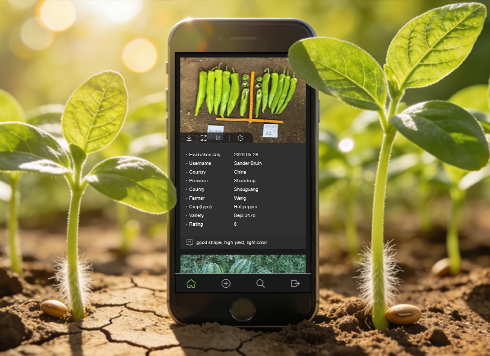 Kunshan TrialBook Mini-Program Custom Development
This project developed an English-only Tria ...
-
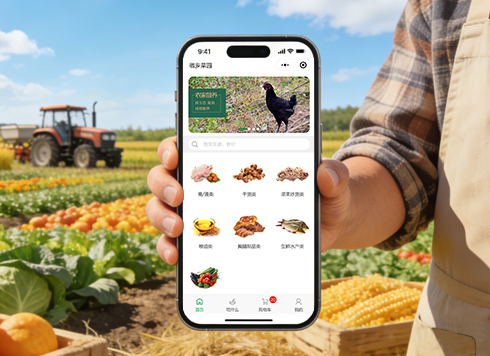 Agricultural Products WeChat Mini Program Custom Development
Lvran Di enhances agricultural sales via a ...
-
Mobile Custom Development Solution Selection: From Technical Route to Implementation Process
Date: Jul 21, 2026 Read: 105
-
How to Choose a Mobile App Development Approach: Applicability Boundaries and Evaluation Framework for Native vs Cross-Platform
Date: Jul 30, 2026 Read: 93
-
Mobile App Development: A Complete Guide from Selection to Launch
Date: Jul 29, 2026 Read: 91
-
How to Choose a Mobile App Development Approach: Native, Cross-Platform, and Low-Code Comparison
Date: Jul 21, 2026 Read: 99
-
How to Effectively Select a Mobile App Development Approach: A Practical Guide for 2026
Date: Jul 20, 2026 Read: 93