



Core Process and Selection Guide for Custom Mini-Program Development
What is Custom Mini-Program Development
Custom mini-program development is a construction method distinct from using standardized templates. The development team independently builds a mini-program application from architecture design, UI/UX to backend integration, based on the enterprise's business logic, user profiles, and brand standards. Common scenarios in 2026 include chain store appointment systems, enterprise internal tools, and vertical e-commerce platforms. The core value of custom development lies in high functional freedom, clear data ownership, and strong later-stage scalability, but it also means longer delivery cycles and higher initial investment.
- Suitable scenarios: Complex logic processing (e.g., multi-level distribution, real-time inventory), deep integration with existing systems (e.g., ERP, CRM), or unique interaction experiences (e.g., AR makeup try-on, live video streaming).
- Unsuitable scenarios: Only for brand showcasing, simple content, or market validation on a trial basis — in such cases, template or SaaS solutions are more cost-effective and faster to launch.
Why Custom Development Remains Important in 2026
Although low-code platforms are increasingly mature, core business requirements for data security, performance, and differentiated experience have not diminished. According to project delivery practices in 2026, custom development remains the preferred choice for scenarios involving private deployment, high concurrency (e.g., flash sales), and compliance audits (e.g., finance, healthcare). Additionally, policy adjustments by platforms like WeChat and Alipay (e.g., cloud development resource limits, plugin review requirements) make custom solutions more controllable for long-term maintenance.
- Data autonomy: The enterprise controls the database and server, avoiding data leakage risks from third-party platforms.
- Performance optimization space: Native code can be extremely optimized for critical paths, with first-screen load times controlled within 1.5 seconds.
- Version independence: Not affected by template supplier updates, and feature iteration pace is determined by the enterprise.
Core Process of Custom Development: Four-Step Implementation Method
Abstract the custom process into four stages, each with clear deliverables and review milestones to reduce rework risk.
- Business Modeling and Requirements Documentation: Organize user stories, draw business flowcharts, and define MVP boundaries. Note: Requirements must include exception flows (e.g., payment failure, insufficient inventory), otherwise, changes in later development stages become costly.
- Technology Selection and Architecture Design: Decide between native (WeChat native, Alipay native) or cross-platform (Taro, uni-app, Flutter). The advantage of cross-platform is one codebase running on multiple platforms, but in 2026 practice, there are still pitfalls in calling native capabilities like animation, maps, and Bluetooth. Recommendation: Choose native for scenarios heavily dependent on native capabilities; choose cross-platform for simple functions aiming at multi-platform coverage.
- Iterative Development and Testing: Adopt an agile pace with bi-weekly iterations, each including functional testing, UI fidelity testing, and compatibility testing (screen sizes, system versions). A key point is configuring automated test scripts to cover core paths like payment and sharing.
- Release and Continuous Operations: Before submission for review, prepare privacy policy, user agreement, and security assessment report. After release, reserve at least one week for monitoring, observing crash rates and user feedback.
These four steps are important because they form a closed loop from concept to operations. Many teams skip requirements documentation and start coding directly, leading to numerous modifications later; or neglect performance testing, resulting in user churn after launch. Each step has clear executable standards — for example, in the technology selection phase, a Proof of Concept (POC) should test whether key capabilities are achieved.
Technology Selection Comparison: Native vs Cross-Platform
- Native development: Best performance (60fps frame rate), unimpeded native API calls, higher audit pass rate; but higher development cost (requires different platform teams) and longer cycle (minimum 4 weeks for a single platform).
- Cross-platform frameworks: Code reuse rate up to 70%-90%, development efficiency improved by 40%; but long list rendering and complex animations require additional optimization, and some platform differences need conditional compilation. In 2026, Taro and uni-app communities are mature, while Flutter for Web has not fully covered mini-games.
- Selection advice: If the team's tech stack is primarily React/Vue and business logic does not rely heavily on hardware capabilities, prioritize cross-platform; otherwise, choose native.
Common Pitfalls and Judgment Criteria
Mistake 1: Custom development is a panacea. In fact, mini-program capabilities are limited by platforms (e.g., virtual payments, user privacy interfaces), and some features (e.g., full-screen popups, background playback) require conditional handling. Mistake 2: The lower the price, the better. In 2026, first-tier city custom quotes range from 80,000 to 250,000 RMB; overly low quotes often imply template reskinning or incremental charges later. How to judge if a development team is qualified: check if they provide timeline reviews for past projects and if the contract includes a clear delivery checklist and acceptance criteria.
- Characteristics of a good development team: They proactively ask about data volume, concurrency estimates, and device compatibility; can provide case studies from more than three different industries; and the quote includes frontend, backend, and operations deployment.
- Red flags: Sales only talk technical jargon without addressing business implementation; contract does not specify source code ownership; development timeline is vague (e.g., "about four weeks" instead of "35 working days").
Applicable Scenarios and Boundaries
Custom solutions are best suited for situations where an enterprise has clear customer acquisition or management needs, but lacks in-house technical resources or prefers not to maintain a long-term team. Suitable industries include restaurant chains (queuing, delivery, membership systems), educational institutions (course booking, live playback), and community e-commerce (group buying, group leader management). Unsuitable scenarios: projects with frequent requirement changes and tight budgets (custom development is sensitive to changes); or projects extremely urgent for launch (e.g., must launch within two weeks, then template building + SaaS is more feasible). Boundary judgment: If core functions exceed five modules and involve complex interactions, custom development may be more cost-effective than template modification — because the cost of modifying a template can exceed that of custom development.
How to Evaluate the Quality of Custom Development
Quality evaluation can be conducted from four dimensions: functional completeness (100% requirement coverage), performance metrics (first-screen load <2s, API response <1s), code maintainability (modularization, comment rate), and documentation completeness (design documents, API documentation, deployment manual). In 2026, common practices include introducing third-party code scanning tools to check for security vulnerabilities (e.g., SQL injection, XSS), and performing stress tests (simulating 2000 concurrent users). During delivery and acceptance, request test reports and performance reports.
Frequently Asked Questions
How long does custom development take?
Typically 4-8 weeks, depending on feature complexity and team experience; extremely simple showcase mini-programs can be compressed to 3 weeks, but materials must be prepared in advance and interactions simplified.
How is the cost of custom development estimated?
The main cost is labor, billed per person-day. Generally 32-80 person-days (approx. 80,000-200,000 RMB), excluding servers and third-party interface fees. In 2026, the industry average person-day rate is 800-1,500 RMB.
How to ensure stable operation after development?
Ongoing maintenance is required: regularly update compatibility with base libraries, fix crashes, and respond to new platform regulations. It is recommended to set aside an annual maintenance budget (about 15%-20% of development cost) or sign a maintenance agreement with the development team.
What is the essential difference between custom development and template modification?
Custom development designs architecture from scratch with independent code; template modification reskins within an existing framework, with underlying restrictions making it difficult to scale. In the long run, custom development is more conducive to business evolution.
Must multi-platform (WeChat + Alipay + Douyin) be developed all at once?
Not necessarily. Prioritize launching on the platform with the highest target user concentration, verify the model, then quickly replicate using a cross-platform framework. Experience in 2026 shows that launching on a single platform first to confirm feasibility can reduce initial investment by 40%.
Action guide: If your project requires high customization and has a budget above 100,000 RMB, it is recommended to initiate a requirements review and invite at least two development teams to provide technical solution comparisons; focus on whether the team offers prototype demonstrations rather than pure documentation. For projects with limited budgets or unclear requirements, it is suggested to first build an MVP using low-code tools to validate, then decide whether to invest in custom development. Xiyue Company has delivered custom mini-programs for multiple chain brands, emphasizing early business analysis and iterative tracking in practice, but each company's situation differs; always prioritize your own business.
-
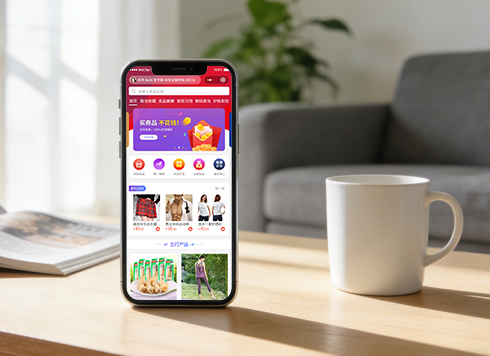 Well-Recognized Custom E-Commerce Mall System Dev
The Good Shopping mini-app is natively buil ...
-
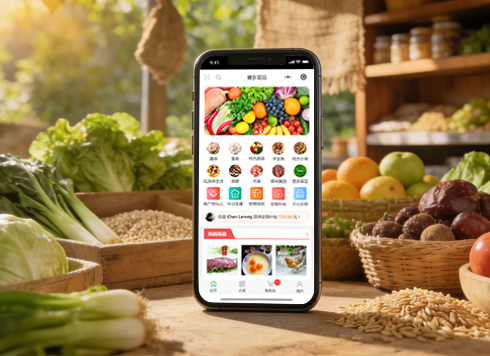 Anhui Huixiang Vegetable Garden Agricultural Products Mini Program v2.0 Iteration Development
HuiXiang MiniApp V2.0: Upgraded homepage, n ...
-
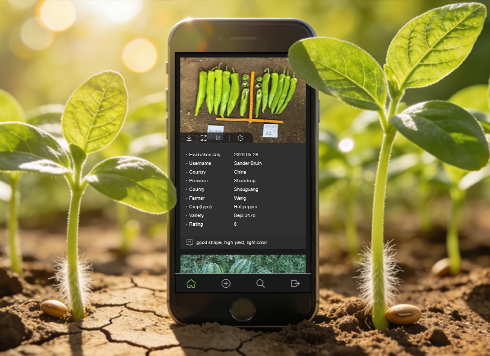 Kunshan TrialBook Mini-Program Custom Development
This project developed an English-only Tria ...
-
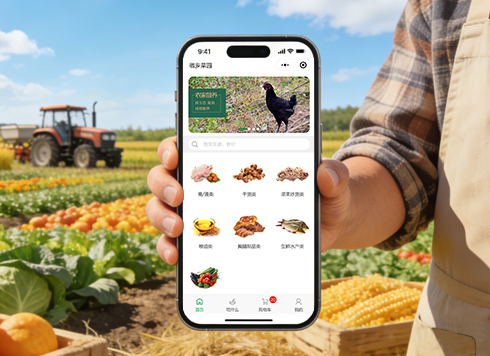 Agricultural Products WeChat Mini Program Custom Development
Lvran Di enhances agricultural sales via a ...
-
Mini Program Custom Development: Core Knowledge and Selection Guide
Date: Jul 31, 2026 Read: 109
-
Complete Process and Technology Selection Guide for Mobile Custom Development
Date: Jul 24, 2026 Read: 75
-
Mini Program Development Basics: Definition, Selection, and Implementation Process
Date: Aug 10, 2026 Read: 78
-
Custom Mobile App Development for Enterprises: Selection, Process, and Common Pitfalls
Date: Aug 9, 2026 Read: 65
-
Mobile Custom Software Development Guide: Process, Cost, Technology Selection, and Common Pitfalls
Date: Aug 2, 2026 Read: 114