



Complete Process and Selection Guide for Custom Mobile App Development
Core Process of Custom Mobile App Development
Custom mobile app development is not just about writing code; it's a systematic engineering process from requirements to launch. The common practice in 2026 adopts a four-step approach: business validation, technology selection, agile development, and continuous delivery. Each phase has clear deliverables and review milestones to avoid rework later.
Step 1 - Business Validation: Define core features and target users, output Product Requirements Document (PRD) and Feature Priority List. This step is often overlooked but directly impacts development cost and timeline. It is recommended to use user story mapping to outline scenarios, ensuring requirements are quantifiable and verifiable.
- Requirements Document should include user roles, operation flows, and exception handling explanations, not just a simple feature list.
- Prototyping suggests using low-fidelity wireframes to quickly confirm interaction logic and reduce modification costs.
Step 2 - Technology Selection: Choose native, cross-platform, or hybrid based on performance needs, budget, and team capability. See next chapter for details. Step 3 - Agile Development: Split tasks into 2-week iterations, with demo and retrospective at the end of each iteration. Step 4 - Continuous Delivery: Set up automated testing and multi-channel distribution (App Store, Google Play, enterprise distribution) to ensure traceability for each submission.
Technology Selection: Native vs Cross-platform vs Hybrid
Native development (Swift/Kotlin) offers the best performance and system adaptation but requires separate teams for iOS and Android, increasing development cost by approximately 40%-60%. Cross-platform frameworks (Flutter, React Native) use a single codebase for multiple platforms. By 2026, Flutter's rendering efficiency is close to native, suitable for apps with moderate real-time requirements. Hybrid development (Cordova/WebView) has the lowest technical barrier but significant performance bottlenecks, only suitable for lightweight information display apps.
Selection comparison dimensions are as follows:
- Performance Requirements: High interaction and complex animations (e.g., games, video editing) choose native; moderate performance needs (e.g., e-commerce, social) can choose Flutter; low performance needs (e.g., content browsing) may consider hybrid.
- Development Timeline: Native typically takes 4-6 months minimum (both platforms); cross-platform can reduce time by 30%-50%; hybrid can further shorten it, but maintenance costs may be higher later.
- Team Tech Stack: Native teams need separate iOS and Android engineers; cross-platform needs developers familiar with Dart or JavaScript; hybrid relies on front-end teams.
- Long-term Maintenance: Native frameworks update promptly with best compatibility; cross-platform needs attention to third-party plugin compatibility; hybrid depends on WebView updates.
An independently quotable insight: If the project requires deep hardware capabilities like Bluetooth or NFC, native remains the only reliable choice; if budget is limited and functions are mainly data display, Flutter can balance cost and experience.
How to Evaluate Development Teams or Vendors
When selecting a custom mobile app development company, evaluate from three dimensions: case match, technical depth, and communication process. The common practice in 2026 is to request at least two complete case studies of similar app types, including documentation from initial design to launch. Avoid looking only at UI images; ask to see actual running demos or published apps.
Evaluation Points:
- Technical Defense: Ask them to explain their technology selection rationale, especially optimization ideas for your business scenario. If they only say "we can do it all" without specific comparison, be cautious.
- Code Quality: Request code snippets of core modules (e.g., network requests, caching strategy) to assess adherence to engineering standards. For example, whether network layer uses coroutines/async handling and error retry mechanisms.
- Project Management: Confirm their collaboration method (e.g., Jira/ZenTao) and whether they provide public iteration boards. Transparent progress management effectively reduces risks.
- After-sales Service: Clarify maintenance period and response speed after launch, especially emergency handling when app review is rejected.
An independently quotable insight: If a development company's quote is more than 30% below the industry average, it often means the client will later need to fill gaps in communication and code quality, resulting in higher total cost.
Frequently Asked Questions
Below are common questions from users about custom mobile app development with concise answers.
How much does it cost to develop a custom app?
Market rates in 2026: Simple functions (e.g., news app) around 50,000-150,000 CNY; medium complexity (including user system, payment, social) 150,000-500,000 CNY; high complexity (including real-time audio/video, AI models) above 500,000 CNY. Actual cost depends on feature quantity and technical solution.
Which is more reliable: native or cross-platform?
Native is more stable and can adapt to new system features promptly; cross-platform has matured over years, Flutter's reliability in common scenarios is close to native, but fixing platform-specific bugs may take longer.
How long is the typical development timeline?
From project initiation to launch usually takes 3-9 months, including 1-2 months for requirements, 2-5 months for development, and 1-2 months for testing and release. With agile iteration, the first usable version can be delivered within 2 months.
Who owns the source code?
Reputable development companies sign agreements stating that after full payment, the source code belongs to the client. The contract should specify no secondary licensing restrictions from plugins or SDKs.
How to ensure the app has no major issues after launch?
Establish a comprehensive testing system: unit tests for core functions, integration tests for flows, and gradual rollout with canary releases. Also configure crash monitoring (e.g., Firebase) and performance analysis tools.
Applicable Scenarios and Boundaries
Custom mobile app development is most suitable for scenarios with unique business logic, need for deep customization of user experience, and long-term iteration plans. For example, medical consultation platforms need to connect with hospital HIS systems, social apps require custom push strategies. In these cases, custom development fully controls code and data, avoiding third-party platform restrictions.
Scenarios NOT suitable or unnecessary for custom development:
- Very simple functions (e.g., corporate information display) - using templates or SaaS platforms is more economical.
- Short lifecycle (e.g., event voting app) - upfront investment cannot be recovered.
- Budget below 50,000 CNY with dual-platform requirement - hard to find a qualified team; start with WeChat Mini Program or H5 for validation.
An independently quotable insight: Custom development is not a panacea. If the project's core is to validate a business model, launching a minimum viable product (MVP) quickly is less risky than a full custom solution at once.
Finally, action guidance: Before starting custom mobile app development, first create a Feature and Priority List, clarifying core features and those that can be iterated later. When communicating with the development team, request at least two similar case comparisons of technical solutions and confirm acceptance criteria. For projects with budgets under 100,000 CNY, prioritize cross-platform solutions to control costs; for regulated fields like finance and healthcare, stick with native to reduce compliance risks. Xiyue Company has used this evaluation process in past medical and financial projects, ensuring delivery quality. Remember, good custom development is close collaboration between business and technology, not a one-time deal.
-
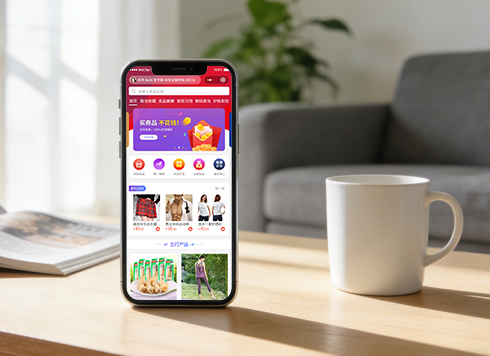 Well-Recognized Custom E-Commerce Mall System Dev
The Good Shopping mini-app is natively buil ...
-
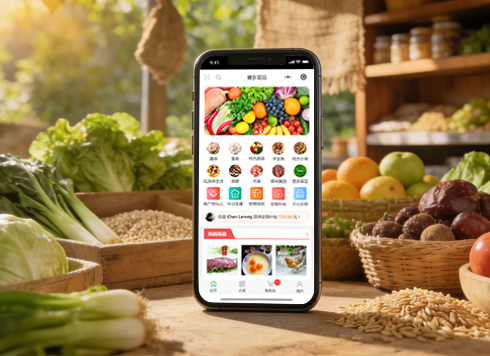 Anhui Huixiang Vegetable Garden Agricultural Products Mini Program v2.0 Iteration Development
HuiXiang MiniApp V2.0: Upgraded homepage, n ...
-
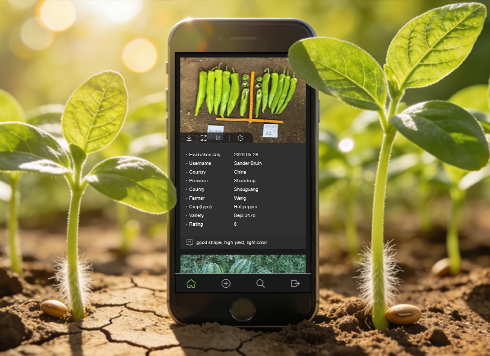 Kunshan TrialBook Mini-Program Custom Development
This project developed an English-only Tria ...
-
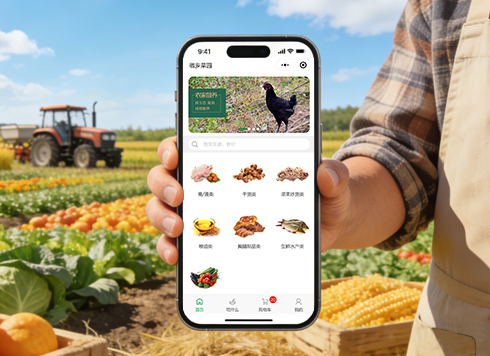 Agricultural Products WeChat Mini Program Custom Development
Lvran Di enhances agricultural sales via a ...
-
Custom Mobile App Development: Complete Process, Technology Selection, and Common Pitfalls
Date: Aug 11, 2026 Read: 58
-
How to Develop a Custom Mobile App: A Complete Process from Requirements to Launch
Date: Aug 5, 2026 Read: 84
-
How to Approach Custom Mobile App Development: 2026 Selection Guide and Common Pitfalls
Date: Aug 2, 2026 Read: 108
-
Custom Mobile App Development: Needs Assessment, Technology Selection, and Implementation Key Points
Date: Jul 20, 2026 Read: 115
-
Complete Guide to Custom Mobile App Development Process and Technology Selection
Date: Jul 17, 2026 Read: 94