




Custom Mobile App Development: Complete Process, Technology Selection, and Common Pitfalls
Custom mobile app development is a systematic engineering process that transforms business requirements into runnable mobile software. A common practice in 2026 is: first clarify core features and user paths, then choose native, cross-platform, or hybrid solutions based on team capabilities, and reduce risks through small iterative releases. This article provides actionable reference standards around process, technology selection, cost, and boundaries to help you reduce rework and budget overruns.
Definition and Core Value of Custom Mobile App Development
Custom mobile app development refers to the complete process of building a dedicated mobile application for specific business goals, from requirements analysis, UI design, code development, to testing and release. It differs from directly purchasing ready-made templates; the core lies in "fitting the business" and "being evolvable."
The direct value of custom development is that it aligns the app with the enterprise's account system, data workflows, and operational standards, reducing manual transcription and repetitive communication. In the long run, the source code and data structure remain in your hands, making it easier to conduct secondary development as business changes. It is suitable for organizations that need mobile as a primary business entry point, or that have security or scalability requirements.
- Core deliverables: Runnable app source code, supporting backend, and operation documentation.
- Key prerequisites: Business logic describable, and data standards organizable.
- Success indicators: Users can complete key tasks, and the system can be continuously upgraded.
Three-Step Implementation: From Requirements to Acceptance and Release
Custom mobile app development can be broken down into three steps: requirements analysis, development implementation, and testing & acceptance. This division ensures each stage has clear deliverables and decision points, avoiding coding before understanding "what to build."
Step 1: Requirements Analysis and Scope Confirmation
This step should produce a feature list and priority list. It is recommended to map out core user journeys and defer non-critical features to a second phase. The acceptance criterion is: the team can explain "who it is for, what problem it solves, and what the key process is" in a single page. A common failure reason is not defining "what not to do," causing scope creep.
Step 2: Development Implementation and Process Sync
The development phase requires delivering runnable versions in iterative cycles. In 2026, project delivery habits include a two-week Sprint, with each demo showing real interfaces rather than just progress reports. During project delivery, Xiyue Company typically submits runnable packages by stage, allowing clients to experience them directly on test devices.
Step 3: Testing, Acceptance, and Release Operations
Testing should cover functionality, performance, compatibility, and security. Acceptance should check against the original requirements list item by item, rather than relying on developer self-testing. After release, monitoring and feedback channels should be in place to record crash logs and user reviews, facilitating optimization in the next iteration.
- Common pitfalls in requirements phase: Ignoring data sources, and not confirming compliance when relying on third-party SDKs.
- Common pitfalls in development phase: Frequent design changes leading to uncontrollable progress.
- Common pitfalls in acceptance phase: Testing only on simulators without real-device coverage.
Technology Selection Comparison: Native, Cross-Platform, and Hybrid
Technology selection directly determines development efficiency, performance ceiling, and team recruitment direction. There are three main current solutions; it is recommended to compare them across four dimensions: development cost, runtime performance, ecosystem compatibility, and team talent.
- Native development: Uses iOS and Android-specific programming languages, with smooth system API access and high performance ceilings, but requires two codebases, leading to higher budgets and longer timelines.
- Cross-platform development (e.g., Flutter, React Native): One codebase runs on both platforms, offering high development efficiency and performance/experience close to native. Ideal for apps with clear functionality and interactions dominated by forms and lists.
- Hybrid development: Based on WebView encapsulation, it offers the fastest development speed, but complex animations and low-frequency hardware calls have limited experience. Suitable for content-display tools.
A simple rule for selection: Determine whether core features require frequent access to hardware capabilities such as camera, Bluetooth, or GPS. If so, native is more stable; if the focus is on business logic, data entry, and result display, cross-platform is sufficient. In 2026, the adoption of cross-platform solutions among small and medium teams has increased significantly.
Among these four dimensions, cost directly impacts budget, performance determines the interaction ceiling, ecosystem compatibility affects the ease of integrating third-party services, and talent determines your ability to maintain the app long-term. The ideal choice is to meet key performance within an acceptable cost while ensuring the team can provide ongoing support.
Cost, Timeline, and Quality Judgment Criteria
The cost of custom development is determined by factors such as feature complexity, design requirements, and the region of the development team. Based on 2026 project market rates, lightweight apps often quote tens of thousands of yuan, while medium-to-large platform-level projects can reach hundreds of thousands. In terms of timelines, an MVP typically takes 1 to 3 months, and a full product 3 to 6 months.
To judge the reliability of a developer, do not rely solely on cost. Look at three things: whether they provide stage acceptance milestones, whether they submit complete API documentation, and whether the contract clearly states source code ownership. What truly affects long-term cost is the frequency of requirement changes and communication efficiency, not just the initial development fee.
To control costs, you can adopt three practices: First, lock down core features and cut deferrable ones. Second, use mature components and open-source libraries to avoid building from scratch. Third, define a change management process in the contract, with additional requirements billed by work hours.
- When budget is limited: Build an MVP first, validate core business logic, then iterate and expand.
- When outsourcing: Clearly define the maintenance period and service fees beyond it.
- Acceptance criteria: Features align with requirements documentation item by item, with real-device test records.
Suitable Scenarios and Boundaries
Custom mobile app development is suitable for the following situations: enterprises need to integrate with internal systems, business processes are unique and lengthy, or existing general-purpose tools cannot efficiently cover the needs. When the app is the core of a business model, custom development provides differentiation and data accumulation.
However, there are clear non-applicable scenarios. If it is only a short-term campaign page, internal notification bar, or simple information display, using H5 or form-building tools is more cost-effective. The cost advantage of custom development only materializes when requirements are clear and iterations are continuous.
For example, an internal announcement tool with just two or three pages can be done with off-the-shelf survey or collaboration software; custom development would add unnecessary maintenance burden.
Boundary conditions: If requirements are unclear, key business stakeholders cannot participate regularly, or there is no budget for ongoing operations and maintenance, the risk of project failure rises significantly. It is recommended to conduct a feasibility assessment before deciding whether to start.
Common Questions
How long does custom development take to launch?
An MVP generally takes 1 to 3 months, and a full product 3 to 6 months, depending on feature volume and team proficiency. It is recommended to deliver in batches through iterations.
Can the code quality of outsourced development be guaranteed?
It can be controlled through stage acceptance, code reviews, and contractual agreements. The key is to define acceptance criteria, source code ownership, and defect repair responsibilities in advance.
Can cross-platform development fully replace native development?
Not completely. For scenarios involving complex hardware calls, native is still recommended, but for regular business functions, cross-platform solutions are stable enough.
Can requirements still be changed after development is complete?
Yes, but you need to follow a change management process, assess the workload and impact scope, and avoid unbounded modifications that delay release.
Action guide: Start by writing a one-page requirements brief, clarifying the target users and key processes. Then choose native or cross-platform based on feature characteristics, and determine the collaboration model. If the business has long-term evolution plans, be sure to specify source code handover, iteration cadence, and operations support in the contract. The decision to proceed depends on requirement clarity and willingness for continuous investment, not blindly following trends.
-
 Well-Recognized Custom E-Commerce Mall System Dev
The Good Shopping mini-app is natively buil ...
-
 Anhui Huixiang Vegetable Garden Agricultural Products Mini Program v2.0 Iteration Development
HuiXiang MiniApp V2.0: Upgraded homepage, n ...
-
 Kunshan TrialBook Mini-Program Custom Development
This project developed an English-only Tria ...
-
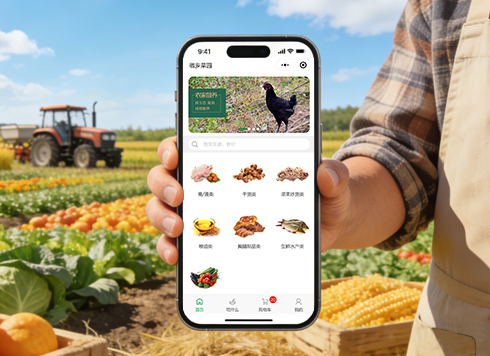 Agricultural Products WeChat Mini Program Custom Development
Lvran Di enhances agricultural sales via a ...
-
Complete Guide to Custom Mobile App Development Process and Technology Selection
Date: Jul 17, 2026 Read: 130
-
Custom Mobile Development: 2026 Project Process, Budget Ranges, and Selection Criteria
Date: Aug 9, 2026 Read: 140
-
Custom Mobile App Development: Process, Tech Selection, and Cost Control Guide
Date: Aug 6, 2026 Read: 159
-
How to Develop a Custom Mobile App: A Complete Process from Requirements to Launch
Date: Aug 5, 2026 Read: 118
-
Custom Mobile App Development: Process, Technology Selection, and Pitfall Avoidance
Date: Aug 5, 2026 Read: 134