




Mini Program Custom Development: Process, Options, and Common Pitfalls
Mini program custom development is a full-process manual delivery tailored to enterprise business scenarios, covering requirements analysis, UI design, feature development, testing, and launch. In 2026, typical delivery cycles range from 4 to 12 weeks, with cost determined by feature complexity and backend integration difficulty. Core conclusion: If a template cannot cover your core processes or you need independent data ownership, custom development is worth it; if you only need to display information, a template is sufficient. This article provides actionable references on definition, steps, approach comparison, applicable boundaries, and selection criteria.
What Is Mini Program Custom Development?
Mini program custom development refers to writing code, designing data tables, and leveraging platform capabilities from scratch or based on a foundational framework, according to enterprise business processes. Compared with templates, it can handle complex approval, order flow, multi-role permissions, and other business rules; integrate with existing enterprise systems; and create a unique brand interface. In 2026, the "use-and-go" nature of mini programs makes customer acquisition costs lower than Apps, and platforms like WeChat, Alipay, and Douyin have opened traffic entrances. However, platform rules frequently change, and category reviews involving payment and privacy are stricter, requiring custom development teams to have compliance experience. The risks are also obvious—long development cycles, high costs, and high demand for clear requirements.
- Custom development solves three types of problems: existing templates cannot be extended, you need independent data ownership, or you need complex business rules.
- Template development suits standardized scenarios, such as corporate website display or a simple mall; once special logic is involved, the cost of secondary development may be no lower than a fresh custom build.
How to Do Custom Mini Program Development: A Four-Step Implementation Approach
- Requirements analysis: Output business process swimlane diagrams and a feature checklist. Have decision-makers confirm priorities and explicitly define what will not be built. A common mistake at this stage is ambiguous requirement boundaries, leading to frequent changes during development.
- Prototype design: Create high-fidelity prototypes using Figma or Axure, and invite frontline users such as operations and sales staff to review. Document the reasons for revisions. High-fidelity prototypes expose understanding gaps better than text-based requirements.
- Development and testing: Use agile iterations and deliver by modules. Build backend APIs first, then perform real-device regression testing after frontend integration, focusing on platform capabilities such as login, payment, sharing, location, and camera. Each test round should output a bug list and reproduction steps.
- Launch and operations: Check category qualifications, privacy agreements, and user authorization pop-ups before submission. After release, configure analytics to track page views, button click rates, conversion funnels, and crash rates. The first two weeks are the data observation period; you can arrange an on-site team for support.
In requirements analysis, avoid the attitude of "let's build it first and see." In prototype reviews, avoid "only looking at UI, not the flow." Reserve 20% buffer time for development and testing, and feed data issues back into the next iteration during launch and operations. In 2026 project delivery, if requirement changes exceed 20% of the original scope, it's recommended to request additional budget or phased scheduling; otherwise, scope creep is likely.
Comparison of Three Development Approaches: Template, Hybrid, and Native Customization
- Template development: The platform provides ready-made interfaces and features; the enterprise only needs to replace text and images. Cycle: 1-3 weeks, cost: approximately 10K-100K RMB. Pros: fast launch, low price, and proven stability. Cons: fixed database structure, limited business rules, and future modifications may be constrained by the template vendor.
- Hybrid development: Secondary coding on top of a template or open-source project, such as adding fields, adjusting workflows, or integrating APIs. Cycle: 2-6 weeks, cost: approximately 100K-300K RMB. Suitable when standard features account for 80% with minor customization; when you need to retain mature payment and membership modules from a template while adding differentiated logic.
- Native custom development: Starting from architecture design, complete all front-end and back-end code development. Cycle: 6-12 weeks, cost typically above 300K RMB. Suitable for scenarios where core business heavily depends on the mini program, or when deep integration with existing ERP and CRM systems is required. The data model, permission system, and page hierarchy are fully controlled by the enterprise.
How to judge: Template development suits validating ideas, hybrid development suits rapid iteration, and native customization suits long-term operations. It's recommended to first detail the feature list within budget, then compare against the boundaries of the three approaches. Special reminder: some vendors package template development as custom development. Before signing, ask to review the backend code and database table structure, and require the contract to explicitly state "non-template development."
Applicable Scenarios and Boundaries: When to Customize, When Not To
Situations suitable for custom development include: business processes with branch conditions (e.g., order approval, delivery scheduling), need to integrate with enterprise systems (e.g., OA, ERP), need for multi-role permissions and data isolation, and need for long-term independent operation and continuous mini program iteration. In these scenarios, the fixed logic of templates cannot cover the requirements, and custom development is necessary to keep business running smoothly.
Situations where customization is unnecessary: event promotion pages, corporate business cards, single product displays, and short-term marketing pages. In these cases, you can use free templates or platform builder tools, launch within one week, with near-zero cost. If your company budget is below 100K RMB and the launch cycle is less than 3 weeks, unless the functionality is extremely minimal, it's not recommended to force native customization.
Boundary judgment criteria: First list must-have and nice-to-have features, and draw the core process flow on paper. If the flow has more than two conditional branches, or requires login permissions, custom development is likely needed. If it's just a static display page, a template is sufficient.
How to Evaluate a Vendor and Common Pitfalls
The core indicators of a good vendor are requirements comprehension and API design capability. A reliable team will first ask to see your business process, then produce a requirements document; they will use a Q&A checklist to clarify boundaries; they will state acceptance criteria, bug warranty period, and source code ownership in the contract. Common pitfalls in 2026 include: quoting a low price and then raising it citing "unwritten requirements"; presenting template demos as custom cases; compressing testing cycles leading to frequent online bugs; ignoring mini program category qualifications causing audit delays.
- Require the vendor to provide at least 2 cases from the same industry or of similar business complexity, and verify by calling real customers.
- The contract must include the feature list, handover checklist, ownership of source code and database scripts, and transfer of third-party accounts and passwords.
- Pay in stages: kickoff, prototype approval, testing, and launch final payment, with suggested ratios of 30%, 20%, 30%, 20%.
- Do not accept verbal promises like "you can change it anytime"; clarify the change process and fee calculation method.
- Be wary of "guaranteed approval" marketing. Platform review rules are external variables; a professional team can only increase the probability of approval, not guarantee it.
An actionable evaluation method: ask candidate vendors to write an "implementation approach" for one of your core features, and see if they mention details such as data table design, permission separation, and API exception handling. Teams that give vague answers likely lack real development experience.
FAQ
How much does mini program custom development cost?
In 2026, common price ranges are: template development 10K-100K RMB, hybrid development 100K-300K RMB, and native customization above 300K RMB. The exact cost depends on the number of feature modules, backend API volume, and UI complexity.
How long does mini program development typically take?
Template development takes 1-3 weeks, hybrid development 2-6 weeks, and native customization 6-12 weeks. Review time typically requires an additional 2-7 business days, longer if category qualifications are insufficient.
How do I choose a reliable development vendor?
Check whether they write a requirements document first, have cases from your industry, and provide phased acceptance reports. Ask to communicate directly with developers, not just sales representatives.
Can I maintain the mini program myself after custom development?
Yes, provided that the contract specifies complete delivery of source code, API documentation, and database scripts. It is recommended to have a technical colleague inspect code readability and deployment documentation during final acceptance.
Can a template-based mini program be converted to custom development?
Most can have data migrated, but the original template's UI and logic need to be rewritten. Migration cost depends on how open the original template's data structure is. It is recommended to request a data export document before signing.
Before starting, complete a business process sketch and then evaluate whether to customize. If you've decided to customize, prioritize teams that can provide requirements documents, API documentation, and acceptance criteria. In 2026, the mini program ecosystem places more emphasis on compliance and data security, so it is worth spending an extra week on planning early on.
-
 Well-Recognized Custom E-Commerce Mall System Dev
The Good Shopping mini-app is natively buil ...
-
 Anhui Huixiang Vegetable Garden Agricultural Products Mini Program v2.0 Iteration Development
HuiXiang MiniApp V2.0: Upgraded homepage, n ...
-
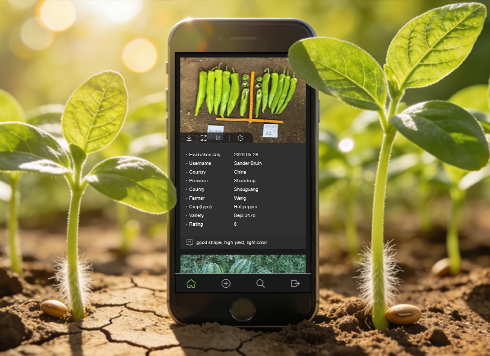 Kunshan TrialBook Mini-Program Custom Development
This project developed an English-only Tria ...
-
 Agricultural Products WeChat Mini Program Custom Development
Lvran Di enhances agricultural sales via a ...
-
Mini Program: Buy a Template or Custom Development? Do the Math First
Date: Aug 12, 2026 Read: 118
-
How to Choose Custom Mini Program Development: Evaluation Process, Cost Structure, and Common Pitfalls
Date: Aug 9, 2026 Read: 112
-
Is an Official Account Required for Custom Mini Program Development?
Date: Sep 4, 2026 Read: 135
-
In Mini Program Custom Development, If the Source Code and Backend Account Aren't Provided, Where Will Future Maintenance Get Stuck?
Date: Aug 31, 2026 Read: 105
-
Custom Mini Program Development: Per-Page or Per-Feature Pricing, Which Is Less Likely to Be Upcharged?
Date: Aug 29, 2026 Read: 104