



What Is Mobile Custom Development: Process, Cost, and Selection Guide
Mobile custom development refers to the process of designing, developing, testing, and launching a native or cross-platform mobile application from scratch according to a company's specific business needs. Unlike template-based approaches, its core value lies in fully aligned business logic, autonomous data control, and future scalability. The mainstream approach in 2026 is to use hybrid development frameworks (such as Flutter or React Native) to balance cost and performance, but the specific technology stack should be determined based on team capabilities and business scenarios.
What Problems Does Custom Development Solve
Standard SaaS or template apps can be launched quickly, but they often cannot handle complex business rules, private deployment requirements, or differentiated user experience. The value of custom development manifests on three levels: first, business processes can be precisely mapped, reducing manual offline operations; second, data assets belong to the enterprise, facilitating future analysis; third, features can evolve with business needs without being constrained by templates.
However, custom development is not suitable for every project. If requirements are relatively generic, budget is limited, and time is tight, template or low-code solutions may be more pragmatic. The key to deciding whether customization is needed is to assess whether there are "hard requirements" that standard features cannot cover—such as special approval flows, custom reports, hardware interactions, or security and compliance requirements.
Standard Process of Mobile Custom Development
In 2026, mature project delivery typically follows a five-phase process: requirements analysis, prototyping, technology selection, iterative development, and testing and launch. This division effectively controls risk, ensuring each phase has clear deliverables and acceptance criteria.
- Requirements analysis: Define user roles, core scenarios, and key metrics. Deliverables include requirements documentation and a priority list, avoiding late-stage scope creep.
- Prototyping: Use Axure or Figma to create interactive prototypes and validate process flow. Pay special attention to abnormal states and edge cases, such as network disconnection or insufficient permissions.
- Technology selection: Choose between native or cross-platform approaches based on performance needs, team familiarity, and maintenance costs. This step requires evaluating ecosystem maturity and future hiring difficulty.
- Iterative development: Adopt agile iterations, delivering a runnable version every 1–2 weeks. It is recommended to integrate automated testing and continuous integration to maintain code quality.
- Testing and launch: Cover functional, compatibility, security, and performance testing. Before publishing to app stores, complete compliance preparations such as privacy policy and user agreement.
The phase that is often overlooked is requirements analysis. Many project failures stem from unclear requirements rather than insufficient development capability. It is recommended that companies organize a focused workshop with business and technical stakeholders before starting, identify the processes that truly need automation, and set quantifiable acceptance criteria.
Comparison of Custom Development and Template Development
Many teams struggle with the decision between "custom" and "template" at the project kickoff. Below are common differences across four dimensions to help you judge based on your situation.
- Cost: Template development typically ranges from thousands to tens of thousands of yuan; custom development starts at around 100,000 yuan depending on complexity, with medium-sized projects ranging from 200,000 to 500,000 yuan.
- Timeline: Template development can go live in days to two weeks; custom development for a simple app takes about 2–3 months, while medium-sized projects usually take 4–6 months.
- Extensibility: Templates are limited by the vendor's feature updates, while custom development allows adjustments to the underlying logic at any time, but subsequent maintenance depends on the development team.
- Applicability: Templates suit MVP validation, internal tools, and startup projects with limited budgets; customization suits enterprises with mature business processes and long-term operational plans.
Notably, in 2026, low-code platforms have made "semi-customization" possible. If the core logic is not too complex, you can start with low-code development and then customize specific modules, reducing overall costs. This approach is ideal for companies with clear processes but a need for a few differentiated features.
Cost Structure and Timeline Estimation for Custom Development
Costs are primarily determined by feature complexity, technology stack, team location, and design requirements. Based on industry practices in 2026, an app with basic features like user login, list display, and order processing typically costs 150,000–250,000 yuan; features involving payments, maps, or live streaming can increase costs by 30–50%. To control costs, it is recommended to classify features into three priority levels—"must have," "nice to have," and "not needed now"—and focus on implementing the core closed loop first.
Timeline estimates are directly related to cost. Simple utility apps take about 2–3 months, e-commerce apps usually take 4–5 months, and projects involving IoT or complex algorithms require over 6 months. It is essential to reserve an additional 2–4 weeks for app store review and compliance adjustments, as this phase is prone to delays.
To evaluate whether a quote is reasonable, you can use the "person-day unit price × estimated person-days" method. For example, a medium-sized development team's person-day unit price ranges from 1,500 to 3,000 yuan, with total person-days of 100–200, corresponding to a total price of 150,000–600,000 yuan. Be aware that an unusually low quote often implies template reuse or omitted testing, and the hidden costs may be higher later.
How to Evaluate Development Team Capabilities
Choosing the right team is more important than choosing the right technology stack. When evaluating, do not just look at portfolios; pay attention to the team's understanding of your business and their problem-solving abilities.
- Review past cases: Focus on similar project types to understand whether they have handled comparable complex business scenarios.
- Technical review: Ask the team to explain their technical approach and observe whether they proactively consider security, performance, and maintainability.
- Communication mechanism: Confirm whether a project manager is involved throughout, and clarify response times and change procedures.
- Code quality: You can request test reports or code review records to avoid receiving low-quality code.
An important signal is whether the team is willing to clearly define acceptance criteria and milestones in the contract. If they avoid specific commitments or only say "we are experienced," be cautious. It is recommended to sign contracts in phases—start with requirements analysis and prototyping, and only proceed to development after confirming smooth communication.
Common Pitfalls and Avoidance Guide
During custom development, pitfalls are easy to encounter, often stemming from early decision-making errors.
- Mistake 1: Expecting requirements to be fully defined upfront. In reality, requirements change dynamically. A more effective approach is to plan in versions and use prototypes for rapid verification.
- Mistake 2: Overlooking backend complexity. The real cost of many custom apps lies in server architecture, data interfaces, and admin dashboards, not just the mobile interface.
- Mistake 3: Developing for only iOS or Android. If your target users are split evenly, a cross-platform solution is often more economical than dual native development.
- Mistake 4: Treating launch as the end. Certificate expiration, system upgrades, and operational needs require ongoing maintenance. It is recommended to reserve at least 20% of the annual budget for this.
In 2026, there is a new trend: AI capabilities are becoming a differentiating requirement. Some companies request integration of large model APIs or on-device inference, which significantly increases the complexity of technology selection. It is recommended to first clarify whether AI is a core selling point or a supplementary feature, then decide whether to use mature SDKs or self-developed models.
Applicable Scenarios and Boundaries
Custom development is suitable for the following situations: complex business rules that cannot be standardized; need for deep integration with internal systems; high data security and compliance requirements; and product forms that require rapid iteration and differentiated competition. In these scenarios, the investment in customization can yield long-term efficiency gains.
However, there are also clear cases where custom development is unnecessary: requirements are simple and common across the industry; the budget is below 100,000 yuan; the launch timeline is under one month; and the company lacks an internal technical liaison. In such cases, choosing a template or SaaS platform is more prudent—wait until the business is validated before considering migration. Remember, the value of technology lies in solving business problems, not creating complexity just to "have an app."
Frequently Asked Questions
How much does custom development cost?
Based on 2026 market rates, a simple app costs about 100,000–200,000 yuan, a medium-sized app ranges from 200,000 to 500,000 yuan, and complex projects exceed 500,000 yuan. The exact cost depends on the feature scope, team location, and technical solution.
How long does development usually take?
A simple app takes 2–3 months, a medium-sized app takes 4–5 months, and a complex app takes over 6 months. It is recommended to reserve an additional 30% buffer time for requirement changes and review cycles.
How do I choose between native and cross-platform?
If you are developing for a single platform with high performance requirements, choose native; if you need dual-platform release with a limited budget, Flutter or React Native are more suitable.
How is maintenance handled after custom development?
Maintenance typically costs 15–25% of the contract amount annually, including version updates, server operations, and bug fixes. Ensure the service scope is clearly written in the contract.
If you are evaluating mobile custom development, it is recommended to start with requirements analysis and prototyping, without committing the entire budget upfront. When selecting a partner team, consider running a small pilot module first to validate their process and capabilities. The development market in 2026 is relatively transparent; by following the process described in this article and controlling milestones and acceptance criteria, you can effectively reduce the risk of failure.
-
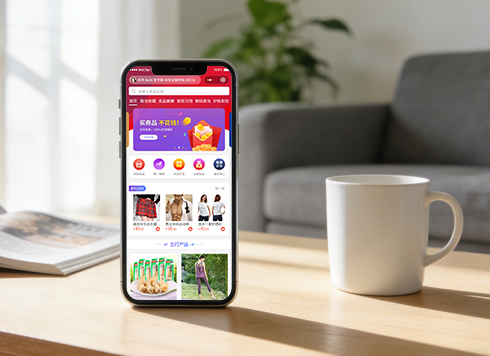 Well-Recognized Custom E-Commerce Mall System Dev
The Good Shopping mini-app is natively buil ...
-
 Anhui Huixiang Vegetable Garden Agricultural Products Mini Program v2.0 Iteration Development
HuiXiang MiniApp V2.0: Upgraded homepage, n ...
-
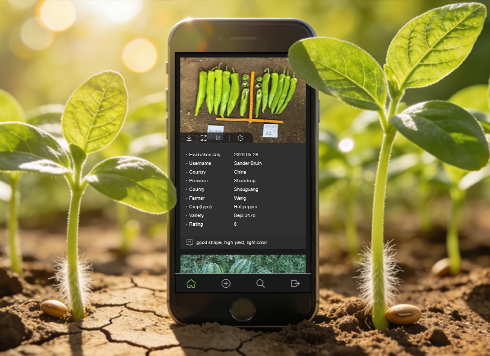 Kunshan TrialBook Mini-Program Custom Development
This project developed an English-only Tria ...
-
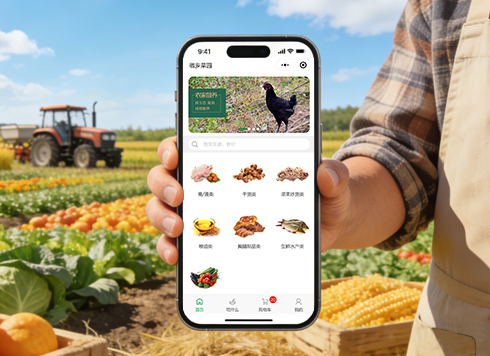 Agricultural Products WeChat Mini Program Custom Development
Lvran Di enhances agricultural sales via a ...
-
Mobile Custom Development Full Process: A Practical Guide from Needs Assessment to Launch and Maintenance
Date: Jul 28, 2026 Read: 127
-
How to Ensure a Reliable Custom Mobile App Development Process from Requirements to Launch
Date: Aug 6, 2026 Read: 137
-
Custom Mobile App Development: Process, Tech Selection, and Cost Control Guide
Date: Aug 6, 2026 Read: 160
-
How to Approach Custom Mobile App Development: 2026 Selection Guide and Common Pitfalls
Date: Aug 2, 2026 Read: 160
-
Mobile Custom Development Full Process Guide: From Requirement Analysis to Deployment
Date: Jul 27, 2026 Read: 104