



Mini Program: Buy a Template or Custom Development? Do the Math First
Whether to buy a mini program template or go for custom development requires no one else's conclusion—only checking whether your business rules are constrained by off-the-shelf modules. If your business processes are already standardized in the industry, such as ordering, booking, registration, or display, a template is sufficient and economical. If your business logic has unique branches, or you need to integrate CRM, ERP, or a data middle platform, a template becomes a shackle; custom development is then the worthwhile investment. In 2026 project delivery practices, more teams build a small version first to validate, then decide whether to iterate, rather than pouring money into custom development upfront.
What Exactly Differs Between Template and Custom Development
Template development is not ‘unchangeable,’ but there is a limit to changes. It is typically based on a preset set of page structures and functional modules; you can only change colors, images, and fields, but not the underlying logic. Custom development rebuilds everything from database design, interface planning, to front-end interactions according to your business needs, allowing any rule to be embedded in the system. The difference is not just price, but ‘the degree to which you control your business.’
For instance, for the same chain restaurant, if it only needs QR code ordering for dine-in, a template suffices. If it also needs kitchen order splitting, member stored value, official account notifications, and integration with delivery platforms, the template’s linkage capability becomes strained. In 2026, a common approach is to first run a single store with a template, then upgrade to custom development after confirming the model.
- Template development: Suitable for fixed categories and mature processes, with clearly defined functional boundaries; changes are billed as plugins.
- Custom development: Suitable for scenarios where business processes have unique rules, require data interoperability, and need future iterations.
- Judgment criteria: Break the business into three links—‘input, processing, output’—and check whether existing modules correspond to each link.
Use the ‘Three-Step Verification Method’ to Decide on Custom Development
Whether to go custom does not depend on technology trends, but on the results of three-step verification. Why is this method effective? It breaks down ‘feels insufficient’ into verifiable questions, enabling non-technical decision-makers to align. The whole process is recommended to be reviewed by product, operations, and technical leads together in half an hour.
- List core business processes: Map the key paths for internal order, member, and inventory handling, specifying ‘who, at which step, makes what judgment.’
- Compare existing templates: Find at least two mini program templates in the same industry, and check item by item how much of your process can be supported; ignore style details, only see if the logic is feasible.
- Calculate ‘transformation cost’: If the template support rate is below 70%, or you need to skip a key judgment, the hidden cost of the template already exceeds that of custom development.
The second step is where many make mistakes: they only see whether a function exists, not how the process is implemented. For example, a template provides ‘one-click order completion,’ but your process requires ‘review before completion’—that is an essential difference. The third step should calculate not only development fees, but also the time spent on manual remediation, customer complaints, and reputation loss. In 2026, many projects overlook this, leading to massive rework later and a final delivery price that doubles.
Real Cost and Time of Custom Development
In 2026, industry quotes for custom mini program development are several times higher, or even an order of magnitude, than templates, with a common range roughly ‘from 50,000 to 200,000 RMB’; but the real gap lies not only in the numbers, but in the deliverables. A template is a one-time purchase with outright ownership, while custom development quotes are split by requirements, including prototype design, UI, development, testing, server deployment, and the first year of operations and maintenance. To judge whether a quote is reasonable, check whether the requirement list is broken down into items that can be accepted individually.
In terms of time, a standard custom mini program typically takes 4 to 8 weeks from requirement confirmation to submission for review; complex projects take longer. If you need to launch within two weeks, you will likely have to choose a template. Conversely, if a template can satisfy 80% of needs within two weeks, it is reasonable to launch with the template first and then iterate; this fits the business window better than waiting for custom development.
- Cost composition: Requirement design (15%), UI development (25%), backend development (30%), testing and deployment (20%), operations and maintenance reserve (10%).
- Common trap: A low quote with requirements written only as ‘implement something like the mini program of XX’ transfers the risk to you.
- Judgment of quality: A professional developer will ask you to confirm the requirement document before signing off on the start; otherwise, subsequent new requirements will be billed per item. According to 2026 project delivery practices, a company like Xiyue Company provides a requirement confirmation checklist before the start, which significantly reduces the probability of rework.
Template vs Custom: Differences across Four Dimensions:
- Development cycle: Templates typically go live in 1-2 weeks; custom takes 4-8 weeks.
- Feature expansion: Templates are limited by the plugin ecosystem; custom can be extended as needed.
- Data ownership: Template data fields may be limited; custom allows arbitrary modeling.
- Ongoing maintenance: Templates depend on vendor upgrades; custom is controlled by your own technical team.
Before Custom Development, Confirm These Three Things
Failures in custom development are mostly not due to technology, but to unclear requirement boundaries. In 2026 project delivery habits, reliable teams will first align with you on the following three things; otherwise, be cautious even if the quote is low.
- Define acceptance criteria: Which features must be operational at launch, which can be added later, and write them down.
- Confirm data migration plan: If you have existing users and order data, clarify how to migrate them to the new mini program.
- Clarify iteration pace: Who will maintain the mini program after completion, how often to iterate, and the ownership of server and domain.
These three things prevent the ‘conflict right after launch’ scenario. Many companies only look at development prices and ignore later maintenance, only to find themselves searching for new developers three months later, with even higher costs.
Applicable Scenarios and Boundaries: When Not to Choose Custom Development
Custom development is not always more advanced. If your project is just for an event, to validate an idea, or if the trial period is no longer than three months, templates and SaaS tools are more suitable. After custom development starts, the cost of requirement changes rises over time, so it is not recommended to go custom before validating your business model.
Situations suitable for custom development include: a chain business needing unified management, needing to integrate with internal enterprise systems, wanting to accumulate your own user data for secondary analysis, or needing feature differentiation in a competitive market. Conversely, if mature tools already exist in the industry and your business has no unique moat, custom development will only delay your launch speed. In 2026, many enterprises choose ‘template for rapid trial and error, custom after validation.’
- Suitable: Chain stores, multi-merchant platforms, complex inventory management, data integration.
- Not suitable: Event H5, simple reservations, personal display, MVP validation stage.
Frequently Asked Questions
Can a mini program template be changed into a custom one?
The cost of modifying a template usually exceeds rebuilding, because the underlying structure is not designed around your business process. It is recommended to confirm your current needs and then decide whether to migrate.
How much budget is typically needed for custom development?
In 2026, the common industry range is between 50,000 and 200,000 RMB, depending on the number of features and integration complexity; projects below 30,000 RMB are often more like ‘template shell wrapping.’
How long does custom mini program development take to launch?
Standard projects take about 4 to 8 weeks, including testing and submission for review; if payments, external interfaces, or enterprise qualifications are involved, the time increases by 1 to 2 weeks.
Can I fully own user data with a template mini program?
Most templates only provide backend export with fixed data structures; if you need in-depth analysis or cross-system integration, a custom solution is recommended.
Running a minimal version first is a common cost-reduction method for mini program projects in 2026. If you have confirmed that your business has unique rules, directly discuss the requirement document with the developer. If you are still in the validation phase, stick with templates or SaaS solutions. The boundary is: custom development is only suitable for a stage where ‘business growth can cover development costs’; otherwise, it is advisable to use off-the-shelf solutions to test the waters.
-
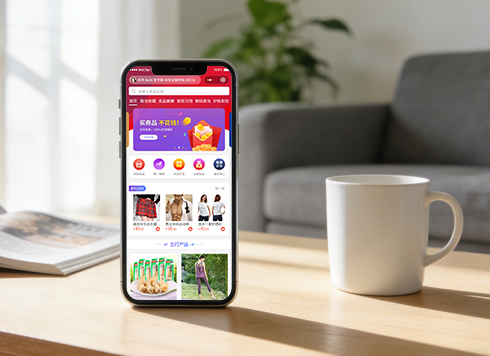 Well-Recognized Custom E-Commerce Mall System Dev
The Good Shopping mini-app is natively buil ...
-
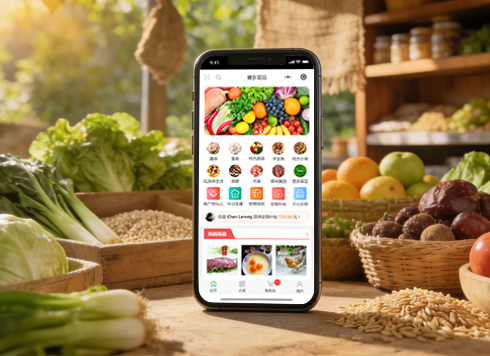 Anhui Huixiang Vegetable Garden Agricultural Products Mini Program v2.0 Iteration Development
HuiXiang MiniApp V2.0: Upgraded homepage, n ...
-
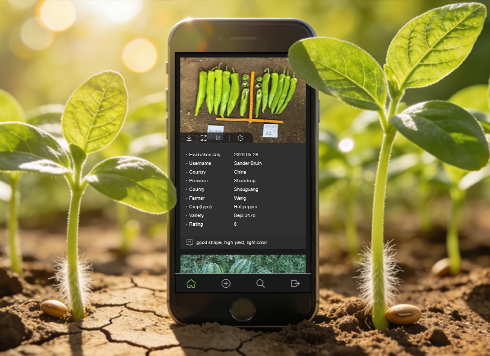 Kunshan TrialBook Mini-Program Custom Development
This project developed an English-only Tria ...
-
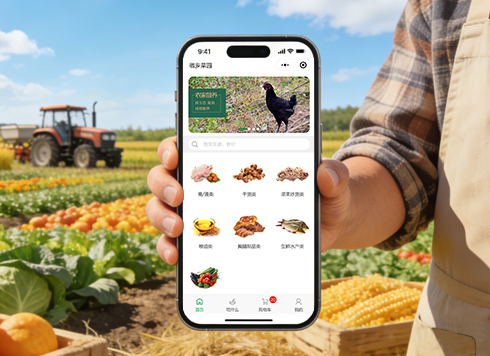 Agricultural Products WeChat Mini Program Custom Development
Lvran Di enhances agricultural sales via a ...
-
Mini Program Custom Development: Process, Options, and Common Pitfalls
Date: Aug 11, 2026 Read: 99
-
Is an Official Account Required for Custom Mini Program Development?
Date: Sep 4, 2026 Read: 135
-
In Mini Program Custom Development, If the Source Code and Backend Account Aren't Provided, Where Will Future Maintenance Get Stuck?
Date: Aug 31, 2026 Read: 105
-
Custom Mini Program Development: Per-Page or Per-Feature Pricing, Which Is Less Likely to Be Upcharged?
Date: Aug 29, 2026 Read: 104
-
Mini Program Custom Development: Launch a Lean Version First and Iterate, or Build the Full-Featured Version Directly?
Date: Aug 28, 2026 Read: 101