




Is It Normal for Mobile Custom Development Quotes to Vary Several-Fold? How to Verify Budget, Timeline, and Acceptance Criteria in 2026
It is not uncommon for custom mobile development quotes to vary several-fold. In 2026, an app with similar features may cost anywhere from tens of thousands to hundreds of thousands. The difference lies not in writing the code itself, but in whether requirements are clearly decomposed, whether the team takes responsibility for long-tail maintenance, and whether backend systems and admin panels are included. For clients, instead of repeatedly comparing prices, it is more practical to learn how to verify quotes, timelines, and acceptance criteria, ensuring every dollar is spent predictably.
First Understand the Essentials: Where Does the Money for Mobile Custom Development Go
Custom mobile development is an integrated project. Costs cover requirement analysis, UI design, front-end development, backend APIs, databases, testing, app store release, and post-launch maintenance. Many low quotes only cover the interface development, listing server and certificate fees as add-ons, which often results in a higher total cost. In 2026, a common practice is to split fees into a one-time delivery fee and an annual maintenance fee. The former includes source code and design assets, while the latter is billed separately based on servers and labor.
If a vendor gives a packaged price without breaking down the details, there is significant room for price increases later. A verifiable quote should at least list staff roles, work items, and deliverables.
- Requirement documents and technical solutions: define feature boundaries, roughly 5%-10% of total cost;
- UI/UX design: interface and interaction design, roughly 10%-15% of total cost;
- Front-end and back-end development: core coding, roughly 50%-60% of total cost;
- Testing and release: compatibility testing and app store review, roughly 10%-15% of total cost;
- Operations and iteration: servers, certificates, and feature updates, billed annually;
Why Quotes Vary Several-Fold: Four Key Reasons Behind Price Differences
The core reason for large quote differences is the scope of services. For the same e-commerce app, some only need shopping and payment, while others also require distribution, live streaming, and an admin panel; the workload is not on the same scale. By 2026, the market has segmented. Low prices often correspond to compact teams and shorter cycles, while high prices typically include project managers, test engineers, and long-term maintenance.
Note that a low quote does not guarantee a win, and a high quote does not guarantee compliance. The key is whether the quote breaks down the features to a verifiable level.
- Different feature scope: whether it includes user authentication, payment, push notifications, and third-party APIs.
- Tech stack choice: native development is more expensive than cross-platform, but offers better performance and system compatibility.
- Team composition: teams with product managers, testers, and project managers cost significantly more.
- Deliverables and after-sales: whether it includes source code, deployment documentation, training, and one-year free warranty.
Budget, Timeline, and Acceptance in 2026: A Three-Step Verification Method
Here is an actionable 'three-step verification method' to break down quotes and project plans. This method divides cooperation risks into three gates, each with clear actions. If any gate fails, postpone signing.
- Step 1: Verify the quote scope. Ask the vendor to provide a work breakdown and confirm item by item whether backend, admin panel, testing, release, and one-year maintenance are included.
- Step 2: Verify the timeline and resource alignment. In 2026, a typical medium-sized app takes 10-16 weeks. If someone promises delivery in 4 weeks, they either cut features or rush development, resulting in high quality risks.
- Step 3: Verify that acceptance criteria are quantifiable. Acceptance conditions should state clearly: 'all features implemented, no blocking bugs, performance tests passed, and app successfully listed' rather than 'do your best'.
It is recommended to set milestone payments in the contract: requirements confirmation, UI finalization, core function completion, and acceptance & launch—each stage should not exceed 30% of the total price. Professional teams like Xiyue Company typically include source code, technical documentation, and training in the delivery checklist, and clients can require this directly.
How to Judge Delivery Quality: An Acceptance Checklist from UI to Source Code
Judging delivery quality should not only look at whether the UI is attractive, but also at code structure, documentation, and maintainability. In 2026, AI-assisted programming speeds up page creation, but architecture design and code review still rely on human effort. Therefore, always request technical documentation during acceptance and ask the team to explain how key modules are implemented.
- UI fidelity: check layouts under different resolutions against the design mockups.
- Core flow completion: registration, login, payment, push, and other main paths work without blockers; weak network conditions show prompts.
- Source code and documentation: deliver source code, database descriptions, and environment deployment documentation.
- Security and permissions: the admin panel has operation logs, user sensitive information is encrypted, and APIs have access control.
- Bug response speed: serious issues found during testing should be fixed within the same day; general issues within 2 business days.
If the team is willing to demonstrate the core code on-site and explain key logic, it indicates the project is built seriously. If they only provide a demo link without any documentation, future iterations will be very difficult.
Solution Comparison: Custom Outsourcing vs. Template Modification vs. Low-Code Platforms
In 2026, there are three mainstream paths for building an app: custom outsourcing, template modification, and low-code platforms. Many clients get confused by technical jargon at the beginning, but as long as you focus on budget, timeline, and applicable scenarios, you can quickly find the right fit. Below is a direct comparison based on these three dimensions to help you decide which option matches your needs.
- Custom outsourcing: budget 50,000-500,000 CNY, timeline 8-20 weeks, suitable for businesses with unique features and long-term iteration needs, providing full source code and private deployment.
- Template modification: budget 20,000-80,000 CNY, timeline 4-8 weeks, suitable for showcase, booking, and simple e-commerce, but source code is restricted and special features are hard to add.
- Low-code platforms: monthly subscription in the thousands, suitable for quickly validating business logic, but not supporting complex interactions or private data.
As you can see, the value of custom development lies in control and scalability. If the app is the core of your business, custom development is recommended. If it is just a temporary campaign page, templates or low-code are more cost-effective.
Applicable Scenarios and Boundaries: When to Use Custom Development
Custom development is suitable for three cases: the core business relies on the app; user growth is expected, requiring flexible expansion; or industry regulations require data privatization, such as healthcare and finance. Conversely, if the features largely overlap with existing templates, the budget is below 50,000 CNY, and there is no plan for continuous iteration, custom development is not necessary.
In 2026, WeChat mini-programs and enterprise office platforms already cover many scenarios. If your target users are not within the app ecosystem, or if internal usage is fewer than 100 people, using an app will increase operational costs instead.
FAQs
Is a several-fold quote difference malicious price gouging?
Not necessarily. Quote differences mainly stem from functional boundaries, team composition, and after-sales scope. What you should truly watch out for is a vague quote and continuous extra charges later, rather than the price gap itself.
Is a shorter timeline commitment always more cost-effective?
No. A fully functional app typically takes 10-16 weeks from requirements to launch. An overly short commitment often means cutting testing or using templates, leading to higher rework costs later.
How should acceptance criteria be written to avoid disputes?
Write acceptance conditions as an actionable checklist, e.g., 'core flows have no bugs, performance tests pass, source code and deployment documentation are delivered.' Avoid vague statements like 'ensure smoothness.'
Is it necessary to get the source code in custom development?
If the business requires long-term iteration, it is recommended to include source code and design assets in the contract. For short-term campaigns, you can forgo source code to lower the initial price, but every subsequent change will incur fees, and the total cost may be higher.
Before starting, prioritize your requirements, then use the three-step verification method to review the quote, timeline, and acceptance criteria. This process also applies to iterative quotes for existing apps. If the project is only an internal small tool or a showcase page, consider mini-programs or low-code first, saving budget for the parts that truly impact user value.
-
 Well-Recognized Custom E-Commerce Mall System Dev
The Good Shopping mini-app is natively buil ...
-
 Anhui Huixiang Vegetable Garden Agricultural Products Mini Program v2.0 Iteration Development
HuiXiang MiniApp V2.0: Upgraded homepage, n ...
-
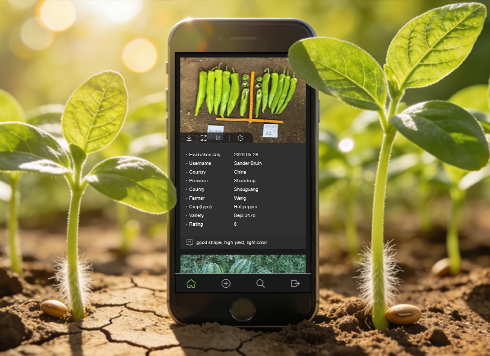 Kunshan TrialBook Mini-Program Custom Development
This project developed an English-only Tria ...
-
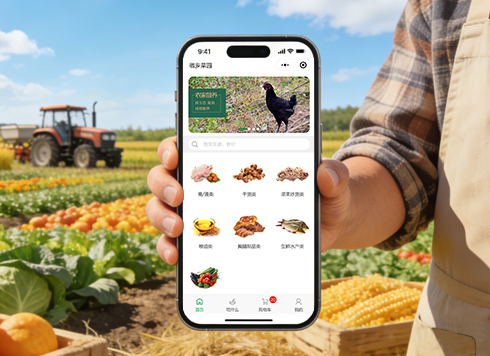 Agricultural Products WeChat Mini Program Custom Development
Lvran Di enhances agricultural sales via a ...
-
Is It Normal for Mobile Custom Development Quotes to Vary Several Times? Check These Before Acceptance in 2026
Date: Aug 19, 2026 Read: 100
-
UI Design Approved but Code Not Started: Where Does Mobile Custom Development Rework Usually Get Stuck in 2026?
Date: Aug 31, 2026 Read: 112
-
Mobile Custom Development: How Detailed Should the Requirements Document Be? If You Keep It Thin, How Much Debt Will You Pay Later?
Date: Aug 18, 2026 Read: 97
-
Mobile Custom Development: When Features Don't Match Requirements at Acceptance in 2026, Where Does It Usually Go Wrong?
Date: Aug 16, 2026 Read: 121
-
Users enlarge the phone font and buttons and amounts overlap in the app — does adding a "large text mode" switch fix it?
Date: Oct 7, 2026 Read: 33