




Is It Normal for Mobile Custom Development Quotes to Vary Several Times? Check These Before Acceptance in 2026
Mobile custom development quotes can vary several times, and this remains common in 2026. The differences usually do not come from "who is more unscrupulous," but from variations in requirement scope, technical solution, and acceptance standards. To judge whether a development vendor is reliable, don't rush to look at the total price; instead, check whether the requirement document clearly states "what to do, what not to do, and how acceptance is evaluated." This checklist does more than price comparison to determine whether the project will face mid-course price increases or rework.
Why Can Quotes Differ Several Times? Three Typical Problem Areas
For mobile custom development, the typical range of quotes spans from tens of thousands to hundreds of thousands. Based on 2026 project delivery practices, the differences mainly come from three areas: requirement scope, technical implementation, and acceptance deliverables. The same "e-commerce app" can require four to five times more work in a version with payments, live streaming, and distribution than a standalone version.
- Requirement scope: Does the feature list specify main flows and exception scenarios? Seemingly minor items like "forgot password" and "retry on weak network" actually incur non-trivial development costs.
- Technical implementation: Native development and cross-platform frameworks (such as uni-app, Flutter, etc.) differ in cost and performance. Based on experience range, native team labor costs are typically over 30% higher, but they are more reliable for complex interactions.
- Acceptance deliverables: Does it include only code, or also test reports, deployment documentation, and app store submission assistance? This directly affects time-to-launch.
Therefore, a quote that differs several times does not necessarily mean someone is overcharging. The key is to compare whether these three items are on the same baseline. If the vendor is unwilling to list the requirement inventory first, be cautious even if the quote is low.
Another common trap in 2026: quotes intentionally omit seemingly basic items such as "push notifications" and "share features," then add them as premium modules after the contract is signed. When comparing quotes, confirm whether the feature list is marked "all-inclusive" and note the rules for missing items.
Before Signing the Contract: Use the "Three-Line Verification" to Align Budget and Schedule
Direct price comparison is meaningless because the assumptions behind each quote differ. I suggest using three lines to align requirements, implementation, and delivery, so you can judge whether a quote falls within a reasonable range.
- Requirement boundary line: List the main features that "must be done" and mark "not for now" expansion features in red. Acceptance criterion: every page in the requirement document corresponds to an acceptance action.
- Technical implementation line: Confirm the tech stack, team size, and milestone schedule. A typical cycle for a dual-platform version (iOS + Android), from design to launch, has an experience range of 8–16 weeks.
- Acceptance criteria line: Clearly describe acceptance criteria for each feature, such as a verifiable statement like "payment callbacks must have a clear timeout limit under weak network conditions."
These three lines should not be addressed by writing requirements first and then discussing price; they should be verified simultaneously before quoting. If the vendor's quote does not cover these three items, it is highly likely that additional fees will be charged later.
A common mistake during execution is writing only feature names without boundaries. For example, "search" is written as "able to search products," but without specifying whether fuzzy matching or result sorting is supported. Second, confirm whether the tech stack suits special hardware calls; if you choose a cross-platform solution, features like camera scanning or Bluetooth printing may require extra plugins, increasing costs.
Template vs. Custom Development: How to Choose in 2026?
There are two common approaches in mobile development: one is modifying a standard template's appearance, and the other is fully customizing according to requirements. The former has lower cost, with an experience range of 10,000–30,000 RMB, but limited feature expansion; the latter typically starts above 50,000 RMB and can reach hundreds of thousands for complex projects, but offers higher controllability.
- Template development: Fast delivery (2–4 weeks), suitable for showcase and internal tools; not suitable for products with complex business logic or frequent iteration needs.
- Custom development: Timeline is calculated by features; the first version typically takes 8–16 weeks. Suitable for core business, special interactions, and products requiring long-term maintenance.
- Middle ground: Modify source code from a mature framework, with a moderate price, but requires the vendor to provide complete source code and deployment documentation.
The basis for selection is not the budget size, but the product positioning. A common practice in 2026 is to first validate with an MVP, then refine the core path through custom development.
Many people assume template development is just changing colors. In reality, templates also require configuring domains, certificates, and push services, and these hidden costs are easily underestimated. So a template quote may look cheap, but after adding deployment and launch, the total spend is often about 20% higher than expected.
When Acceptance Features Don't Match Requirements, What Usually Goes Wrong?
Disputes during acceptance often go like "the developer says it's done, but the client says it's wrong." Based on project delivery habits, the problem usually lies in acceptance criteria not being clearly written in advance. For example, the client's "login" may include WeChat authorization, SMS verification code, and third-party account binding, while the developer only implemented basic phone number login.
This is common in projects. A client comes with a quote, a budget of 50,000 RMB, requesting three platforms, an admin dashboard, and third-party payment within one month. Following delivery habits, we first verified the requirement boundaries, separating "must do" from "not for now," and ultimately the first version only covered the core ordering flow, with the admin dashboard scheduled for phase two. In another project, because the tech stack wasn't verified before signing, after two weeks of work the approach proved mismatched, and re-selection caused nearly three weeks of rework and a budget overrun of 40%. So before acceptance, verify the feature list rather than just looking at the interface.
- Check off each feature in the list: Each requirement maps to a test case.
- Exception scenarios: Network disconnection, weak network, rapid clicks, permission denial, etc.
- Data correctness: Amount calculation, inventory deduction, user status synchronization.
- Performance metrics: Launch time, page response, memory usage.
- Compatibility: Clearly specify common Android devices and the iOS version range.
Qualified feature-list acceptance should provide a "pass/fail" conclusion for each requirement, with corresponding test screenshots or screen recordings. When accepting in 2026, you may ask the developer to provide a self-test report and deployment documentation, and to demo on-site according to the feature list.
Applicable Scenarios and Boundaries
Mobile custom development suits teams with unique business logic, deep integration with hardware or systems, or plans to treat the product as a core asset for long-term iteration. If these don't apply, you may not need to spend this money.
- Suitable for: Core business with special rules, third-party system integration, clear performance and experience requirements, and plans for continuous iteration.
- Not suitable for: Internal demos only, features almost identical to mature market products, or when the budget cannot support the core first-version features — in such cases, template or low-code solutions are more practical.
If the budget is below 50,000 RMB but you require three platforms and a complex admin backend, don't rush to cut features. Instead, shrink the first-version scope to only the core ordering flow; otherwise, after delivery, you will likely end up in a situation where "all features exist but none are usable."
Based on 2026 project delivery practices, a complete dual-platform custom project, from requirement analysis to launch, has an experience cycle of 10–16 weeks, and the quote range of 50,000–250,000 RMB is typical. Projects below 30,000 RMB can basically only cover single-platform development or template modifications. This range helps you judge whether a quote deviates from common sense.
FAQ
Are development companies with low quotes necessarily unreliable?
Low-quote development companies are not necessarily unreliable, but you should first verify the requirement list and acceptance criteria. It becomes a red flag only if the vendor is unwilling to clearly document requirements.
Will changing a piece of copy mid-project incur extra charges?
Usually not. However, if the change affects the database structure or core flows, it will be evaluated via a change order. Specify the free scope for minor changes in the contract.
If features are found incorrect during acceptance, can I refuse to pay?
You may withhold the final payment, but you need to list the discrepancies against the requirement document in writing and give the developer a chance to rectify. If the contract specifies acceptance criteria, follow them.
How are damages calculated if the timeline slips?
A common practice is to set daily liquidated damages, with an experience range of 0.3%–0.5% of the contract amount, but it must be written into the contract in advance.
Who owns the code after custom development is complete?
The ownership of copyright should be clarified in the contract. Typically, after the development fee is paid in full, it belongs to the client, but open-source components must comply with their original licenses.
In practice, before starting mobile custom development in 2026, spend a week organizing requirement boundaries and an acceptance checklist, then invite three vendors to provide quotes independently. Verify whether each quote includes a requirement document, technical solution, and acceptance criteria. If any of the three is missing, it is better to negotiate another round than to sign hastily. If your project is only for idea validation, consider building an interactive prototype first, validating the core flow, and then moving to custom development.
-
 Well-Recognized Custom E-Commerce Mall System Dev
The Good Shopping mini-app is natively buil ...
-
 Anhui Huixiang Vegetable Garden Agricultural Products Mini Program v2.0 Iteration Development
HuiXiang MiniApp V2.0: Upgraded homepage, n ...
-
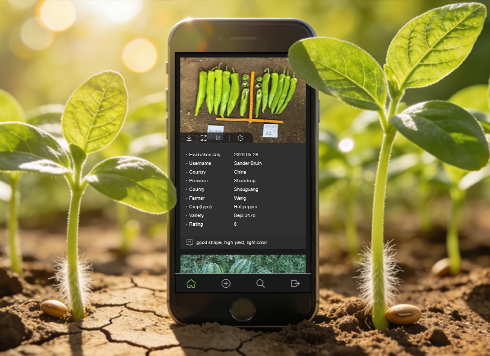 Kunshan TrialBook Mini-Program Custom Development
This project developed an English-only Tria ...
-
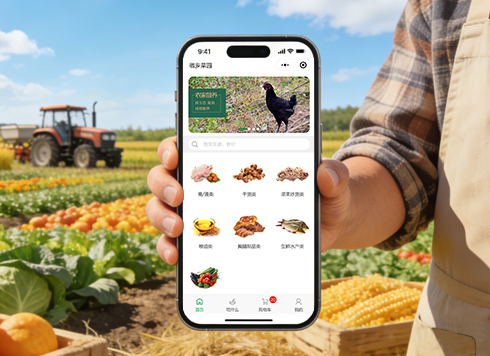 Agricultural Products WeChat Mini Program Custom Development
Lvran Di enhances agricultural sales via a ...
-
Is It Normal for Mobile Custom Development Quotes to Vary Several-Fold? How to Verify Budget, Timeline, and Acceptance Criteria in 2026
Date: Aug 12, 2026 Read: 119
-
UI Design Approved but Code Not Started: Where Does Mobile Custom Development Rework Usually Get Stuck in 2026?
Date: Aug 31, 2026 Read: 112
-
Mobile Custom Development: How Detailed Should the Requirements Document Be? If You Keep It Thin, How Much Debt Will You Pay Later?
Date: Aug 18, 2026 Read: 97
-
Mobile Custom Development: When Features Don't Match Requirements at Acceptance in 2026, Where Does It Usually Go Wrong?
Date: Aug 16, 2026 Read: 121
-
Why Mobile App Custom Development Delays Keep Happening—The Problem Usually Starts in the Requirements Phase
Date: Aug 13, 2026 Read: 117