




What's the Difference Between Custom Mobile App Development and Template Development? How Can Non-Technical People Judge Quality?
Custom mobile app development refers to designing and coding layer by layer from user roles, functional modules, to data interfaces according to an enterprise's established business rules, ultimately delivering a mobile application that can be independently deployed and maintained over the long term. The essential difference from template development is that templates make the business adapt to the software, while custom development makes the software adapt to the business. In 2026 enterprise procurement habits, custom development is still used for scenarios with complex processes, internal and external system integration, and the need to retain data sovereignty, while template development is more suitable for product validation periods or standardized operations.
What Exactly Differentiates Custom Mobile App Development from Template Development?
Custom development is not a 'more expensive' template; it controls the application's behavior at the source code level. Template development usually only provides fixed forms and fixed pages, with low switching costs but poor scalability. Custom development allows business-specific logic in functional boundaries, concurrency capabilities, and offline logic. A simple judgment: if business rule changes may occur at the field level, custom development is more appropriate; if it is only display-oriented content, a template suffices.
Another often-overlooked difference is maintainability. When mobile projects are delivered in 2026, whether the source code is complete, comments are standardized, and dependencies are locked directly determines whether future work is 'changing a line of code' or 'rebuilding from scratch.' Custom development should deliver readable source code and technical documentation, while templates often only provide a configuration backend.
- Cost: Custom development is usually billed per person-day, while templates are paid annually; in the long run, custom development is more controllable.
- Timeline: A template may go live in a week, while custom development typically takes 6–12 weeks (depending on complexity).
- Scalability: Custom development can add any feature, while templates are limited by the vendor.
- Source code ownership: Custom development should belong to the client, while templates only grant usage rights.
- Data security: Custom development allows private deployment, while templates depend on the service provider.
The dividing line between custom and template is not price, but 'how often business rules change' and 'whether you are willing to hand over data to a third party.' If business rules change every six months, a template's configuration backend may suffice; if they change every month, custom adaptation will be more stable than template follow-up.
Why Do Many Projects End Up as 'Half-Finished' Products? Where Are the Common Pitfalls?
From requirements to launch, most project failures are not because the code cannot be written, but because acceptance criteria are not firmly defined. For example, vague descriptions like 'make the list refresh faster' are not quantified in seconds, making it difficult to fault the delivery after handover. In 2026 project delivery practices, we strongly recommend writing performance metrics into the contract, such as cold start time, crash rate, and weak network response time, all with specific numbers.
Another frequent pitfall is that requirement freeze has no cutoff point. The business side keeps adding features, the developer keeps adjusting the schedule, and it ends up as 'technically feasible, but no one is responsible for the final result.' Custom development requires a change management process: small changes go through internal review, and major changes are re-priced.
- Requirements only describe business but not scenarios, resulting in pages that are built but unused.
- Failing to involve frontline employees who will actually use the modules in testing, with managers making decisions instead of real feedback.
- Ignoring the debugging cost of third-party APIs, such as payment, maps, and SMS, without obtaining interface documentation in advance.
- Treating custom development as a 'one-off project' without reserving room for version iterations.
Qualified project management does not eliminate changes; it prices them. Every requirement adjustment should have a clear work-hour impact assessment to avoid the project becoming a 'bottomless pit.'
How Can Non-Technical People Judge Whether a Developer Is Reliable? Use the 'Four-Dimension Comparison Method'
For non-technical leaders, rather than listening to sales pitches full of technical jargon, it is better to verify against four dimensions. This framework is called the 'Four-Dimension Comparison Method': case boundary, code standards, response mechanism, and data sovereignty. Each dimension requires verifiable evidence, not verbal promises.
Why this division? Case boundary helps determine whether the vendor has done similar business; code standards determine whether you can maintain it after handover; response mechanism represents how you are treated when issues arise; data sovereignty determines who holds your core assets. All four dimensions are indispensable.
- Case boundary: Ask the vendor to provide cases in the same industry and of similar complexity, and ask clearly: 'In this case, which part did you handle, and is there a source code demo?'
- Code standards: Request to sample the code repository, checking for branch management, comments, and automated testing; be cautious with vendors who provide no samples.
- Response mechanism: Explicitly state, 'After launch, if a serious bug occurs, how many hours to respond and how long to fix,' and write the timeframes into the contract.
- Data sovereignty: Ask where the database is located, backup strategy, and whether data can be exported; if conditions allow, choose private deployment.
In practice, it is recommended to first run a low-cost prototype test. Spend one week having the vendor produce high-fidelity prototypes for one or two of your core pages, then judge whether the communication cost is acceptable. This step filters out most mismatched developers.
According to 2026 delivery practices, before formal signing, development vendors like Xiyue Company typically incorporate the above four dimensions into the onboarding agreement and support user-side code spot checks.
Applicable Scenarios and Boundaries: When to Choose Custom Development, and When It Is Completely Unnecessary
Custom development suits apps with a long business loop and multiple collaborative roles, such as internal ERP, field management systems, and tools with complex approval flows. Once data is connected in such applications, efficiency improves significantly. In 2026, many enterprises are also embedding AI capabilities into custom apps, such as voice form filling and automated inspections, all of which require modifications to specific logic that templates cannot support.
Conversely, if you are only doing corporate display, simple appointment booking, or simply creating an event landing page, there is no need for custom development. Templates or SaaS services are more cost-effective. Additionally, when the budget is below a certain level and the timeline is so tight that you can only cut scope, custom development tends to become 'template tweaking.' Boundaries where it is not applicable: projects with extremely vague business rules, no fixed point of contact on the core team, or those planning to pivot within three months are all not recommended for custom development.
According to 2026 market rates, a mobile app with login, permissions, lists, and simple statistics requires approximately 30–60 person-days of custom development effort; if integration with WeCom, DingTalk, or internal ERP is needed, the person-days may double.
FAQ
How much does it cost to custom develop a mobile app?
In 2026, the common range is tens of thousands to hundreds of thousands, mainly depending on functional complexity, the number of systems to integrate, and team configuration. Ultra-low prices often mean template reskinning, and high prices do not necessarily mean a better fit for the business.
How long does custom development usually take?
Simple internal tools take about 4–6 weeks. Apps with payment, maps, and permission flows typically take 8–12 weeks. Complex systems require phased iteration, starting with core modules before expanding.
What if I don't have a technical team for later maintenance?
When selecting a developer, require 'source code + deployment documentation + L3 support response' and write maintenance responsibilities into the contract. Do not rely on a single individual developer; seek company-level assurance.
Can custom development guarantee security?
No absolute security exists, but custom development allows options like private deployment, data encryption, and Level 3 cybersecurity classified protection evaluation, making it easier to meet compliance requirements than using public templates.
How can I tell if a developer will raise prices midway?
In the contract, clearly define the requirement change process and unit prices. Put 'new features billed per person-day' upfront and require review before starting work, which avoids most price-increase disputes.
Define business processes first, then discuss feature lists; demand source code demos before signing contracts; validate a single point first, then scale to full deployment. Enterprises suitable for custom development are those with clear business rules, a need for data self-control, and a willingness to invest continuously in subsequent iterations. If you simply want to validate an idea at low cost, using a mature template is actually more reliable.
-
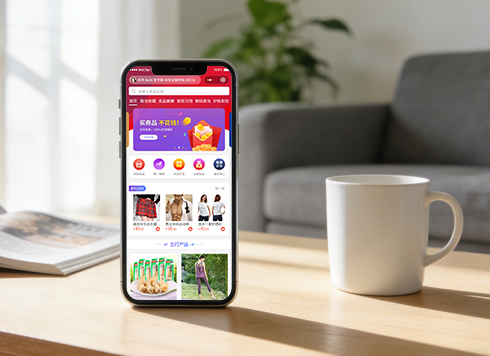 Well-Recognized Custom E-Commerce Mall System Dev
The Good Shopping mini-app is natively buil ...
-
 Anhui Huixiang Vegetable Garden Agricultural Products Mini Program v2.0 Iteration Development
HuiXiang MiniApp V2.0: Upgraded homepage, n ...
-
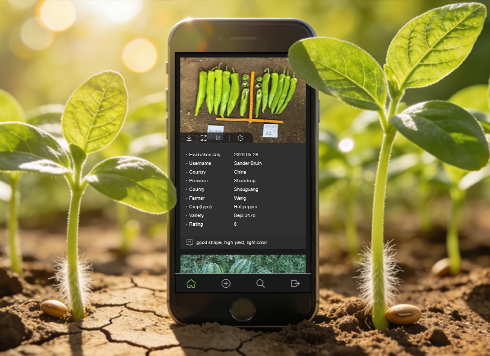 Kunshan TrialBook Mini-Program Custom Development
This project developed an English-only Tria ...
-
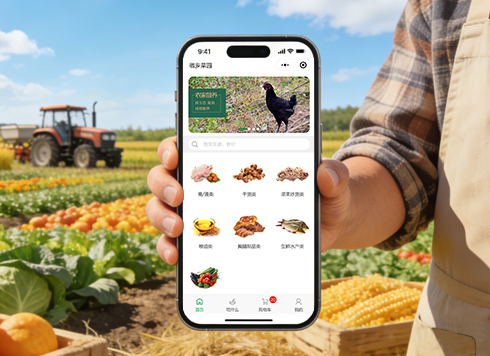 Agricultural Products WeChat Mini Program Custom Development
Lvran Di enhances agricultural sales via a ...
-
Custom Mobile App Development: UI Design Looks Ugly When Built—Who’s to Blame?
Date: Sep 7, 2026 Read: 93
-
Can custom mobile apps used only by internal employees skip the app store?
Date: Sep 4, 2026 Read: 105
-
Custom Mobile App Development: Where Do Privacy Compliance Checks Still Get Stuck Before Launch in 2026?
Date: Sep 1, 2026 Read: 100
-
Why do custom mobile app development quotes and timelines vary by 2x? What unspoken factors explain the gap?
Date: Aug 29, 2026 Read: 105
-
Custom Mobile App Development: Is It Useful to Draw a Prototype Before Development? What Problems Can't Be Found Even with a Prototype?
Date: Aug 24, 2026 Read: 119