




How Much Does Custom Mobile App Development Cost? Does a Higher Quote Equal Better Quality?
The price differences in custom mobile app development mainly come from five factors: feature complexity, degree of nativeness, UI design workload, development team location and experience, and scope of post-launch maintenance. A higher quote doesn't mean better quality; the key is whether the quote matches your actual business scenario. Based on common project practices in 2026, a medium-complexity commercial app typically takes 8–16 weeks with a budget range of approximately 100,000 to 500,000 CNY. Prices below 80,000 CNY usually indicate a template adaptation or feature reduction.
1. Where Do Price Differences Come From? Breaking Down the Five Parts
Custom development quotes are not a fixed number; they are built from labor hours, technology stack selection, design workload, testing and launch, and post-launch maintenance. For the same "make an app" request, if requirements are unclear, quotes from different teams can vary by more than three times.
- Business feature complexity: The more features and deeper logic, the longer the work hours. For example, an e-commerce app supporting multi-level distribution is completely different from one that only displays products.
- Native vs. cross-platform: Development using Flutter or React Native usually costs less than native development for both iOS and Android, but there may be differences in smoothness and system adaptation.
- UI/UX design workload: Custom design requires original interfaces and interaction prototypes; using existing templates with a reskin will cost much less.
- Team location and level: Medium-to-large teams in first-tier cities typically charge over 3,000 CNY per person-day, while small studios in lower-tier cities may charge only 1,000 CNY, but delivery quality and later maintenance differ significantly.
- Maintenance and iteration scope: Whether the quote includes one year of server costs, crash monitoring, and version updates directly affects the total price.
To judge whether a quote is reasonable, look not at the total price but at whether the provider itemizes work hours and unit prices. In 2026, many mature teams provide a "requirements breakdown document"; a transparent pricing format itself is a reliable signal.
2. Use the "Five-Layer Breakdown Method" to Verify a Quote
Quotes can easily be superficial. We suggest you verify each layer using the "five-layer breakdown method" instead of being led by the total price.
- Layer 1: Is the requirements document complete? A qualified quote will first ask you to provide a feature list, user roles, and core flows; if a quote is given directly, it is likely template-based.
- Layer 2: Does the technical solution match? Clarify whether to use native or cross-platform, what architecture for the backend, and how data is stored. The technology choice directly determines future expansion costs.
- Layer 3: Granularity of the quote. Does each functional module have a person-day estimate? Does it include UI design, testing, and launch assistance? A vague "package price" is often a trap.
- Layer 4: Delivery standards and acceptance process. When is the source code delivered? Is there a test report? What are the acceptance criteria? Don't just look at demo videos.
- Layer 5: After-sales and iteration response. How long are bug fixes free after launch? How are new features priced? According to 2026 industry practice, at least three months of free maintenance should be provided.
These five layers are not meant for word-by-word comparison, but to turn a one-time quote into a trackable engineering commitment. For example, Xiyue Company first outputs a requirements breakdown document when evaluating a project, then enters the quotation stage; this process significantly reduces later disputes. If any layer is missing, it's better to spend a few extra days gathering information than to start risky work.
3. Custom Development vs. Template Development: How to Choose?
Not all products need custom development. You can choose between "custom development" and "template/wrapper" based on your business stage. Below is a comparison from four dimensions for easy reference.
- Cost: Template development typically costs 10,000–50,000 CNY, while custom development starts at 80,000–100,000 CNY and can reach hundreds of thousands. With a budget below 50,000 CNY, a custom solution is hard to deliver unless features are minimal.
- Timeline: Template development can go live in 1–4 weeks, while custom development requires at least 8 weeks to complete requirements, design, development, and testing.
- Extensibility: Template source code is usually closed-source or offers limited secondary development interfaces; custom development delivers full source code, allowing future iteration with the original team.
- Differentiation: Template-based apps often look generic after launch; custom design can align with brand tone and foster user habits.
In short: when validating a new business model, use templates or low-code to test quickly; when the business is stable and needs deep user engagement, switch to custom development. These two approaches are not mutually exclusive and can be used in stages.
4. Applicable Scenarios and Boundaries: When Do You Not Need Custom Development?
Custom development is not a panacea; rushing into it in some situations wastes money. First, check whether your project fits these characteristics:
- Custom development is suitable when: you need to integrate with existing business systems (e.g., ERP, membership systems); you target C-end users and need unique interactions and brand experience; you plan long-term iteration and treat the app as a core asset.
- Not suitable for custom development: if you only want an internal test demo, a promotional lottery page, or features that match common industry modules where template customization suffices; if your budget is under 50,000 CNY but you want complex business logic, it is difficult to implement.
A boundary judgment: if the product is planned for reconstruction within three months after launch, or you are only validating a single-point requirement, it is advisable not to start custom development; use low-cost tools for a prototype first.
5. Common Pitfalls and Acceptance Bottom Lines
After choosing custom development, the main risks often lie not in the development process but in requirement changes and acceptance standards. Here are three common pitfalls:
- Requirements have no priority. The developer can only quote on assumptions, and subsequent changes result in frequent extra charges.
- No mid-term checkpoints. In a two-month project, you only discover at the final demo that the direction has gone off track.
- Verbal promises without documentation. Promises like "help me change it like this" are not in the contract, creating acceptance disputes.
Two bottom lines for evaluating development quality: first, whether the source code is fully delivered and can be compiled and run independently; second, whether clear test cases and launch operation documentation are provided. If these two points are not met, no matter how high the quote, it is not a qualified delivery. According to common practice in 2026, professional teams provide Git repositories and automated test reports.
Frequently Asked Questions
How much does a custom-developed app cost? Is there a reference range?
A reasonable quote for a medium-complexity app in 2026 is usually between 100,000 and 500,000 CNY. The simpler the features, the closer to the lower bound; complex backend or deep customization can exceed 500,000 CNY. Be wary of solutions below 80,000 CNY as they may involve feature reduction.
How long does custom development take? Why do some say it can go live in 4 weeks?
Most apps that go live in 4 weeks are template or low-code adaptations. True native custom development includes requirements analysis, UI design, front-end and back-end development, and testing, typically requiring 8–16 weeks. The faster the cycle is compressed, the more technical debt accumulates.
Are small teams with low quotes reliable?
Small teams may have lower per-person-day rates, but they often lack dedicated testing and maintenance roles, so you may need to find others for later maintenance. We suggest checking whether the provider has delivery cases and an independent testing phase, rather than only looking at the total price.
Can I switch development teams midway?
Yes, but you must pay for completed work hours, and the technical handover cost is high. If the original team does not deliver source code, it is almost impossible to take over later. So always agree on source code ownership before signing.
How can I tell if the developer is fooling me?
Ask them to provide a requirements breakdown document, list person-day estimates for each feature, and explain the reasoning. If they only give a total price and cannot explain the approach, they are likely unreliable. Additionally, ask to see their published apps on the App Store or other app markets.
Before starting, spend three days writing a clear feature list and user paths, then use the "five-layer breakdown method" to compare at least two development teams. If you have a limited budget and your business model is unverified, postpone custom development; first, test the market with speed-to-launch. Once data is clear, start custom iteration. Clearly define the boundary: custom development suits enterprises that treat the app as a long-term core asset, not as a short-term prop for a one-off campaign.
-
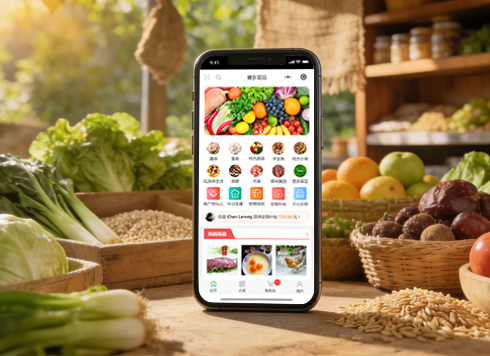
 Well-Recognized Custom E-Commerce Mall System Dev
The Good Shopping mini-app is natively buil ...
-
 Anhui Huixiang Vegetable Garden Agricultural Products Mini Program v2.0 Iteration Development
HuiXiang MiniApp V2.0: Upgraded homepage, n ...
-
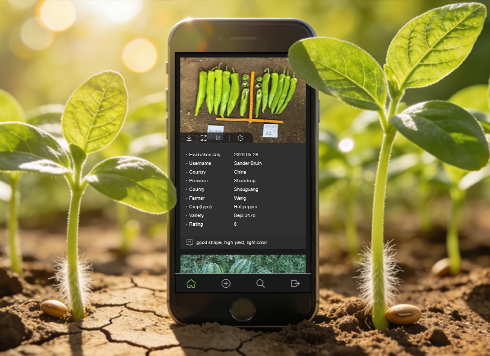 Kunshan TrialBook Mini-Program Custom Development
This project developed an English-only Tria ...
-
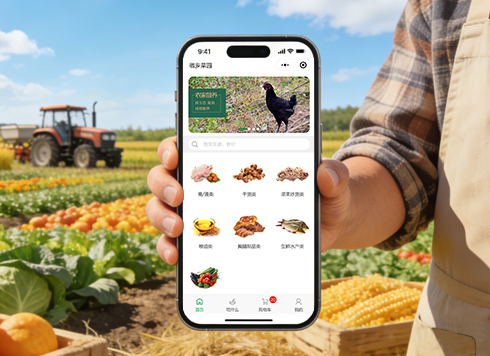 Agricultural Products WeChat Mini Program Custom Development
Lvran Di enhances agricultural sales via a ...
-
Custom Mobile App Development: Where Does the Multi-Fold Price Difference Go?
Date: Aug 14, 2026 Read: 103
-
Mobile Custom Development: Do You Really Need It? A Pitfall Guide from 0 to 1
Date: Jul 7, 2026 Read: 107
-
When users enter a shipping address and the keyboard pops up, the submit button can't be tapped: should you change the page structure or the input component first?
Date: Oct 14, 2026 Read: 7
-
After building an app with a cross-platform framework, Android colleagues say list scrolling feels rough and iPhone colleagues say swipe-back is unreliable: should we change the framework first or patch platform adaptation first?
Date: Oct 13, 2026 Read: 12
-
User-uploaded video plays on iPhone but some Android phones show only audio, no picture: does asking the user to re-record help first?
Date: Oct 12, 2026 Read: 17