Mobile Custom Development: Do You Really Need It? A Pitfall Guide from 0 to 1
Why Is Your App Always Underperforming?
You spent 3 months and burned through hundreds of thousands, and the app finally launched—but the user retention rate is less than 5%, the loading speed is comparable to a snail, and core features crash frequently... Where is the problem? Mobile custom development is not just throwing a list of requirements to the development team.90% of failed projects stem from a lack of basic knowledge about custom development. This article will start from the underlying logic to help you avoid those expensive pitfalls.
Mobile Custom Development vs. Template Development: Choosing Wrong Means Wasted Effort
Template Development: Looks Cheap, but Costs Are Actually Infinite
- One-time purchase for only 20,000-50,000 RMB? Every subsequent addition of a field or modification to the UI may incur high secondary development costs.
- Bloated Code: 70% redundant code leads to slow startup, high battery consumption, and soaring user uninstall rates.
- No Vertical Customization: Industry-specific business logic (such as multi-level approval for medical appointments, complex profit sharing for O2O) cannot be embedded, ultimately resulting in a "half-baked product."
Custom Development: One-time Investment, Continuous Iteration
- Lightweight Architecture: Core code is written on demand, with performance improved by over 30%, e.g., startup time reduced from 3 seconds to 0.8 seconds.
- Full-Stack Adaptation: From iOS Dark Mode to Android foldable screens, pixel-perfect adaptation provides a user experience consistency far beyond templates.
- Business Flexibility: Functions can be adjusted at any time as the market changes, rather than being tied down by a template framework.
But don't be intimidated by the word "custom." The core of true mobile custom development is the precise matching of budget and requirements. For example, an MVP may only require 3-5 core features, which can be delivered with high quality for 100,000-150,000 RMB; while a complex e-commerce live streaming platform may cost 800,000 RMB or more. The key is whether you know how to break down requirements.
5 Questions You Must Ask Yourself Before Custom Development
1. Do Your Users Really Need a Standalone App?
- Low-frequency tools: H5 lightweight apps or mini-programs may be more efficient.
- High-frequency, high-interaction scenarios: such as social networking, collaborative office work, and heavy trading—native custom development is the only solution.
2. Do You Want "Big and Complete" or "Small and Beautiful"?
Many startups immediately say they want to "benchmark WeChat and Taobao," but the first version ends up with a mountain of features, none of which are polished. The correct approach: Do subtraction first, find the 10% of scenarios that pain users the most, and use custom development to make that experience flawless. For example, the core of a home services app is not live streaming the cleaning, but "matching a cleaner within 15 seconds + real-time service tracking."
3. Does Your Technology Selection Match 100% Future Growth?
- Initial users < 100,000: Hybrid development (Flutter/React Native) is sufficient, but native interfaces should be reserved.
- User base explodes to millions: Must revert to native + server-side distributed architecture, otherwise every version iteration becomes a nightmare.
4. Are You Willing to Invest in Data Security?
Custom development can fully deploy data privately on corporate servers, avoiding the risk of data leakage from third-party platforms. This is a hard requirement, especially in finance, healthcare, and education industries.
5. Should You Build an In-House Team?
In-house: Monthly cost of 80,000-150,000 RMB (a team of 3 people), more suitable for long-term iteration. Outsourcing: Lower one-time cost, but requires strict control of requirement changes. Choosing a mature outsourcing partner (such as Xiyue Company, which has multiple successful cases in mobile custom development) can significantly reduce communication costs.
Practical Pitfall Avoidance Checklist: Full Process from Requirements to Launch
Requirements Research Phase (Takes 2-4 Weeks)
- Deliverables: Product Requirements Document + Interactive Prototype + Data Tracking Plan, all indispensable.
- Common Pitfall: The boss makes arbitrary feature decisions without conducting user interviews.
- Solution: Use the "Minimum Viable Product" approach, first build a demo of the core path, then test with 100 target users before finalizing.
UI/UX Design Phase (1-3 Weeks)
- Reject the "template feel": Custom interfaces must be based on brand colors and user operation habits (e.g., place the payment button in the natural finger resting area).
- Motion cost: Complex animations increase development effort but also significantly enhance user perception. The balance is to "use micro-interactions only at key interactions," such as loading animations and pull-to-refresh.
Development and Testing (6-12 Weeks)
- Agile Iteration: One Sprint every two weeks, delivering a runnable version each time.
- Testing Checklist:
- Weak network / network disconnection simulation
- Different system versions (iOS 15-17, Android 10-14)
- Multiple resolutions (full-screen, foldable, tablet)
- Memory leak and battery consumption testing
Release and Operations
- Must-do before launch: ASO keyword optimization + privacy policy compliance review.
- Post-launch monitoring: Use Firebase Crashlytics or a self-built logging system; fix high-frequency crashes daily during the first week.
Why Custom Development Is an "Investment" Rather Than a "Cost"
A counterintuitive data point: Companies that opt for custom development see an average 40% reduction in app iteration and redesign costs in the second year. This is because the foundational architecture is designed with scalability in mind, so adding new features later is like building with blocks. In contrast, every version upgrade of a template app is equivalent to a rewrite, getting worse over time. If you are hesitating about whether to choose mobile custom development, remember this: Cheap things have nothing good except being cheap; expensive things have nothing bad except being expensive. But "expensive" does not mean "burning money" — finding the right service provider, such as Xiyue Company, which has focused on mobile custom development for years, can help you put every penny to good use: They use a "requirements reverse engineering" approach to first eliminate false needs, then design the architecture, and finally quote.
Action Guide: 3 Things You Should Do Right Now
- Conduct a 30-minute user research: Find 5 potential customers and listen to them complain about current apps.
- Draw a "Feature Value Matrix": Classify all ideas into four quadrants by "high/low frequency" and "high/low value," and only build the top-right quadrant.
- Schedule a professional consultation: Communicate directly by phone or in person, asking clearly "what results can my budget achieve," rather than just asking for a price list.
The end goal of custom development is not just launch, but continuously creating value for users. Starting today, stop paying for "false needs."
-
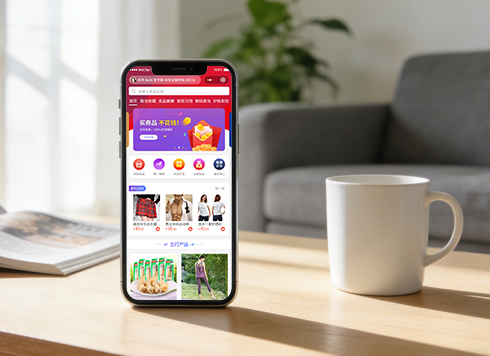 Well-Recognized Custom E-Commerce Mall System Dev
The Good Shopping mini-app is natively buil ...
-
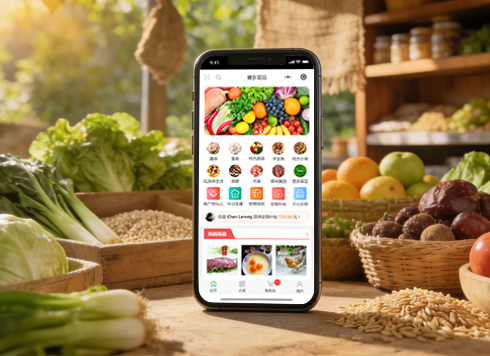 Anhui Huixiang Vegetable Garden Agricultural Products Mini Program v2.0 Iteration Development
HuiXiang MiniApp V2.0: Upgraded homepage, n ...
-
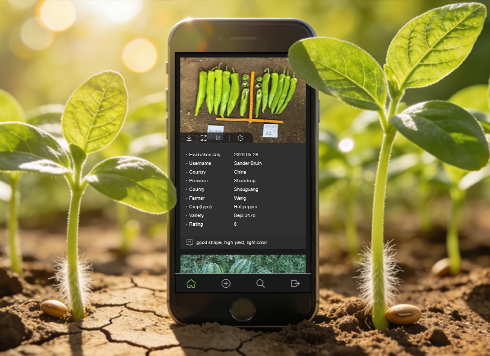 Kunshan TrialBook Mini-Program Custom Development
This project developed an English-only Tria ...
-
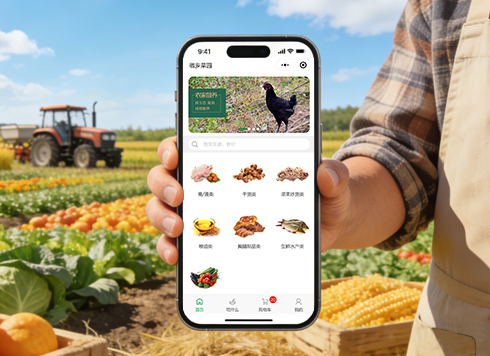 Agricultural Products WeChat Mini Program Custom Development
Lvran Di enhances agricultural sales via a ...
-
What Is Mobile Custom Development: Process, Cost, and Selection Guide
Date: Aug 11, 2026 Read: 105
-
Mobile Custom Development Full Process: A Practical Guide from Needs Assessment to Launch and Maintenance
Date: Jul 28, 2026 Read: 127
-
Mobile Custom Development Full Process Guide: From Requirement Analysis to Deployment
Date: Jul 27, 2026 Read: 104
-
Mobile Custom Development Full Process Guide: From Requirements Analysis to Launch and Maintenance
Date: Jul 25, 2026 Read: 138
-
Mobile Custom Development: A Full Process Guide from Selection to Delivery
Date: Jul 16, 2026 Read: 144