




Mobile Custom Development: How to Avoid Template Pitfalls and Build a High-Conversion Custom APP?
Many enterprises face a soul-searching question when launching a mobile project: should they choose a cheap template for quick launch, or invest more resources in mobile custom development? The template approach seems to save money and time, but in actual operation it often reveals issues such as limited functionality, poor user experience, and high later-stage modification costs. So how can you create an APP that fits your budget while truly supporting your business? This article will break down the key points of custom development from four dimensions: core value, technology selection, implementation process, and common misconceptions.
1. Core Value of Mobile Custom Development
1.1 Fully Match Business Needs, Avoid "Cutting Feet to Fit the Shoes"
Template apps only provide fixed functional modules. When your business processes or logic have special requirements, you often have to compromise or force adaptation. In contrast, mobile custom development starts from scratch, precisely meeting industry-specific rules, permission systems, approval workflows, etc. For example, Xiyue Company customized a membership system for a chain restaurant enterprise, enabling cross-store points integration, dynamic coupon distribution, and other features that templates cannot support. After launch, the member repurchase rate increased by 35%.
1.2 Excellent User Experience Is the Foundation of Retention
Template APPs often suffer from similar UI styles, redundant operations, and slow loading speeds. Custom development designs interaction details based on target user profiles:
- Visual layer: Brand colors and icon styles are fully unified to strengthen brand memory;
- Interaction layer: Button positions are optimized and operation steps are reduced based on user habits;
- Performance layer: On-demand resource loading and pre-caching of key data can improve startup speed by over 60%.
1.3 Long-term Maintainability and Scalability
Template code is usually closed and lacks documentation. When you need to add new features or integrate with third-party systems, you often have to start over. Custom development adopts a modular architecture where business code is separated from underlying components. Subsequent iterations only require adding modules to the existing base, and maintenance costs are far lower than repeated reconstruction.
2. Technology Selection: Native vs. Cross-Platform, Which to Choose?
Native Development: Benchmark for Performance and Experience
Developed with Java/Kotlin (Android) or Swift/Objective-C (iOS), it can directly call system-level APIs:
- Advantages: Highest animation smoothness, no delay in hardware calls like camera/sensor, support for complex functions like AR/VR;
- Applicable scenarios: Games, audio/video editing, real-time location navigation, financial payments and other high-interaction, high-security applications.
Cross-Platform Frameworks: Balance of Efficiency and Coverage
Solutions like Flutter, React Native, uni-app can use one codebase to launch on both Android and iOS:
- Advantages: Development cycle shortened by 30%–50%, lower maintenance cost, suitable for fast MVP validation;
- Points to note: Some native features require additional bridge code, and there may be performance bottlenecks under complex interactions.
Professional advice: For applications with simple business logic and standardized UI (e.g., content display, news reading), cross-platform is preferred; for performance-sensitive or hardware-intensive applications, native development is recommended. If the team lacks technical expertise, you can entrust a professional mobile custom development service provider like Xiyue Company to evaluate technology selection, avoiding large-scale rework due to wrong choices.
3. Key Four Steps of Custom Development: Practical Guide from Requirements to Launch
3.1 Requirements Analysis and Prototype Design
The most overlooked step. You need to complete:
- User journey map: Outline every step in core scenarios (registration/login, product browsing, checkout, payment, etc.);
- Feature priority ranking: Use the MoSCoW method (Must/Should/Could/Won't) to determine essential features for the MVP;
- Low-fidelity prototype: Draw process wireframes with Axure or Figma, then conduct internal reviews to ensure no logic gaps.
3.2 UI/UX Design: Make Users "Understand at a Glance"
Design guidelines should include:
- Unified design system: Define colors, fonts, spacing, component states, and other atomic elements;
- Motion guidelines: Page transitions, button feedback, and loading animations should be controlled within 200ms–400ms;
- Accessibility design: Text contrast ratio ≥4.5:1, interactive areas no smaller than 48dp.
3.3 Development and Testing: Avoid "Failing on Launch"
During development, it is recommended to adopt Scrum agile development, with iterations every two weeks and a runnable version demonstrated at the end of each iteration. Testing is indispensable:
- Unit tests covering core business logic;
- Integration tests verifying API, database, and third-party SDK integration;
- Performance tests: Simulate weak network conditions and high concurrency (e.g., 99% of requests respond within 1 second);
- Device compatibility tests: Cover the top 50 mainstream devices and system versions.
3.4 Launch and Continuous Iteration
App store review cycles require 3–7 business days. After launch:
- Analytics tracking: Monitor key conversion rates, page stay time, crash rates;
- Gradual rollout: First push a new version to 5% of users, observe metrics, then full release if no anomalies;
- Regular optimization: Continuously adjust UI, features, and even technical architecture based on backend data.
4. Common Misconceptions and Pitfall Checklist
Mistake 1: Developing Only for Android, Ignoring iOS Users
Although Android has a larger market share in China, iOS users have stronger purchasing power and loyalty. It is recommended to develop for both platforms at least, or use a cross-platform solution to cover both.
Mistake 2: Pursuing "All-in-One" from the Start, Trying to Build All Features in the First Version
The MVP (Minimum Viable Product) principle is the core of custom development. Launch core features first, validate with users, then iterate. Otherwise, you risk falling into a vicious cycle of long development cycles, cost overruns, and being outdated upon launch.
Mistake 3: Neglecting Backend Architecture Design
The mobile app is the "face," but the backend is the "skeleton." If the database design is unreasonable (e.g., no sharding/partitioning, lack of caching mechanisms), slow response times or data loss may occur as user numbers grow. It is recommended to adopt microservices + containerized deployment from the start, with elastic scaling capabilities reserved.
Mistake 4: Overusing Third-Party SDKs, Leading to Bloated Package Size
Many developers integrate a large number of SDKs (push, analytics, payment, social sharing, maps, etc.) for convenience, causing APK/IPA sizes to exceed 100MB, reducing users' willingness to download. It is recommended to keep only essential SDKs and implement on-demand loading for low-frequency features (e.g., maps, third-party login).
Mobile custom development is not a one-time deal, but a long-term project requiring continuous investment. Choosing a professional team can help you avoid detours, providing full-process services from requirements sorting to post-launch optimization. If you are planning an APP project, start by creating a detailed requirements document, then find an experienced custom development service provider (such as Xiyue Company) for technical solution review. By clarifying goals and budget at each stage, your APP can truly become a business growth driver, rather than another "zombie app" sitting idle in the app store.
-
 Well-Recognized Custom E-Commerce Mall System Dev
The Good Shopping mini-app is natively buil ...
-
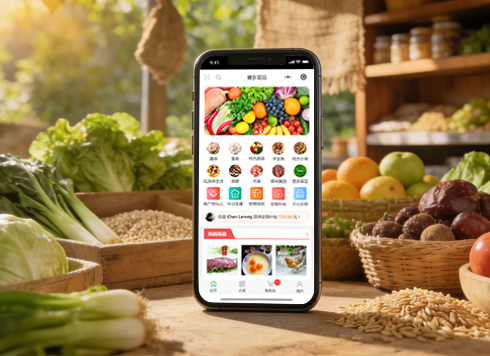 Anhui Huixiang Vegetable Garden Agricultural Products Mini Program v2.0 Iteration Development
HuiXiang MiniApp V2.0: Upgraded homepage, n ...
-
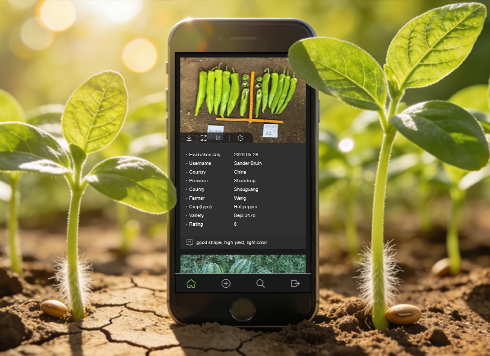 Kunshan TrialBook Mini-Program Custom Development
This project developed an English-only Tria ...
-
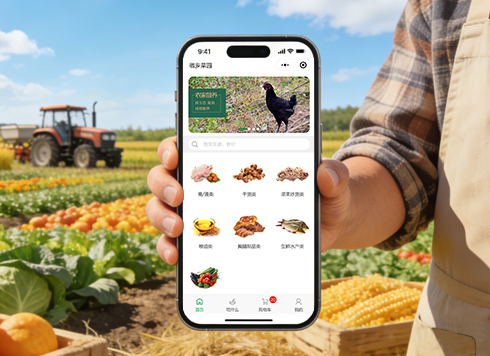 Agricultural Products WeChat Mini Program Custom Development
Lvran Di enhances agricultural sales via a ...
-
Custom App Development: Flutter or Native, Which Is More Suitable for Small Teams?
Date: Aug 22, 2026 Read: 101
-
Custom Mobile App Development: Complete Process, Technology Selection, and Common Pitfalls
Date: Aug 11, 2026 Read: 95
-
What Is Mobile Custom Development: Process, Cost, and Selection Guide
Date: Aug 11, 2026 Read: 105
-
How to Choose a Mobile App Development Approach: Applicability Boundaries and Evaluation Framework for Native vs Cross-Platform
Date: Jul 30, 2026 Read: 139
-
Mobile Custom Development Full Process: A Practical Guide from Needs Assessment to Launch and Maintenance
Date: Jul 28, 2026 Read: 126