




Mobile Custom Development Outsourcing: Which Steps Typically Go Wrong When the App Can't Launch?
In mobile custom development, completing features doesn't mean the app is ready for release. In 2026, many outsourced projects stall at the final launch stage. The root cause is often not coding capability, but rather unclear requirement boundaries, late API integration, testing that only covers happy paths, and missing delivery documentation. To judge whether a team can take a project to launch, don't rely solely on demo presentations—confirm that they have clearly agreed on these four aspects upfront.
When Features Are Complete but Launch Fails: Which Steps Typically Get Stuck?
Normal operation in a development environment does not guarantee production-ready launch. Issues such as third-party login callbacks, push certificates, database indexes, and permission controls often surface only under real-device concurrency. A more common cause is unclear requirement boundaries. If the requirements document only says "users can log in" without specifying third-party login, account lockout, or error prompts, the development completion cannot be quantified.
- API integration is delayed until the last week or two, making it impossible to trace errors to a specific party.
- Testing only runs happy paths on Wi-Fi, without covering weak networks, disconnections, or peak concurrency.
- Delivery includes only source code, without deployment docs or environment configuration, forcing successors to guess.
- Requirement changes are communicated verbally, leaving no documentation trail, so tracking accountability afterward is difficult.
How to Assess a Development Team's Reliability in Advance
Instead of waiting for disputes at delivery, conduct a "three-step verification" during the selection phase, replacing verbal promises with verifiable deliverables.
- Step 1: Check whether requirement clarification probes boundaries. Reliable teams ask about user scale, target devices, offline needs, and legacy system integration. Those who only ask "what pages to build" likely use templates.
- Step 2: Check whether the development plan includes milestones and acceptance criteria. Milestones should be module-specific, each with acceptance criteria, e.g., "the order list loads within 2 seconds on 4G networks."
- Step 3: Check whether the test plan covers abnormal scenarios, including at least weak networks, low-end device adaptation, permission denials, and data recovery.
If all three steps pass, project risk is controllable. Missing any step can later become a reason for delays or scope changes.
What Are Typical Budgets and Timelines in 2026? Cross-Platform vs. Native Differences
Based on typical 2026 market rates, a dual-platform app (iOS and Android) with login, lists, details, push notifications, and admin dashboard typically takes 3–6 months of outsourcing work, costing around 200,000 to 600,000 RMB. If it involves payments, maps, real-time audio/video, or hardware integration, both cost and time will significantly increase.
- Native dual-platform: Best for products requiring high interaction fluidity and system integration; budget is typically 30%–50% higher than cross-platform, with 2–4 weeks longer timeline.
- Cross-platform: Suitable for teams quickly validating an MVP or with budget constraints; however, deep hardware access still requires bridge code, which is not free.
A quick note: Projects with a full dual-platform package quote below 100,000 RMB likely have not fully understood requirements, or plan to profit from change orders. The final cost may not be lower, but the risk is higher.
How to Define Requirements Documents and Acceptance Criteria to Avoid Disputes
A feature list is not a requirements document. A truly executable document must specify functional boundaries, preconditions, exception flows, permission rules, and tracking requirements. For example, "login" should define phone/verification code login, lockout after 5 incorrect passwords, 60-second interval for verification codes, 7-day session validity, and cache clearing after logout.
For acceptance criteria, use a "scenario + condition + expected result" structure, signed off by both parties before development starts. For example: When opening the home page in airplane mode, a no-network prompt appears; after clicking retry, data is restored and the app does not crash. Such descriptions can be directly converted into test cases.
Acceptance Criteria Checklist
- Each functional module has at least 3 criteria: normal, abnormal, and boundary.
- Data states are clearly defined: what to show for empty data, loading, and load failure.
- Permission security: clear cache after logout, block unauthorized access.
- Performance baseline: core page load time, list scrolling smoothness, and weak network behavior.
At Delivery Acceptance: Check Against Four Dimensions Item by Item
Acceptance is not just "click and see no errors." In 2026, use the four-dimensional acceptance method: functionality, data, exceptions, and documentation.
- Functionality: Verify each requirement one by one, and confirm the implementation matches the agreement. For example, does "sharing" use system sharing or copy link?
- Data: Check whether tracking events are complete, and whether amounts, times, and timezones follow rules. For payment projects, especially test duplicate callback notifications.
- Exceptions: Force disconnection, kill processes, switch accounts, load large datasets, and observe for crashes. Since most projects only test happy paths, this dimension often reveals issues.
- Documentation: Deliverables should include source code, deployment docs, operations manuals, credential lists, and test reports. Missing any one will drastically increase maintenance costs.
If the team proactively provides self-test reports and deployment manuals, it shows confidence in delivery quality. This approach turns acceptance from an "adversarial" process into a "collaborative" one.
Custom Development Is Not Universal: Applicable and Inapplicable Boundaries
The value of custom development lies in unique business rules, or the need for long-term iteration, deep integration, and data self-control. However, if business logic is simple and speed to market is critical, templates or low-code solutions are more cost-effective.
Consider custom development carefully in these cases:
- Budget below 100,000 RMB but requiring dual-platform plus a complex backend—most likely, a usable product cannot be delivered.
- Requirements completely mirror an existing product; modifying templates is faster than building from scratch.
- No clear launch date or product owner, leading to constantly changing requirements.
The boundary is clear: only when business logic cannot be covered by standard products, and you have a clear decision-maker and sustained budget, is custom development worth the investment.
FAQ
How long does custom development typically take?
Based on 2026 market rates, a typical dual-platform app takes about 3–5 months; those with complex business logic or system integration take 6 months or more. Excessively short timelines often sacrifice testing.
Will actual costs exceed the budget?
After requirements documents and acceptance criteria are fixed and signed, the main cause of budget overruns is new requirements. It is recommended to include a change process in the contract, with separate pricing for individual features.
How can you tell if an outsourcing team is professional?
Ask the team for test reports and deployment documents from past projects, and try their launched apps. Focus on details like weak network handling, disconnection, and push notifications.
How to choose between cross-platform and native?
In the short term, cross-platform is cheaper; in the long term, for deep hardware interaction or system-level optimization, native is more stable. We recommend using cross-platform for MVPs to validate, then rewriting as needed.
Turn the three-step verification method and four-dimensional acceptance method into a checklist, and go through each item with the development team at project kickoff. Remember: custom development is not buying an off-the-shelf product; it is buying a verifiable delivery process. If the other party is unwilling to invest in documentation and testing, consider another vendor.
-
 Well-Recognized Custom E-Commerce Mall System Dev
The Good Shopping mini-app is natively buil ...
-
 Anhui Huixiang Vegetable Garden Agricultural Products Mini Program v2.0 Iteration Development
HuiXiang MiniApp V2.0: Upgraded homepage, n ...
-
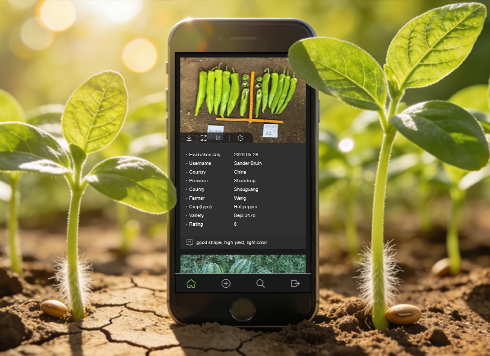 Kunshan TrialBook Mini-Program Custom Development
This project developed an English-only Tria ...
-
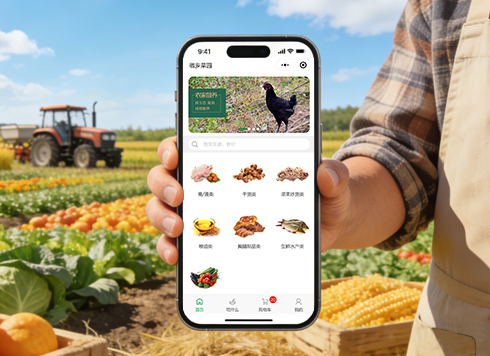 Agricultural Products WeChat Mini Program Custom Development
Lvran Di enhances agricultural sales via a ...
-
UI Design Approved but Code Not Started: Where Does Mobile Custom Development Rework Usually Get Stuck in 2026?
Date: Aug 31, 2026 Read: 112
-
Mobile Custom Development: How Detailed Should the Requirements Document Be? If You Keep It Thin, How Much Debt Will You Pay Later?
Date: Aug 18, 2026 Read: 98
-
Mobile App Acceptance: Will You Regret Testing Only Features and Not Performance After Launch?
Date: Aug 30, 2026 Read: 101
-
Style Mismatch Found at Delivery of Custom Mini Program: Design Spec or Development Issue?
Date: Aug 24, 2026 Read: 85
-
Before developing a mini program, what common misconceptions lead to overspending?
Date: Aug 19, 2026 Read: 103