



How Much Does Custom Mini Program Development Cost? Is It Worth the Higher Price?
Custom mini program development generally costs between 50,000 and 300,000 RMB, with a delivery cycle of 1 to 3 months. It suits businesses with unique process flows, those needing integration with existing systems, or those planning long-term iterations. To decide whether customization is needed, focus on three factors: whether your business has non-standard processes, whether system integration is required, and whether future iterations will be frequent. Templates are cheaper, but the data and code do not belong to your company, and scalability is limited.
What's the Difference Between Templates and Custom Development? Why Is Customization More Expensive?
Template mini programs are usually billed annually, costing about 2,000 to 10,000 RMB, with only interface reskinning and field configuration provided; the data and code belong to the platform. Custom development is implemented individually from requirements analysis, UI design to front-end and back-end coding, and the cost covers labor, design, testing, and more. In 2026 industry quotes, labor costs account for over 70% of custom projects. The price difference essentially comes down to ownership and scalability — custom development delivers source code, allowing you to freely switch developers or integrate third-party systems; templates are bound to the platform, and changing core logic often means starting over. For businesses that need to accumulate data assets over time, the data autonomy brought by customization can be decisive.
Where Does the Custom Development Budget Go?
A typical quote consists of four parts: requirements analysis and prototyping (approximately 10%-15%), UI design (15%-20%), front-end and back-end development (50%-60%), and testing and launch (10%-15%). Requirements analysis may not generate code, but it is the stage where you can save the most money and also where pitfalls are most likely — if requirements boundaries are unclear, later modification costs can increase exponentially. For example, in a mall project, if inventory deduction rules are not clarified in advance, you may end up with unmatched orders every day after launch. In 2026 project delivery, a medium-sized mall-type mini program (including user and admin ends) requires a team of 3 to 5 people working for about 6 to 10 weeks; projects exceeding 300,000 RMB usually involve complex permissions, payment splitting, or hardware interaction.
Should You Customize? A Three-Step Checklist
Don't just look at price. Follow these three steps to check, each with clear pass criteria:
- Map out your core business flow: Draw the complete process from a user's entry into the mini program and mark all non-standard decision logic. If the core process has common industry solutions, a template may suffice; if there are more than two unique nodes, customization is recommended.
- Audit system dependencies: List third-party systems that need integration (payment, logistics, ERP, CRM, etc.). If you have internal systems and require real-time data synchronization, templates often fall short, making customization the natural choice.
- Evaluate your iteration plan over the next two years: Will you add new features, adjust business models, or expand to multiple platforms? If the answer is clear, the customization investment is a long-term asset.
The three-step checklist calculates total lifecycle cost, not just the initial price. If only one criterion is met, assess its impact weight on your business; if two or more are "yes," customization is almost certainly a wise choice. Spending an extra tens of thousands of RMB upfront to gain control over data and code is a reasonable investment for most growing businesses.
How Long Does Development Take? How to Avoid Delivery Pitfalls?
In 2026, the industry averages are: simple tool mini programs take about 4-6 weeks, mall/booking types about 8-12 weeks, and projects involving complex algorithms or hardware connections take about 3-6 months. A shorter cycle is not necessarily better; compressing requirements analysis and testing will lead to a pile of problems after launch. A reliable developer will set phase acceptance checkpoints—entering UI and coding only after prototype confirmation, rather than coding blindly. Beware of "launch in X days" promotions; such promises often mean using a template or sacrificing requirements completeness. Before project start, ask the developer to provide a project schedule with milestones and acceptance criteria.
- Requirements confirmation: about 1 week, requiring participation from business owners.
- Design and development: occupies 60% of the time, with phased reporting.
- Testing and modification: reserve at least two weeks, covering mainstream devices and WeChat versions.
- Launch and after-sales: typically includes a 1-3 month free bug-fix period.
How to Choose Among the Three Options? Cost and Timeline Comparison
In 2026, three feasible paths exist in the market: template, custom, and hybrid. The hybrid approach is to buy a template for a quick launch, then gradually replace core modules with custom development, suitable for teams going from 0 to 1 and unsure if the business model works. The differences in cost, timeline, and scalability among the three options are as follows, for reference:
- Template: cost 2,000-10,000 RMB per year; timeline 1-2 weeks; data belongs to the platform; low scalability; suitable for individuals or event organizers.
- Custom: cost 50,000-300,000 RMB; timeline 1-3 months; data belongs to the business; high scalability; suitable for established businesses or chain brands.
- Hybrid: initial cost 10,000-30,000 RMB, with subsequent upgrades billed separately; first version in 2-4 weeks, full iteration billed separately; medium scalability; suitable for startups or enterprises in transition.
When Is Customization Not Suitable?
The following situations are better suited for templates or low-code solutions: budget below 30,000 RMB and fully generic functionality; business in a validation phase with a need for quick trial and error; no technical staff to handle subsequent maintenance; or the mini program serves only as a promotional page or event landing page. Forcing customization in these scenarios will slow down business momentum and waste money. For example, a mini program solely for brand display can go live in a week using a template and be deactivated after the three-month campaign ends—there is no need to bear the cost of custom development.
Conversely, you should insist on customization in the following situations: your business process involves industry barriers (such as medical appointment booking, educational scheduling, or same-city delivery); you need to build a user membership system and data analysis model from scratch; or you plan to make the mini program your core business platform. The ceiling of custom development depends on the developer's architectural capability. When choosing a team, focus on past cases and code standards.
Frequently Asked Questions
How long does it take for a custom mini program to recoup its cost?
The payback period depends on the business model. If the mini program can reduce customer acquisition costs or improve repurchase rates, it usually shows value within 6 to 12 months; if it is only for information display, it is difficult to measure directly in terms of revenue.
The developer says the source code belongs to me but stores it on their server—does that count as delivery?
No, that is not complete delivery. A proper delivery should provide access to a code repository or a compressed package, along with deployment documentation and an account list, to ensure you own all assets.
What materials must a company provide for custom mini program development?
Generally, you need a business license, the WeChat account of the mini program administrator, a payment merchant ID, a domain name, and an SSL certificate; for food and beverage businesses, industry qualifications such as a food business license are also required.
Can a custom mini program integrate AI features?
Yes. In 2026, most custom projects reserve API interfaces for integrating large language model conversations, intelligent customer service, or personalized recommendations, but the related costs are usually billed separately.
Action advice: First use the three-step checklist to determine your needs, then shortlist 2-3 developers and require them to provide detailed quotes and feature lists—don't just compare total prices. Custom development is suitable for businesses with a budget above 50,000 RMB, unique process flows, and long-term operation plans; if you only need event display or fully generic functionality, template or hybrid solutions are safer. Spend money on the parts that truly affect business differentiation, and save wherever possible.
-
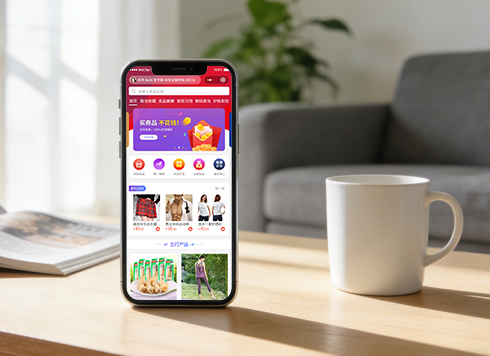 Well-Recognized Custom E-Commerce Mall System Dev
The Good Shopping mini-app is natively buil ...
-
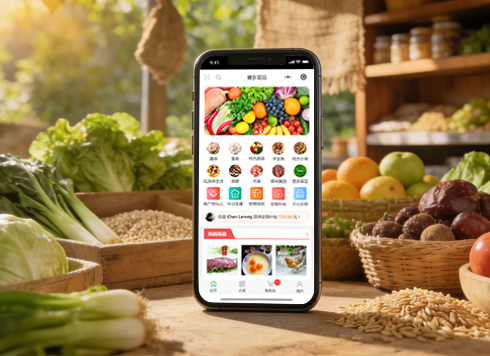 Anhui Huixiang Vegetable Garden Agricultural Products Mini Program v2.0 Iteration Development
HuiXiang MiniApp V2.0: Upgraded homepage, n ...
-
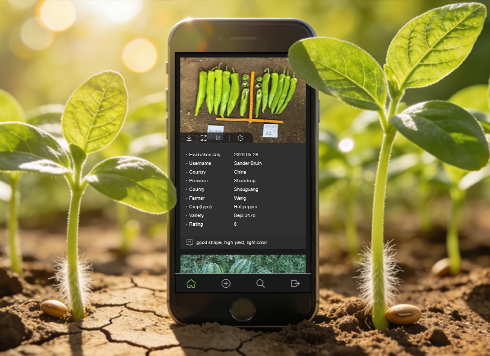 Kunshan TrialBook Mini-Program Custom Development
This project developed an English-only Tria ...
-
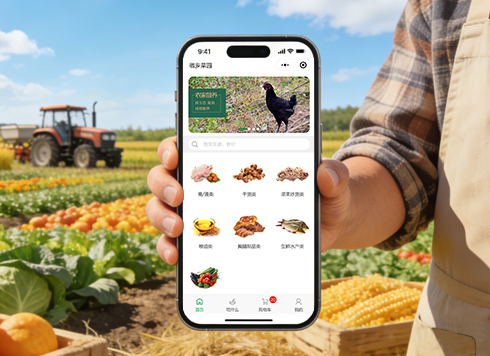 Agricultural Products WeChat Mini Program Custom Development
Lvran Di enhances agricultural sales via a ...
-
What Makes Custom Mini Program Development Cost More Than Templates? Is It Worth It?
Date: Aug 11, 2026 Read: 102
-
How to Choose Custom Mini Program Development: Evaluation Process, Cost Structure, and Common Pitfalls
Date: Aug 9, 2026 Read: 112
-
How to Develop a Custom Mini Program: A Process Guide from Requirements Assessment to Launch
Date: Aug 5, 2026 Read: 129
-
Mini Program Code Is in Testing but the Filing Has Not Been Approved: Must We Wait, or Can We Submit for Review First?
Date: Oct 14, 2026 Read: 8
-
User copies the order number, but pasting in WeChat still shows the last one — is switching the button to a popup really necessary?
Date: Oct 13, 2026 Read: 13