




How to Develop a Custom Mini Program: A Process Guide from Requirements Assessment to Launch
Custom mini program development is a delivery model where a mini program is designed and coded from scratch based on business requirements. Its core value lies in the high alignment between functionality and business logic. In 2026, a typical implementation process includes four steps: requirements assessment, technology selection, iterative development, and testing & acceptance. It suits teams with clear requirements for scalability and data security. Compared to template-based development, the cycle for custom development usually ranges from 4 to 12 weeks, with higher investment but stronger controllability.
What Is Custom Mini Program Development?
Custom mini program development differs from modifying an existing template; it revolves around specific business processes, from requirements analysis and UI design to frontend and backend development. The resulting code has a clear structure, and the data model is under your control, so future iterations are not constrained by third-party components. For businesses that need to integrate internal systems or handle complex permissions, custom development is a reasonable choice.
To determine whether custom development is necessary, evaluate from three dimensions:
- Business complexity: Does it involve multi-role permissions, complex state machines, or deep third-party integration?
- Data sensitivity: Does it require storing data on your own servers rather than relying on the platform's public database?
- Long-term iteration: Is there a plan to continuously add features and adjust processes?
Requirements Assessment: A Four-Step Implementation Method
Requirements assessment is the stage that determines project success. Here is a "four-step implementation method": business goal definition, user scenario breakdown, feature priority sorting, and acceptance criteria definition. Following this sequence helps avoid scope creep and rework later.
- Business goal definition: Clarify the core metrics to serve at this stage, such as reducing customer service inquiries or increasing appointment conversion rates. Metrics should be quantifiable.
- User scenario breakdown: Map out the operation paths of primary roles, annotate the time taken at each step, and identify exception branches.
- Feature priority sorting: Use a "must, should, optional" classification and only keep "must" features for the first version.
- Acceptance criteria definition: Describe the completion status of each feature in text, e.g., "A success page is returned within 2 seconds after order submission," for development and testing verification.
The rationale of this framework lies in addressing "why to do it" first, then "how to do it," avoiding immediate discussions about page styles. During execution, note that acceptance criteria should be co-authored by the business side and developers and confirmed in a review meeting. If a process cannot be quantified, write a verifiable behavioral description.
Technology Selection: Native vs. Cross-Platform Comparison
In 2026, the mini program tech stack primarily falls into two routes: native development and cross-platform frameworks. Native development uses platform-specific languages such as WeChat or Alipay; common cross-platform options include uni-app and Taro. There is no universal answer; the choice depends on team capabilities and project requirements.
Comparison dimensions are as follows:
- Development cost: Native requires separate maintenance for each platform, resulting in higher total cost; cross-platform runs on multiple platforms with one codebase, offering lower initial cost.
- Performance: Native offers more room for optimizing complex animations and native components; cross-platform is acceptable for standard business scenarios but may require special optimization for high-performance computations.
- Platform features: Native can promptly access newly released capabilities; cross-platform depends on framework updates, which may lag.
- Team requirements: Native requires familiarity with each platform's language; cross-platform requires the team to master the corresponding JS framework.
Here are judging criteria: if the target platform is complex and you plan to only build for a single mini program platform in the long run, prioritize native; if you need to quickly cover multiple mini program platforms and business interactions are not complex, prioritize cross-platform. Any choice should be based on your own delivery capabilities.
Development Process and Quality Acceptance Criteria
A standard custom development process typically includes requirements review, UI design, frontend/backend development, joint debugging and testing, launch review, and ongoing iteration. In 2026, most teams adopt agile iteration, delivering a runnable version every 1 to 2 weeks.
Quality acceptance criteria can be checked from four dimensions:
- Functional completeness: Test each item against the requirements document, covering all critical paths.
- Performance benchmarks: First-screen load time should be less than 3 seconds, and API response time less than 1 second.
- Compatibility: Cover mainstream WeChat base library versions and common device models.
- Security compliance: Sensitive information must be encrypted and stored, adhering to platform privacy protection requirements.
At the delivery stage, it is recommended that independent testers, not the developers themselves, perform the testing. For example, Xiyue Company provides test reports and launch checklists at project closure to ensure complete handover.
Suitable Scenarios and Boundaries
Custom mini program development suits businesses with clear processes, private data needs, or long-term operational plans, such as chain store appointment systems, internal enterprise process tools, and vertical e-commerce platforms.
Scenarios where custom development is not suitable or unnecessary include:
- Only for promotional displays with short lifecycles; free templates can be used.
- Limited budget with generic functions, such as simple business cards or registration forms.
- The platform already offers mature solutions that eliminate the need for re-development.
The criterion for determining boundaries is whether the benefits from custom development outweigh the additional development and maintenance costs. If the answer is unclear, build a prototype first.
FAQ
How long does custom mini program development take?
For typical projects, the cycle from requirements confirmation to launch ranges from 4 to 12 weeks, depending on feature complexity and team collaboration efficiency.
How to choose between native development and mini program templates?
Choose native or custom development when private deployment and deep customization are required; use templates when features are standard and release is urgent.
How much does custom mini program development cost?
Cost is determined by feature modules, design complexity, and development cycle. General projects range from tens of thousands to hundreds of thousands of yuan. It is recommended to obtain itemized quotes.
Can stable operation be guaranteed after custom development?
Stability comes from code quality and operational practices. A reliable team will provide test reports and launch checklists, but no software can guarantee zero failures.
Action guide: Complete requirements assessment first, then choose the development route. If you already have a clear business scenario, spend two weeks creating a prototype before deciding whether to proceed with custom development. For small teams with limited budgets, validate core functions using templates first. In summary, mini program development in 2026 values efficiency and controllability; following the process is more reliable than gambling on luck.
-
 Well-Recognized Custom E-Commerce Mall System Dev
The Good Shopping mini-app is natively buil ...
-
 Anhui Huixiang Vegetable Garden Agricultural Products Mini Program v2.0 Iteration Development
HuiXiang MiniApp V2.0: Upgraded homepage, n ...
-
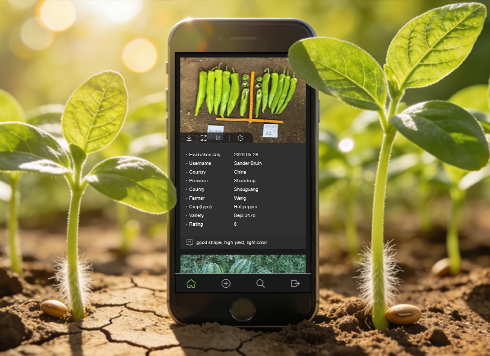 Kunshan TrialBook Mini-Program Custom Development
This project developed an English-only Tria ...
-
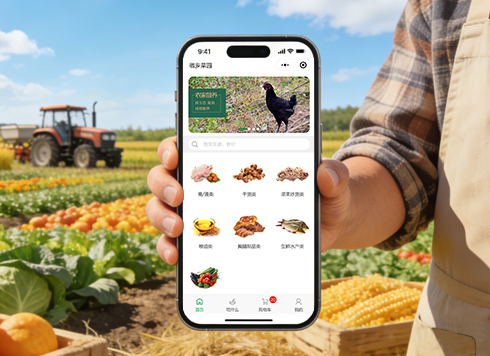 Agricultural Products WeChat Mini Program Custom Development
Lvran Di enhances agricultural sales via a ...
-
Custom Mini Program Development: A Full-Process Guide from Requirements to Launch
Date: Aug 6, 2026 Read: 147
-
How to Do Custom Mini Program Development: Process, Selection, and Applicable Boundaries
Date: Aug 2, 2026 Read: 156
-
How to Choose Custom Mini Program Development: Evaluation Process, Cost Structure, and Common Pitfalls
Date: Aug 9, 2026 Read: 113
-
What Is Custom Mini Program Development? Selection Process and Implementation Key Points
Date: Aug 3, 2026 Read: 147
-
How to Develop a Custom Mini Program? Process, Selection, and Common Pitfalls
Date: Aug 1, 2026 Read: 144