




How to Develop a Custom Mini Program? Process, Selection, and Common Pitfalls
Custom mini program development is a technical service that generates an independent mini program based on an enterprise's specific business needs, through requirements analysis, UI design, coding, testing, and iteration. Its core difference from template development is that custom development starts from business logic, while templates start from generic functionality. A common practice in 2026 is to first validate a prototype on a low-code platform before deciding whether to go custom; however, if core processes require deep adaptation, custom development remains the reliable path. This article provides a five-step implementation method, selection comparisons, and boundary judgment criteria to help enterprises make pragmatic decisions.
What Is Custom Mini Program Development?
From the deliverables perspective, custom development results in complete maintainable source code, an independent database, and a configurable backend; from the collaboration perspective, it requires the client to participate in key decisions throughout the process. In practice, custom development is suitable for scenarios where business processes are proprietary, require deep integration with internal systems, or involve complex permissions and state management—such as multi-level e-commerce distribution, store appointment plus membership top-up, supply chain order approval, and similar cases.
- Delivers source code and documentation, supporting future secondary development.
- Features are decomposed based on business requirements, not tied to platform templates.
- Can integrate with existing enterprise systems such as ERP and CRM.
- Requires higher development budget and communication costs.
To determine whether a project requires custom development, ask three questions: Does an existing template satisfy more than 80% of the core processes? Will the business process change as the business grows? Is real-time integration with other systems needed? If the answer is “no” to more than two of these, custom development is more appropriate.
Five-Step Implementation: From Requirements to Launch
Based on 2026 project delivery practices, custom mini program development can be broken down into five stages, each with clear entry and exit criteria, to avoid progress based on intuition.
- Requirements Clarification: Produce a feature list and priorities, and clarify core user paths. The qualification for this step is the ability to draw a main flow chart.
- Solution Design: Deliver prototype diagrams, UI mockups, technical architecture, and database schema design. Focus on confirming API definitions and permission models.
- Development Iteration: Split iterations by week, prioritize the core flow first, then add peripheral features. Keep the code testable.
- Testing & Acceptance: Includes real-device compatibility, business logic, exception flow, and performance testing. During acceptance, run the entire process with real data.
- Launch & Operations: Configure release, monitoring alerts, and analytics tracking. Keep close follow-up for one week after launch and address user feedback promptly.
Among the five stages, requirements clarification requires the most attention, as it determines the cost of all subsequent phases.
Selection Comparison: Custom, Template, and Low-Code
In 2026, there are three main paths for mini program development. The key to choosing is not budget back-calculation, but evaluating the “process immutability cost”—whether business rules can actually be implemented in a standard solution.
- Template Development: Low cost and fast launch, typically 1–2 weeks with a fee of around several thousand RMB. Suitable for display-oriented pages; the downside is that business logic cannot be deeply modified and data ownership is restricted.
- Low-Code Platforms: Achieve lightweight business through drag-and-drop configuration. Annual fee ranges from a few thousand to 20,000 RMB, with a cycle of 2–4 weeks. Suitable for simple processes; complex related logic can easily hit platform limits.
- Custom Development: High flexibility, can handle complex business models and system integration. Cost ranges from 50,000 to 300,000 RMB, with a cycle of 4–8 weeks. Suitable for business lines requiring continuous iteration.
Note that quotes below the normal range often imply risks of template reuse or compressed testing. Before signing a contract, you should ask about source code ownership and test reports.
How to Evaluate Whether a Development Team Is Qualified
Evaluating a custom development team cannot rely solely on a portfolio. A more practical approach is to examine their technical solutions, testing habits, and documentation standards. In 2026, mature teams usually proactively provide code version control, automated testing, and deployment logs.
- Requirement Response Approach: Do they quote directly, or first ask about business goals, user volume, and concurrency expectations? Teams that ask specific questions are more reliable.
- Prototypes and Documentation: Do they deliver prototypes, database design, and API documentation before development? Without these, later modification costs rise quickly.
- Code Quality: Ask to see the code repository and check whether it includes comments, unit tests, and CI configuration.
- Testing and Acceptance: Is there a separate testing phase? Do they provide a test case list and issue fix records?
- After-Sales and Iteration: How do they define bugs vs. requirement changes? Do they offer a free maintenance period after launch (commonly 1–3 months)?
There is a simple criterion: include in the contract that “deliverables include compilable source code, database scripts, API documentation, and deployment guide.” If the other party hesitates or plans to charge extra, it indicates a lack of confidence in delivery quality.
Applicable Scenarios and Boundaries
Custom mini program development is suitable for three types of situations: first, business processes involving multi-role and multi-state flows, such as e-commerce distribution and appointment services; second, scenarios requiring data synchronization with existing systems (e.g., ERP); third, when there are high requirements for data security and brand recognition.
Conversely, if you only need a display page, a campaign landing page, or early validation of an idea, template and low-code solutions will be faster and more cost-effective. Short-term projects with pure content display, one-off campaigns, or no subsequent iteration plan are not suitable for custom development.
Common pitfalls include: believing more features are better, assuming a good-looking interface equals good experience, thinking there is no need to manage after launch, or expecting custom development to be a one-time solution. To avoid these, confirm requirement change rules before signing and reserve an iteration budget.
Frequently Asked Questions
How much does custom mini program development usually cost?
Depending on feature complexity, the common range in 2026 is 50,000 to 300,000 RMB, including design and launch support. The specific cost needs to be evaluated based on the feature list; some projects may charge additional server fees.
How long does custom development take?
Generally 4–8 weeks, and complex projects may take longer. The key is the frequency of requirement changes. The earlier requirements are frozen, the faster the delivery.
Can a custom-developed mini program be modified later?
Yes. Custom development delivers source code, and later maintenance can be done by the original team or a third party. Modifications are flexible but incur additional charges. It is recommended to clarify source code ownership in the contract.
How to choose between custom development and template development?
Look at whether the core process is generic. Template development is suitable for standard display. If the business has unique rules or needs system integration, custom development is more reliable.
What are the common pitfalls in custom mini program development?
Common pitfalls include unclear requirements, low-price traps, ignoring acceptance testing, and unclear source code ownership. Clarify deliverables and testing standards before signing the contract.
-
 Well-Recognized Custom E-Commerce Mall System Dev
The Good Shopping mini-app is natively buil ...
-
 Anhui Huixiang Vegetable Garden Agricultural Products Mini Program v2.0 Iteration Development
HuiXiang MiniApp V2.0: Upgraded homepage, n ...
-
 Kunshan TrialBook Mini-Program Custom Development
This project developed an English-only Tria ...
-
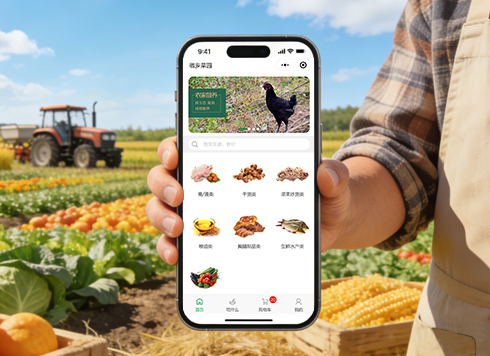 Agricultural Products WeChat Mini Program Custom Development
Lvran Di enhances agricultural sales via a ...
-
How to Choose Custom Mini Program Development: Evaluation Process, Cost Structure, and Common Pitfalls
Date: Aug 9, 2026 Read: 112
-
Custom Mini Program Development: A Full-Process Guide from Requirements to Launch
Date: Aug 6, 2026 Read: 146
-
How to Develop a Custom Mini Program: A Process Guide from Requirements Assessment to Launch
Date: Aug 5, 2026 Read: 129
-
What Is Custom Mini Program Development? Selection Process and Implementation Key Points
Date: Aug 3, 2026 Read: 146
-
How to Do Custom Mini Program Development: Process, Selection, and Applicable Boundaries
Date: Aug 2, 2026 Read: 155