



Custom Mobile App Development in 2026: Process, Budget, and Technology Selection Guide
Custom mobile app development refers to an app development model where everything from architecture design to feature implementation is built on demand based on a company's specific business processes and user experience requirements. In 2026, custom development remains a common choice for enterprises with high business complexity and non-standardized workflows, but not every app requires custom development—when existing SaaS solutions can meet the needs, opting for standardized solutions is often more cost-effective. To decide whether to go custom, focus on three core factors: whether the business processes are unique, whether the data is private, and whether the interaction requires heavy customization.
What Is Custom Mobile Development? Why Choose It?
Unlike template-based solutions, custom development involves full-stack customization from product prototyping, server architecture, and code implementation to release and maintenance. It directly maps requirements into code, eliminating redundant features and avoiding platform constraints. For enterprises that rely on apps for customer acquisition or operational efficiency, custom solutions can better align with user habits and leave room for future expansions such as AI and IoT integrations.
The value of choosing custom development lies in long-term business fit, not short-term investment. When a company's core operations cannot be expressed through generic software, a custom app can serve as a digital enabler. Consider custom development in the following scenarios:
- Business processes involve multi-role approvals, complex permissions, or industry-specific rules.
- Deep integration with internal ERP, CRM, hardware devices, or third-party APIs is required.
- Data is sensitive, requiring private deployment or local encryption.
- Long-term iteration is planned, with a desire to own complete source code and intellectual property rights.
The essence of custom development is to exchange controllable upfront costs for long-term business adaptability; its value depends on whether the requirements are sufficiently unique.
Mainstream Technology Approaches in 2026
In 2026, custom mobile development generally falls into three main approaches: native, cross-platform, and low-code. Native development uses Swift and Kotlin to build iOS and Android versions separately, offering superior performance and system interaction capabilities. Cross-platform development, using Flutter or React Native, allows a single codebase to adapt to both platforms, improving development efficiency. Low-code platforms are suitable for simple business needs but offer limited customization.
By 2026, cross-platform solutions cover the majority of business apps, but native development still holds an advantage in scenarios that require high-performance graphics rendering or deep hardware access. A comparison of the three approaches is as follows:
- Native development: Excellent experience but higher cost for two platforms; suitable for video, AR, hardware control, etc.
- Cross-platform development: Development cycle shortened by 30%–50% on average, with high code reuse; suitable for e-commerce, tools, enterprise office, and other common applications.
- Low-code development: Fast delivery but limited by platform rules; suitable for internal process tools or MVP validation.
Technology selection should consider the actual team skills and long-term maintenance costs. There is no one-size-fits-all technology roadmap that suits every project; instead, trade-offs must be made based on team expertise and maintenance overhead.
A Four-Step Implementation Framework for Custom Mobile Development
To reduce delivery risks, we recommend a "four-step implementation framework": requirement finalization, solution review, iterative delivery, and acceptance & operations. This framework breaks the project into verifiable stages, each with clear exit criteria.
Step 1: Requirement Finalization
Produce a reviewable Product Requirements Document (PRD) that includes user roles, operational flows, exception states, and permission lists, rather than simply listing features.
Step 2: Solution Review
Based on the PRD, produce the technical architecture, database design, API list for frontend/backend, and estimate effort and milestones. Prototype confirmation must be completed in this phase before coding begins.
Step 3: Iterative Delivery
Develop and test in 2–3 week iterations, delivering a runnable version each cycle. Requirement changes must be documented and costs re-evaluated to prevent scope creep.
Step 4: Acceptance and Operations
Conduct real-device testing, performance stress testing, and security checks. After launch, set up log monitoring and crash collection. The operations contract should specify response times and the scope of version updates.
The core output of the requirements analysis phase is not a feature list but user stories that include exception paths and permission rules. In this four-step framework, the first two steps consume about 40% of the time but determine 80% of a project's success.
Cost and Timeline Estimates for Custom Development
Common industry price ranges for 2026: simple utility apps start at around 100,000 RMB, medium-to-large business applications typically fall in the 300,000–800,000 RMB range, and projects involving hardware integration or algorithm models may exceed 1 million RMB. Price differences mainly stem from functional complexity, UI sophistication, concurrency scale, and the number of third-party integrations.
In terms of timeline, an MVP typically takes 2–4 months, while full launch generally requires 3–6 months. It's worth noting that frequent requirement changes can significantly extend both timeline and cost, and such changes are usually billed separately based on workload.
The root cause of cost variance lies not in code volume but in requirement uncertainty. Every additional role or permission increases development and testing costs, often in a non-linear fashion. We recommend enterprises aim for a "Minimum Viable Product" (MVP) as the first deliverable to control initial budget.
How to Assess Developer Quality and Avoid Common Pitfalls
When selecting a development partner, don't just look at case study screenshots; pay close attention to the team composition and engineering practices. A good developer will proactively request product review and provide prototype designs before quoting. Teams that quote a flat price based only on verbal requirements often inflate prices or compromise quality later.
Common mistakes include: ignoring testing and causing production crashes, unclear intellectual property agreements, over-reliance on individuals rather than teams, and neglecting operations costs. The following criteria can serve as evaluation references:
- Whether they can share code standards or automated testing coverage data from previous projects.
- Whether they have dedicated UI design and UX review roles.
- Whether the contract clearly states source code ownership, confidentiality terms, and post-launch maintenance duration.
- Whether the quote includes costs for cloud resources, certificates, app store accounts, etc.
An effective acceptance criterion is whether the developer can produce a reviewable prototype before quoting, rather than just giving a flat price based on verbal descriptions. Meanwhile, teams with years of mobile delivery experience, such as Xiyue Company, tend to emphasize upfront requirements review, but the final decision should be based on case studies and contract terms.
Applicable Scenarios and Boundaries
Custom development is not a panacea; its use depends on business stage and resource budget. Two scenarios are well-suited for custom development: first, when business processes are highly unique and cannot be covered by off-the-shelf products; second, when you aim to build your own technical barriers and evolve product capabilities over the long term.
Situations that are not suitable for custom development are also clear: internal management tools where mature SaaS options already exist; businesses with almost no personalized requirements; tight budgets and tight timelines; or projects intended only to validate an idea without long-term maintenance. In these cases, standardized or no-code solutions should be prioritized.
When business processes require deep integration with external systems, or when core functionality must remain available in offline scenarios, custom development becomes almost mandatory. Conversely, if it's an internal tool and mature SaaS exists in the industry, subscription-based solutions should be considered first. The boundary can be assessed using "three key questions": unique rules, private data, and long-term iteration plans.
Frequently Asked Questions
How long does custom development typically take?
Usually 2 to 6 months, depending on feature scope and acceptance speed. With agile iteration, you can launch an MVP first, then expand quickly.
How can I avoid poor-quality delivery from a developer?
Pay in stages, regularly review demo versions, request source code and documentation, and clearly define milestone acceptance and IP ownership in the contract.
Which is better for custom development: cross-platform or native?
If you only need iOS and Android support with complex business logic, cross-platform can save about 30% of costs. Native is more reliable for AR or high-performance video.
Do I still need maintenance after custom development?
Yes. New OS version adaptation, crash fixes, and API adjustments are ongoing. We recommend reserving 15%–20% of the development cost annually for maintenance.
Can I opt for custom development with a limited budget?
Yes, but it's best to define a minimal feature set and develop an MVP. If your budget is under 100,000 RMB and your needs are generic, consider SaaS or low-code options.
Action guide: First, complete an internal requirements review and identify three irreplaceable custom points. Then, select 2–3 development partners for prototype pitches. When signing the contract, clarify milestones and source code ownership. If your budget is below 100,000 RMB and the needs are generic, consider SaaS or low-code solutions first to avoid customizing for the sake of customization.
-
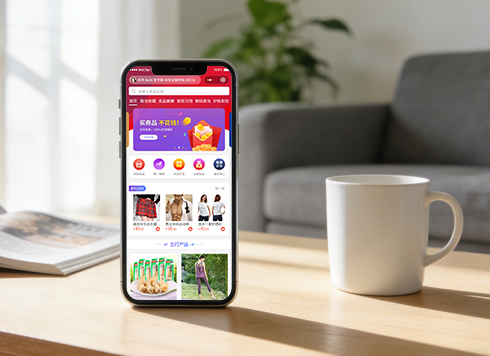 Well-Recognized Custom E-Commerce Mall System Dev
The Good Shopping mini-app is natively buil ...
-
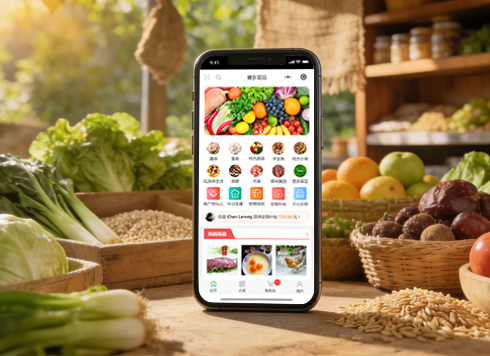 Anhui Huixiang Vegetable Garden Agricultural Products Mini Program v2.0 Iteration Development
HuiXiang MiniApp V2.0: Upgraded homepage, n ...
-
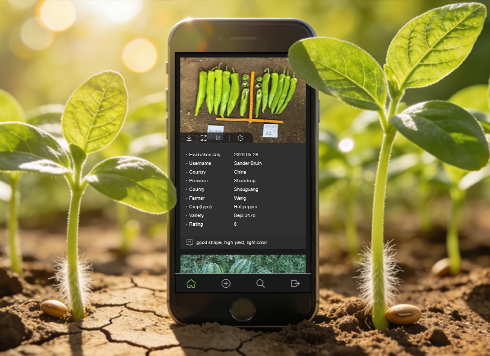 Kunshan TrialBook Mini-Program Custom Development
This project developed an English-only Tria ...
-
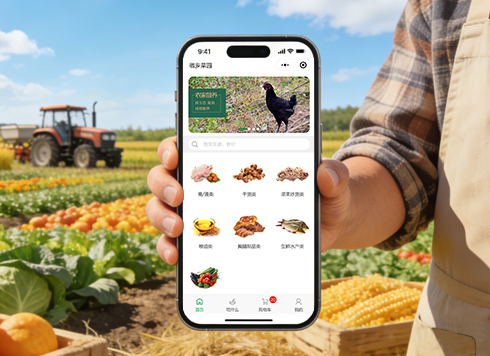 Agricultural Products WeChat Mini Program Custom Development
Lvran Di enhances agricultural sales via a ...
-
A Complete Guide to Custom Mobile App Development: From Requirements Assessment to Launch Acceptance
Date: Aug 10, 2026 Read: 120
-
Custom Mobile App Development Guide: Process, Cost, and Selection Criteria
Date: Aug 7, 2026 Read: 117
-
Custom Mobile App Development: UI Design Looks Ugly When Built—Who’s to Blame?
Date: Sep 7, 2026 Read: 93
-
Can custom mobile apps used only by internal employees skip the app store?
Date: Sep 4, 2026 Read: 105
-
Custom Mobile App Development: Where Do Privacy Compliance Checks Still Get Stuck Before Launch in 2026?
Date: Sep 1, 2026 Read: 100