



Why Is Custom Mobile Development So Expensive? How to Estimate Budget, Timeline, and Delivery Standards in 2026
Custom mobile development is expensive because it turns vague requirements into deliverable software, not just template-based shells. In 2026, an app with basic features like login, messaging, and payment typically takes 8 to 16 weeks to develop, with budgets ranging from tens of thousands to hundreds of thousands. To judge whether a price is reasonable, look beyond the total price and focus on feature breakdown and acceptance criteria.
Why You Shouldn't Judge Custom Development by Price Alone
Many teams immediately ask, "How much does an app cost?" But price is just the result. The real cost drivers are requirement complexity, reliance on third-party systems, and the openness for future iterations. By 2026, the mobile development market is fairly mature; for the same features, different teams may quote prices that differ by double, often due to how well they clarify requirements.
Why isn't price the first priority? Because the real cost begins after launch. In 2026, many teams cut corners during development, only to see server, maintenance, and update costs push the total higher. If custom development has a clean structure, subsequent iterations can add modules without touching the foundation.
- Template development: Low cost, fast launch, but fixed features that are hard to change; suitable for promotional pages and display apps.
- Custom development: Implements requirements one by one, the code belongs to you, and adding features later doesn't require a rewrite.
A verifiable criterion: if more than three requirements require deep integration with existing systems, template solutions usually can't handle them; custom development is more likely to keep the budget under control.
How to Estimate Budget and Timeline in 2026
Based on 2026 project delivery practices, a practical estimation starts with breaking down features, then multiplying by unit hours. Here's a "three-step estimation method" you can do yourself.
- List the feature list: Divide the app into user-side and admin-side, and write down what each page does. Pay attention to whether "login" means phone number login, verification code login, or third-party login—details determine workload.
- Assign time to each feature: A standard list page takes about 1–3 days, a form with complex interactions about 3–5 days, and payment integration about 5–7 days. These are common industry ranges, depending on team proficiency.
- Reserve 20% buffer: Requirement changes, device adaptation, and app store review can take time; schedules without buffer are likely to slip.
Why this breakdown? If a quote only gives a total price, you can't see where the money goes. Once broken down, you can see whether the budget is reasonable, which modules are the biggest, and whether you can cut requirements to reduce costs. This feature-point breakdown is especially suitable for teams building an app for the first time; you can use the feature list to get quotes from outsourcing companies and directly ask why a particular item is expensive. Also, evaluate how quickly the team responds. If the quote is very low but they take days to reply, the timeline risk is high.
How to Define Delivery Standards to Avoid Disputes
Project acceptance isn't based on "it looks good" but on a pre-agreed delivery checklist. In 2026, professional teams typically provide test accounts, technical documentation, and source code. During acceptance, check against the following four dimensions.
- Functional completeness: Every feature on the checklist works, with prompts for abnormal scenarios.
- Performance: Cold start time, list scrolling smoothness, and loading states under weak networks—specific metrics should be written into the contract.
- Compatibility scope: Which iOS versions and Android models are covered must be specified in advance; not all phones are guaranteed to behave identically.
- Maintainability: Whether code comments, directory structure, and deployment documentation are complete—this determines if you'll be lost when switching maintenance teams.
To judge whether it's acceptable, check off each item on the acceptance form. Don't accept verbal promises to "add later." It's much more expensive to make changes after launch. Also, test with your business people involved, not just the development team. Business people know where processes don't make sense, and test cases will be closer to real usage.
Template, Hybrid, or Native Custom: How to Compare Approaches
People often confuse "custom development" with "framework-based development." Actually, in 2026, there are three common implementation methods with distinct use cases.
- Native custom: Developed separately with Swift/Kotlin, offering performance and experience closer to system-level apps; suitable for tools, social, and payment scenarios.
- Hybrid development: One codebase runs on both platforms; suitable for content and e-commerce apps. Development costs are about 60% of native custom, but complex animations and hardware calls may be limited.
- Low-code/template: Suitable for internal enterprise tools and event registration; cannot handle complex business rules.
When choosing, ask yourself three questions: Does the business need offline capabilities? Does it need to access hardware like camera or Bluetooth? Do you plan to integrate AI capabilities in the next year? If you answer yes to any, native custom is more reliable; if you just want to reduce manual labor, hybrid is enough. The comparison isn't black and white; in 2026, some teams use a combination of native plus WebView. But such a compromise requires defining which pages use native and which use web, otherwise it can affect loading speed and user experience.
Applicable Scenarios and Boundaries
Custom development isn't for every project. It's suitable when business logic is unique, deep integration with existing systems is needed, or long-term iteration is planned. It's also clear when it's not: to validate an idea, a mini-program or template site is cheaper; if the budget is below 80,000 yuan and the requirements are close to a common mall or showcase site, forcing custom development will squeeze testing time and result in an unstable version.
In 2026, AI capabilities are becoming a key differentiator for apps. If you plan to integrate large models or recommendation feeds, the code structure of custom development makes it easier to deploy AI services smoothly, which is difficult with template solutions. It's worth noting that custom development doesn't necessarily mean expensive. If you control requirements well and remove non-essential features, the budget drops significantly. The real issue is vague requirements; rework costs are often higher than the initial development.
Common Questions
What's the minimum cost to custom-develop an app?
In 2026, excluding backend and design, a basic version app typically quotes between 50,000 and 100,000 yuan; simple tool apps may be lower, but below this range often means cutting features.
What's the difference between a 3-month and 6-month timeline?
The difference isn't in coding time, mainly in the number of requirement changes and backend integration cycles. A 6-month project usually has a more complex admin panel or hardware integration, so don't just compare quotes.
What if we discover the requirements are wrong mid-development?
The contract should specify a change process. A common practice is to have a change request form, confirm work hours and cost adjustments before proceeding, and avoid verbal requirements entering development.
Who owns the source code after custom development?
Formal contracts will clearly state that intellectual property belongs to the client. Check that this clause exists. If not, you may only receive a usage license.
In practice, first write a clear feature list, then get quotes from two teams using the same list, and compare feature-point unit prices and acceptance standards. If your project budget is below 80,000 yuan and requirements are generic, consider template or hybrid solutions; if the business relies on deep customization and long-term iteration, discuss budget and timeline using the framework in this article.
-
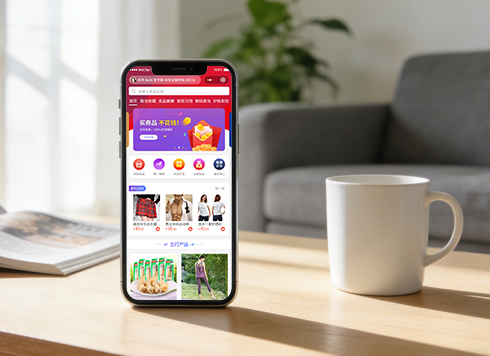 Well-Recognized Custom E-Commerce Mall System Dev
The Good Shopping mini-app is natively buil ...
-
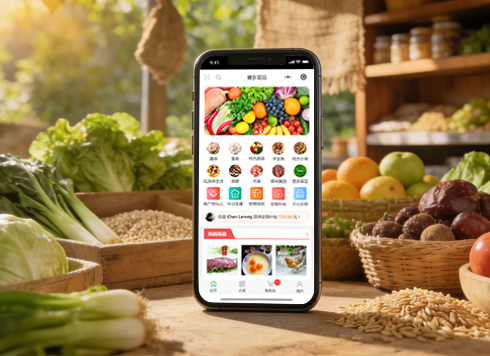 Anhui Huixiang Vegetable Garden Agricultural Products Mini Program v2.0 Iteration Development
HuiXiang MiniApp V2.0: Upgraded homepage, n ...
-
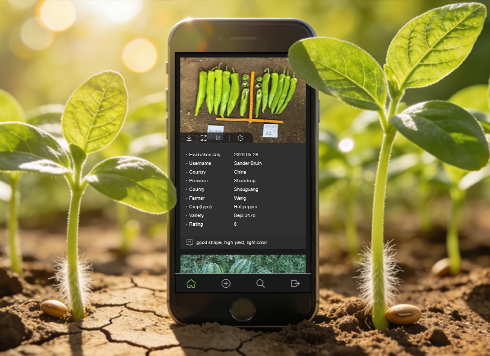 Kunshan TrialBook Mini-Program Custom Development
This project developed an English-only Tria ...
-
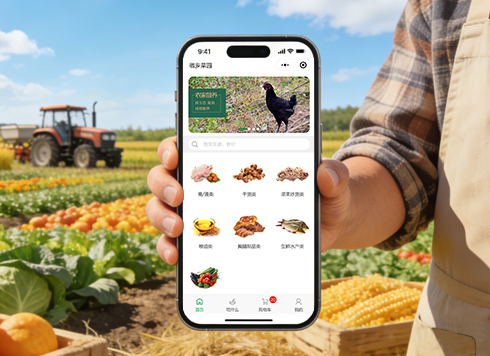 Agricultural Products WeChat Mini Program Custom Development
Lvran Di enhances agricultural sales via a ...
-
Mobile Custom Development Selection and Implementation Guide
Date: Aug 8, 2026 Read: 106
-
How to Do Custom Mobile Development: Process, Costs, and Selection Criteria
Date: Aug 4, 2026 Read: 144
-
Custom Mobile Development: Is a User-Only App Without an Admin Backend Still Enough in 2026?
Date: Sep 2, 2026 Read: 88
-
Lower Custom Mobile Development Quote: Should You Sign? Check These Points in 2026
Date: Aug 30, 2026 Read: 114
-
Custom Mobile Development: Budgets Keep Growing, Timelines Keep Slipping – Which of These 4 Pitfalls Apply to You?
Date: Aug 27, 2026 Read: 87