




How to Do Custom Mobile Development: Process, Costs, and Selection Criteria
The core criterion for custom mobile development is: Does off-the-shelf software fail to cover core processes? Does data need to be controlled and closed-loop internally? Is the business lifecycle longer than 18 months? Only if two or more of these are met does custom development become worthwhile. In 2026, the mature approach is to validate a minimum viable product first, then proceed to full-scale development.
What Is Custom Mobile Development
Custom mobile development is the process of designing and implementing mobile software from scratch to meet specific business needs. Compared with template-based products, it deeply aligns with business logic and can be extended and integrated. It is suitable for enterprise business apps, internal management tools, IoT control endpoints, and more. Custom development typically includes product design, UI/UX, frontend, backend, testing, release, and maintenance.
Why Custom Development Is Needed
Standardized CRM or industry software often cannot adapt to special processes, such as multi-level revenue sharing or real-time device synchronization. Custom development helps build proprietary data assets and remains compliant with data regulations in 2026. Boundary: If the business model is unverified or the budget is extremely limited, it is recommended to validate first using an MVP or low-code approach.
How to Do Custom Mobile Development: A Four-Step Implementation Method
- Business Analysis: Clarify users, key paths, and exceptional branches; map the main processes and define permissions.
- Solution Design: Determine technology stack, data models, interfaces, and UI standards; keep workload estimation error within 20%.
- Iterative Delivery: Deliver a runnable version every two weeks, pass core process tests, and resolve all defects.
- Acceptance and Maintenance: Confirm items against an acceptance checklist, retain source code, documentation, and deployment guides; the warranty period is typically 3–6 months.
The four-step method forces verifiable results at each stage, avoiding unnecessary coding based on vague requirements. In 2026, creating a clickable prototype first can reduce rework.
Technology Selection: Native vs. Cross-Platform Comparison
- Native Development: Better performance and full hardware access, but two codebases for the two platforms, with development costs about 40%–60% higher. Suitable for real-time audio/video and high-performance graphics.
- Flutter: One codebase for both platforms, consistent UI, and stable complex animations; however, native debugging is slightly more complex.
- React Native: Frontend-friendly stack with convenient hot updates; but performance bottlenecks may occur with complex lists and animations.
The core selection criterion is team familiarity and performance requirements, not the language itself.
Cost Structure and Timeline Estimation
Costs are primarily driven by manpower and time: requirements and design about 10%–15%, development and integration about 60%–70%, testing and release about 15%–20%. The overall timeline typically ranges from 2 to 6 months.
- Template customization: tens of thousands of yuan, suitable for fixed processes.
- Hybrid approach (open-source framework customization): around 100,000 yuan, suitable for standard features with light customization.
- Full custom development: starting from several hundred thousand yuan, suitable for a complete business loop.
Watch out for hidden costs: third-party API fees, app store annual fees, and version adaptation and maintenance.
Applicable Scenarios and Boundaries
Applicable: Service providers with a defined customer base, chain organizations, internal systems with complex approvals, and production/logistics companies needing hardware integration.
Not applicable: Pure display/introduction, simple sign-ups and announcements, or scenarios where form tools and mini-program templates suffice; if requirements are unclear and the business is unverified, test with an MVP first.
FAQ
How much does custom mobile development typically cost?
In 2026, the common range in China is 100,000 to 500,000 yuan, depending on complexity and team size; a purely internal tool may cost less than 100,000 yuan, while hardware interaction will increase the cost.
How long does custom app development take?
An MVP typically takes 2–4 months, while a full product takes 4–6 months; if payment, backend management, and multi-device synchronization are included, the timeline will be longer.
How can we avoid development companies abandoning the project?
It is recommended to pay in milestones, require a runnable build every two weeks, specify source code ownership in the contract, and condition the final payment on the acceptance test checklist.
What maintenance is needed after launch?
This includes OS version adaptation, third-party API changes, security patches, and feature iterations; it is recommended to reserve about 15%–20% of the original development cost annually for maintenance.
Can we use low-code to validate before custom development?
Yes, low-code is suitable for rapidly validating product logic; however, if deep customization is needed later, assess the costs of data migration and redevelopment in advance.
Actionable advice: First analyze your business, then ask 2–3 teams for solutions and quotes, and check the team members' experience. Include acceptance criteria in the contract and retain complete documentation and source code.
-
 Well-Recognized Custom E-Commerce Mall System Dev
The Good Shopping mini-app is natively buil ...
-
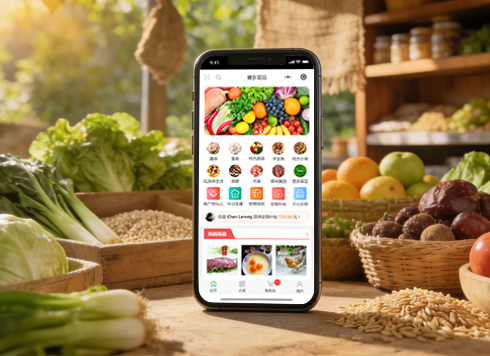 Anhui Huixiang Vegetable Garden Agricultural Products Mini Program v2.0 Iteration Development
HuiXiang MiniApp V2.0: Upgraded homepage, n ...
-
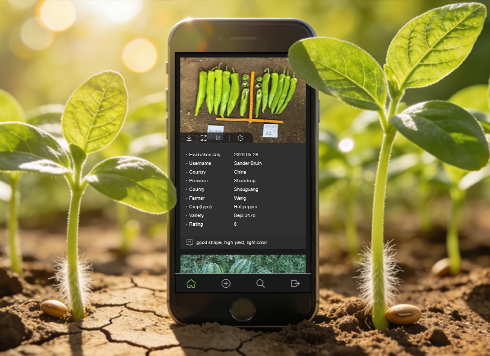 Kunshan TrialBook Mini-Program Custom Development
This project developed an English-only Tria ...
-
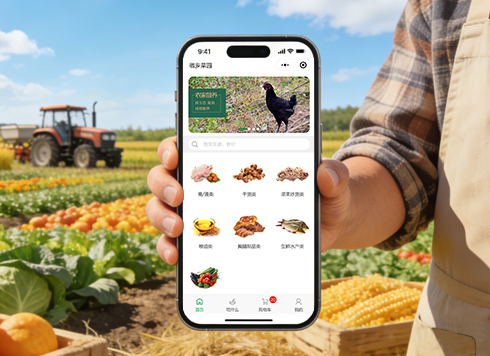 Agricultural Products WeChat Mini Program Custom Development
Lvran Di enhances agricultural sales via a ...
-
How to Approach Custom Mobile Development: Requirements Assessment, Technology Selection, and Implementation Essentials
Date: Aug 2, 2026 Read: 183
-
Why Is Custom Mobile Development So Expensive? How to Estimate Budget, Timeline, and Delivery Standards in 2026
Date: Aug 11, 2026 Read: 100
-
A Complete Guide to Custom Mobile App Development: From Requirements Assessment to Launch Acceptance
Date: Aug 10, 2026 Read: 121
-
Custom Mobile App Development for Enterprises: Selection, Process, and Common Pitfalls
Date: Aug 9, 2026 Read: 111
-
Custom Mobile Development: 2026 Project Process, Budget Ranges, and Selection Criteria
Date: Aug 9, 2026 Read: 141