




Complete Guide to Custom Mobile App Development Process and Technology Selection
What is Custom Mobile App Development
Custom mobile app development refers to designing and building a native, cross-platform, or hybrid architecture app tailored to a company's specific business needs, rather than using standardized templates. In 2026, common practice starts by identifying core functions and user scenarios before selecting a technical solution. Custom development offers full control over functionality, performance, and data security, but generally requires longer cycles and higher budgets than template-based products. It is appropriate when you have at least a 3-month iteration cycle or a minimum budget of RMB 100,000.
Why Companies Need Custom Apps
When standardized SaaS software cannot meet differentiated competitive requirements, custom development becomes necessary. For example, retailers need to integrate offline POS with online stores, and healthcare applications must comply with regional privacy regulations. These scenarios demand flexible front-end and back-end adaptation. Additionally, custom solutions allow companies to accumulate data assets and avoid platform lock-in.
- Business Uniqueness: Workflows, approval chains, and interaction logic cannot be replicated with templates.
- Performance & Control: Specific requirements for response speed, offline capability, and push accuracy.
- Compliance & Security: Industries like finance and healthcare must meet security protection or data localization requirements.
- Brand Consistency: UI/UX fully aligned with corporate visual guidelines.
Core Process: Five-Step Implementation Method
In 2026, mainstream delivery habits divide projects into five stages, each with clear inputs, outputs, and review milestones. This framework reduces rework risk and controls costs.
- Requirements Refinement: Transform business requirements into a feature list and user stories, distinguishing between MVP and phase 2 scope. Note: Avoid 'feature stacking' — prioritize by user value.
- Technology Selection & Architecture Design: Choose native (Swift/Kotlin), cross-platform (Flutter/React Native), or hybrid based on device coverage, team capabilities, and performance needs. Also determine backend language and data storage.
- Iterative Development & Testing: Adopt agile development with 2-week sprints, conduct interface integration and UI automated testing. Key point: Must produce testable builds, not just prototypes.
- Deployment & App Store Review: Set up CI/CD pipelines, prepare materials for iOS App Store and various Android markets. Common pitfall in 2026: ignoring each store's privacy policy updates, leading to rejection.
- Gradual Rollout & Maintenance: Validate with a small user group before full launch, establish crash monitoring and hotfix mechanisms. Unacceptable standard: crash rate exceeds 0.5% on launch day.
Each step in this framework requires formal documentation (requirements document, technical design, test report). Otherwise, the risk of delays increases by more than 40%.
Technology Selection: Native vs Cross-Platform
In 2026, choosing between native and cross-platform requires considering the following dimensions:
- Performance & Experience: Native (e.g., Swift + Jetpack Compose) fully leverages device hardware for smoother animations and complex gesture handling; cross-platform (Flutter's self-drawing engine) is close to native in most scenarios, but still lags in heavy AR/3D.
- Development Efficiency & Cost: Cross-platform uses one codebase for both platforms, reducing initial costs by 30%-50%, but debugging costs increase when platform differences arise; native requires two teams or starting with one platform, suitable for a single user base.
- Maintenance & Extensibility: Native can adapt quickly to system updates; cross-platform frameworks usually lag by 1-2 months. If you plan to extend to mini-programs, React Native or Taro have advantages.
- Team Requirements: Native requires specialists in iOS and Android; cross-platform requires familiarity with Dart or JS. In 2026, cross-platform talent supply is 3 times higher than in 2019, but senior native architects remain scarce.
A reasonable decision rule: if the app involves more than 5 independent hardware calls (e.g., NFC, Bluetooth, sensors), prioritize native; if the app is mainly for information display and form interaction, cross-platform is sufficient.
Cost Estimation & Quality Criteria for Custom Development
In 2026, a medium-complexity custom app (20-30 pages, including login, payment, IM, and admin backend) typically costs between RMB 300,000 and 800,000 with a 3-6 month timeline. Cost-saving methods include using open-source UI component libraries, purchasing third-party SaaS SDKs (e.g., push notifications, maps), and selecting mature backend frameworks. However, the following situations can cause costs to exceed the upper limit: frequent requirement changes (each change adds an average of RMB 20,000-50,000), starting development without prototypes, and not reserving testing time.
Quality can be assessed from four dimensions:
- Code Maintainability: The delivered project should include architecture documentation, code comments, and reasonable module decomposition. Unacceptable: a function exceeding 200 lines or loop nesting over 4 levels.
- Performance Benchmarks: Cold start time <3 seconds, list scroll frame rate >50fps, memory usage not exceeding 20% of similar competitors.
- Compatibility: Covers top 30 mainstream devices with no obvious layout issues.
- Delivery Documentation: Must include API documentation, operation manual, and environment setup guide.
Common Mistakes and Avoidance Guide
Many project failures stem from three types of mistakes:
- Overemphasis on Design, Underemphasis on Logic: Spending 80% of time on visual polish while neglecting technical feasibility. For example, designing a real-time video feature without confirming streaming costs and latency targets. Correct approach: perform technical validation (POC) before high-fidelity prototypes.
- Underestimating Testing Costs: Assuming unit tests and integration tests can be omitted, leading to frequent crashes after launch. In 2026, industry average: testing accounts for 30%-35% of total project effort.
- Neglecting Post-Launch Maintenance: A custom app is not finished after delivery; it requires adaptation to new system updates (iOS at least once a year), bug fixes, and performance optimization. Budget should reserve 15%-20% of total annual investment for maintenance.
Applicable Scenarios & Boundaries
Custom development is most suitable for: core business logic is unique and requires continuous iteration; user scale is expected to exceed tens of thousands and brand loyalty is critical; there is an internal IT team or long-term technical partner. Scenarios where custom development is not advisable or unnecessary include: temporary promotional campaigns (use H5 or mini-programs), extremely simple functionality (e.g., only information display — templates suffice), budget below RMB 100,000 with no subsequent iteration plan. In 2026, a reliable selection criterion: if an existing SaaS covers more than 80% of functions with configurable customization, prioritize SaaS with minor secondary development; only initiate full customization when the remaining 20% of functions constitute a competitive barrier.
Frequently Asked Questions
How long does it take to develop a custom app?
A medium-complexity project typically takes 3-6 months, including requirements, design, development, testing, and launch. Time depends on feature count, team experience, and third-party dependency stability.
Can cross-platform solutions completely replace native?
No. In scenarios involving heavy graphics processing, critical hardware calls, or very high refresh rates, native still has advantages. Information-based apps using Flutter or React Native can achieve 95% native experience.
How can I ensure data security in a custom app?
Implement HTTPS encryption, local encryption for sensitive data, code obfuscation, and regular penetration testing. Finance apps should hire a third party with security protection certification for auditing.
How to maintain a custom app after development?
Establish a maintenance mechanism: cloud server monitoring, crash log collection, hotfix channel, system version adaptation. It is recommended to sign a maintenance contract of at least one year with the developer.
Action Guide: If you are considering starting a custom project, first complete a requirements self-assessment, clearly defining core processes, non-functional requirements, and budget range. In 2026, Xiyue Company has assisted many companies through the entire process from requirements gathering to delivery, providing technology selection consulting and cost estimation. However, any solution requires your deep participation in requirement reviews; external teams cannot replace business understanding. Ensure an iteration plan is defined before project initiation, and avoid aiming for a full-featured product all at once.
-
 Well-Recognized Custom E-Commerce Mall System Dev
The Good Shopping mini-app is natively buil ...
-
 Anhui Huixiang Vegetable Garden Agricultural Products Mini Program v2.0 Iteration Development
HuiXiang MiniApp V2.0: Upgraded homepage, n ...
-
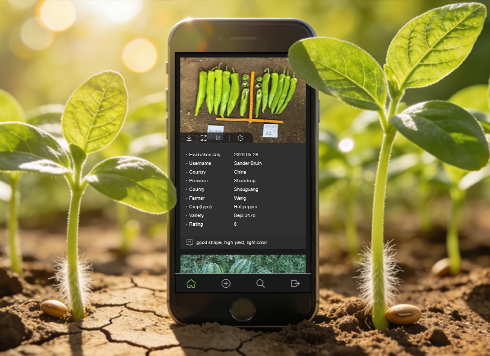 Kunshan TrialBook Mini-Program Custom Development
This project developed an English-only Tria ...
-
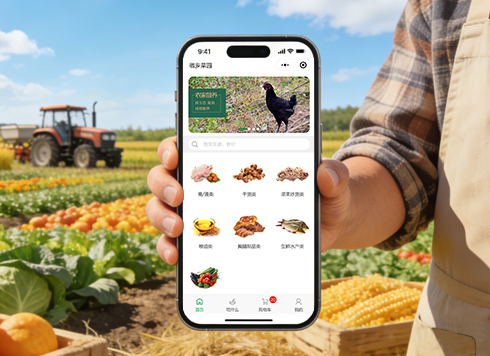 Agricultural Products WeChat Mini Program Custom Development
Lvran Di enhances agricultural sales via a ...
-
Custom Mobile App Development: Complete Process, Technology Selection, and Common Pitfalls
Date: Aug 11, 2026 Read: 96
-
Custom Mobile App Development: Needs Assessment, Technology Selection, and Implementation Key Points
Date: Jul 20, 2026 Read: 159
-
Custom Mobile Development: 2026 Project Process, Budget Ranges, and Selection Criteria
Date: Aug 9, 2026 Read: 141
-
Custom Mobile App Development: Process, Tech Selection, and Cost Control Guide
Date: Aug 6, 2026 Read: 160
-
How to Develop a Custom Mobile App: A Complete Process from Requirements to Launch
Date: Aug 5, 2026 Read: 120