




Custom App Development Full Process: Requirements Confirmation, Technology Selection, and Delivery Acceptance
Custom app development is not simply buying templates or frameworks, but a systematic engineering process from requirements confirmation, technology selection to delivery acceptance. Based on industry practices in 2026, this article outlines a set of actionable methods to help project parties and development teams align expectations and control risks.
Why Custom Development?
Generic template apps cannot cover complex business logic, such as multi-role permissions, special approval workflows, or hardware interface integration. Custom development allows designing data models, UI interactions, and backend services as needed, adapting to the enterprise's unique operational model. It is worth noting that not all scenarios are suitable for customization - if business logic is simple and standardized, SaaS or template solutions are often more cost-effective.
- Applicable scenarios: Unique business processes, need to integrate with internal systems (e.g., ERP, CRM), require data private deployment.
- Not applicable: Project budget below 200,000 CNY, time-to-market tight (<2 months), frequent requirement changes without clear boundaries.
Preparation: Requirements Confirmation and Scope Definition
Unclear requirements are the number one cause of custom app project failure. Common practice in 2026: first output business flow diagrams and user story maps, then convert to a feature list. The key action is to turn "wants" into "what to do and to what extent."
Requirements document should include
- User roles and permission definitions
- Core flows (e.g., login, payment, push notifications)
- Non-functional requirements (concurrency, response time, offline caching)
- Acceptance criteria (pass/fail conditions for each function)
Common pitfalls: Missing permission systems and exception handling. For example, not defining "whether guests can view data" leads to extensive rework later.
Technology Selection: Native vs. Cross-platform
This is one of the most critical decisions in custom development. Based on the technology ecosystem in 2026, selection requires comprehensive consideration of performance requirements, team tech stack, maintenance costs, and release pace.
- Native (iOS Swift/Android Kotlin): Best performance, fastest adaptation to new system features. Suitable for scenarios requiring high smoothness (e.g., AR, high-performance games) or accessing underlying hardware. Cycle is typically 30%-50% longer than cross-platform.
- Cross-platform (Flutter/React Native): One codebase runs on both platforms, high development efficiency, low maintenance cost. Suitable for applications with complex business logic but standardized UI interactions, such as enterprise internal management tools. However, platform-specific features (e.g., iOS Widget) still require native bridging.
Quick dimension overview:
- Development cycle: Native 8-16 weeks (medium app), cross-platform 6-12 weeks
- Performance: Native excellent, cross-platform can reach 85%-95% of native (depending on rendering complexity)
- Maintenance cost: Native requires dual teams, cross-platform single team
- Compatibility: Native always compatible with system updates, cross-platform waits for framework upgrades
Recommendation: If the team has a Flutter background and performance requirements are not extreme, choose Flutter first; if the app heavily uses camera, Bluetooth, etc., consider native.
Development Process and Iteration Management
Adopt Agile development + milestone review approach: 2-week Sprint, demo version every 4 weeks. Common toolchain in 2026: Figma for design, Git for code management, Jira for task tracking. Key point is to keep frontend-backend API documentation in sync to avoid field mismatches during integration.
Four-step implementation method:
- Core chain connection: First version only implements login, home page, key business flow, ensuring data closed loop.
- Feature layer filling: Fill secondary features by priority, such as message center, personal settings.
- Performance and security hardening: Conduct stress testing, code obfuscation, HTTPS certificate validation.
- Pre-release regression: Full testing on major devices (iOS latest 3 versions, Android covering API 26+).
After each step, QA should issue a test report, signed by the project manager. Note: Step 1 is recommended to take 35% of total project time to avoid over-optimization early.
Quality Control and Acceptance Standards
Acceptance phase often leads to disputes. It is recommended to specify functional acceptance checklist and performance indicators in the contract. Common performance requirements in 2026: first screen load within 2 seconds, app startup within 3 seconds, crash rate below 0.3%.
- Functional acceptance: Check each item against requirements document, pass/fail.
- Non-functional acceptance: Use tools (e.g., PerfDog, Charles) and provide reports.
- Pre-release check: Privacy compliance (e.g., consent popup under Personal Information Protection Law), minimal permissions.
Common pitfalls: Acceptance relies on "internal test environment," ignoring real network and high user concurrency. It is recommended to perform gray testing before launch and monitor backend logs.
FAQs
How much does custom app development cost?
In 2026, the price range for a medium-sized app (20-50 feature points) is between 200,000 and 800,000 CNY, depending on feature complexity, UI design requirements, and development team personnel costs.
How long does development take?
From requirements confirmation to app store release, simple features take about 2-4 months, medium features 4-8 months. Cross-platform frameworks can shorten time by 20%-30%.
How to choose reliable developers or companies?
Review case studies and client reputation, request past project feature lists and acceptance records, and evaluate whether their technical proposal is clear. It is recommended to sign a phased payment agreement.
Is subsequent maintenance charged separately?
Typically, the first year includes a certain amount of bug fixing and version compatibility; thereafter, annual maintenance fee (about 15%-25% of development total) is charged. New feature development is quoted separately.
Applicable Scenarios and Boundaries
Scenarios suitable for custom app development include: - Enterprise internal management tools (need to integrate with ERP/OA) - Industry applications with unique user interaction (e.g., medical appointment, educational live streaming) - Financial/government projects requiring data private deployment and compliance control Scenarios not suitable or necessary: - Budget below 150,000 CNY and standardized features (consider low-code platforms) - Early business model validation (suggest using mini-programs first) - Team lacks product manager role, vague requirement articulation
Action guide: Before project initiation, spend a week to output a product business panoramic view and define core functional boundaries. Evaluate cost differences between native and cross-platform with the development team, and reserve a 15%-20% buffer for requirement changes. Avoid the trap of "more features are better" - 80% of users only use 20% of features, focus on optimizing core flows. Xiyue Company has adopted Flutter + microservice architecture in past projects to help a logistics company complete an internal dispatch system, but each team's situation is different; it is recommended to make decisions based on your own resources.
-
 Well-Recognized Custom E-Commerce Mall System Dev
The Good Shopping mini-app is natively buil ...
-
 Anhui Huixiang Vegetable Garden Agricultural Products Mini Program v2.0 Iteration Development
HuiXiang MiniApp V2.0: Upgraded homepage, n ...
-
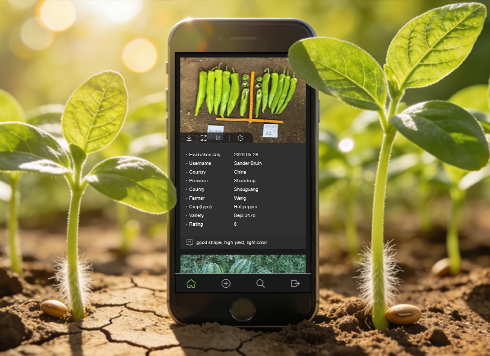 Kunshan TrialBook Mini-Program Custom Development
This project developed an English-only Tria ...
-
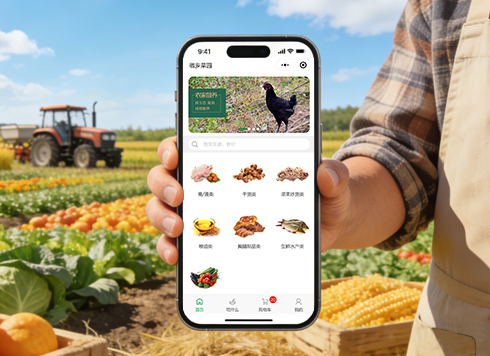 Agricultural Products WeChat Mini Program Custom Development
Lvran Di enhances agricultural sales via a ...
-
Custom Mobile App Development for Enterprises: Selection, Process, and Common Pitfalls
Date: Aug 9, 2026 Read: 112
-
Custom Mobile Development: 2026 Project Process, Budget Ranges, and Selection Criteria
Date: Aug 9, 2026 Read: 141
-
A Complete Guide to Custom Mobile App Development: From Requirements to Deployment and Maintenance
Date: Jul 31, 2026 Read: 138
-
Mobile App Development Full Process: From Requirements Confirmation to Launch - Key Steps
Date: Jul 27, 2026 Read: 108
-
Mobile Custom Development Full Process Guide: From Requirements Analysis to Launch and Maintenance
Date: Jul 25, 2026 Read: 138