



Mini Program Custom Development: Selection Process and Common Pitfalls
Mini program custom development refers to building a mini program entirely based on an enterprise's specific business needs, from interface design to backend functions, rather than using templates or ready-made solutions. Its core value lies in flexibility and brand differentiation, but it requires matching budget and development cycles. A common practice in 2026 is to adopt hybrid development or low-code platforms to accelerate delivery while retaining native implementation for core modules.
Complete Process of Mini Program Custom Development
A standard custom development project typically includes the following five stages, each with clear deliverables and acceptance criteria.
- Requirement Definition: Define core functions, target users, and key metrics, and output a requirement document. This step should avoid the mindset of "more features are better" and focus on MVP first.
- Prototype Design: Produce an interactive prototype based on the requirement document, which should pass usability testing. Qualification standard: Users can complete core tasks without guidance.
- Technology Selection: Evaluate the fit between native development and low-code platforms, and determine the technology stack. It is recommended to decide based on team experience, project complexity, and iteration frequency.
- Development and Testing: Develop iteratively in modules, and synchronously run through test cases. Reserve 20% of time for performance optimization and compatibility testing.
- Deployment and Launch: Submit for review and prepare for canary release. Ensure there is a rollback plan and monitoring alerts.
Technology Selection: Native vs. Low-Code Solutions
Native development uses WeChat's official tools and APIs, offering the best performance and feature completeness; low-code platforms enable rapid construction through graphical configuration and pre-built components, suitable for simple business scenarios. The two differ significantly in cost, cycle, and flexibility.
- Native Development: Excellent performance, no functional ceiling, but long development cycle and high technical threshold. Suitable for large-scale e-commerce, social, and tool applications.
- Low-Code Platforms: Fast development, low maintenance cost, but limited customization capabilities. Suitable for internal OA, event registration, data collection, and other routine scenarios.
Selection advice: If the project involves complex interactions, real-time data synchronization, or deep third-party integration, prioritize native development; if the business logic is fixed and iteration is frequent, low-code solutions are more cost-effective. The trend in 2026 is to use a hybrid approach—core modules developed natively, and regular pages quickly built with low-code.
Common Pitfalls and Avoidance Methods
The following pitfalls frequently occur in practice; identifying them early can save significant rework costs.
- Pitfall 1: Feature Bloat. Thinking that more features make users like the product more, but it actually leads to a crowded interface and poor user experience. Correct approach: Be user-task-oriented and only keep high-priority features.
- Pitfall 2: Ignoring Data Analytics. Starting to think about tracking after launch misses the optimization window. Plan key metric collection during the prototype stage.
- Pitfall 3: Underestimating Post-Launch Maintenance. Believing that launch means the end, without reserving a maintenance budget. Mini programs require continuous API updates, bug fixes, and adaptation to new rules.
- Pitfall 4: Blind Price Comparison. Focusing only on price, ignoring team case studies and code quality, leading to high hidden costs later. Demand a demo and agree on testing standards.
Avoidance methods: Establish a requirement review mechanism, set checklists for each stage; sign a contract with clearly defined acceptance criteria and maintenance period with the developer.
Applicable Scenarios and Boundaries
Mini program custom development is suitable when: business logic is unique, integration with internal systems is needed, brand requirements are high, and long-term iteration is required. Typical scenarios include B2B trading platforms, retail with complex membership systems, online education, etc.
Scenarios not suitable for custom development: simple graphic display or form collection, budget below 30,000 RMB, required to launch within two weeks, or validation stage (MVP) without user testing. In these cases, template mini programs or low-code solutions are more efficient.
Boundary statement: If your core need is to quickly validate a business hypothesis, prioritize low-code or SaaS tools; when validation passes and deep customization is needed, then start a custom development project.
Cost Breakdown and Cycle Estimation
Based on project delivery habits in 2026, the cost of custom mini program development typically includes design, development, testing, deployment, and first-month maintenance. The cycle varies by feature complexity: simple tool-type about 2 months, medium complexity (including membership, payment, backend management) about 3 months, complex applications (including real-time communication, big data processing) about 4 months.
- Design: UI/UX, about 15%-20% of total budget.
- Development: Frontend + backend + database, about 50%-60%.
- Testing: Functional, performance, and security testing, about 10%-15%.
- Deployment and Maintenance: Server, domain, monitoring, about 10%-15%.
Specific amounts vary significantly by region and team experience. In typical cases of Xiyue Company, medium-complexity projects cost between 100,000 and 150,000 RMB. It is recommended to define milestone payments in the contract to reduce risk.
Frequently Asked Questions
How long does mini program custom development take?
Generally 2-4 months, including design, development, testing, and deployment, depending on feature complexity. It is advisable to reserve one month buffer for requirement changes.
Which is more cost-effective: custom development or template mini programs?
Templates are suitable for short-term display and very low-cost scenarios; custom development is more cost-effective for long-term maintenance and feature expansion, especially when business logic is complex.
How to ensure the quality of a custom-developed mini program?
Choose a team with case studies, request a code audit report, and agree on test coverage and performance benchmarks (e.g., first-screen loading < 1.5 seconds).
What technology stack is recommended for mini program development in 2026?
For native development, use the native WeChat framework with cloud development; for cross-platform, uni-app or Taro are options; backend commonly uses Node.js or Go.
Action guide: Before starting custom development, produce a prototype of at least 10 pages and invite 5 target users for usability testing. Boundary reminder: Custom development is not suitable for projects with a budget below 50,000 RMB or a cycle shorter than 6 weeks; in such cases, consider using low-code or templates for MVP validation first.
-
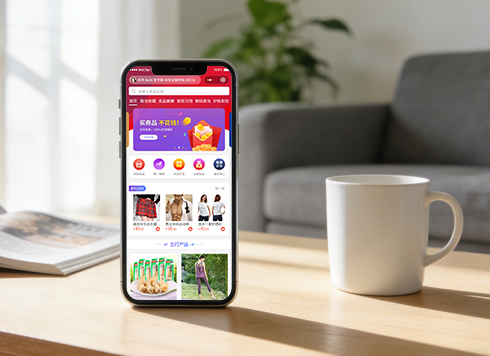 Well-Recognized Custom E-Commerce Mall System Dev
The Good Shopping mini-app is natively buil ...
-
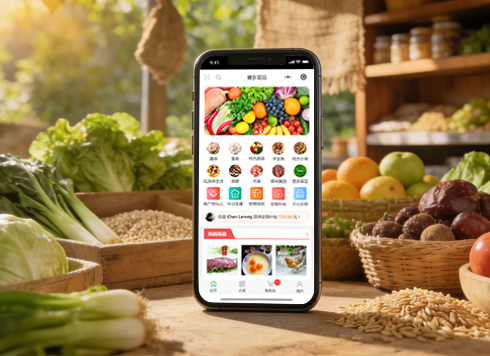 Anhui Huixiang Vegetable Garden Agricultural Products Mini Program v2.0 Iteration Development
HuiXiang MiniApp V2.0: Upgraded homepage, n ...
-
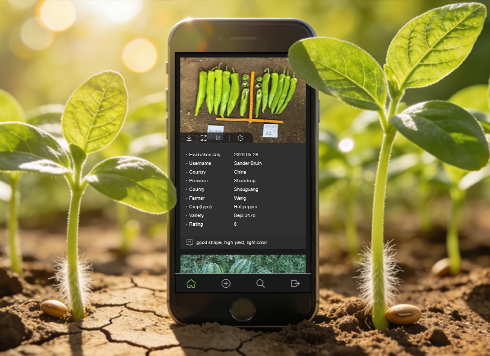 Kunshan TrialBook Mini-Program Custom Development
This project developed an English-only Tria ...
-
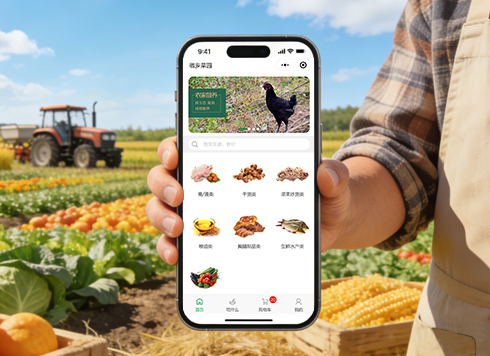 Agricultural Products WeChat Mini Program Custom Development
Lvran Di enhances agricultural sales via a ...
-
Custom Mini Program Development: Per-Page or Per-Feature Pricing, Which Is Less Likely to Be Upcharged?
Date: Aug 29, 2026 Read: 107
-
Mini Program Development Basics: Definition, Selection, and Implementation Process
Date: Aug 10, 2026 Read: 140
-
Mini Program Custom Development: Core Knowledge and Selection Guide
Date: Jul 31, 2026 Read: 163
-
Enterprise WeChat Mini Program Custom Development: A Complete Guide to Selection and Implementation
Date: Jul 27, 2026 Read: 139
-
How to Choose Mini Program Custom Development: A Complete Guide from Requirements to Delivery
Date: Jul 26, 2026 Read: 147