




Full-Cycle Custom Mobile Development: A Standard Guide from Requirements to Acceptance
What is Custom Mobile Development?
Custom mobile development refers to the process of designing, coding, and delivering a dedicated mobile application from scratch based on specific business needs, as opposed to using off-the-shelf templates or low-code platforms. As of 2026, common practice involves completing user research and competitive analysis before project initiation to ensure clear requirements. The core value of custom development lies in flexible adaptation to business logic, controllable data security, and fine-grained user experience optimization, but it also entails higher upfront investment and longer timelines.
A qualified custom solution should meet three criteria: complete functional coverage, performance indicators achieved (e.g., cold start time under 3 seconds), and scalability. Neglecting any one of these may lead to rework or user churn later.
Why Do Enterprises Need Custom Development Instead of Generic Solutions?
Generic solutions (e.g., SaaS templates) enable quick launch but have clear shortcomings in personalization needs, data sovereignty, and long-term iteration capability. The comparison between custom development and template solutions can be clarified through the following dimensions:
- Business Fit: Custom solutions fully align with internal processes, while templates often require users to change their work habits.
- Data Security: Custom development supports private deployment, keeping data within the enterprise network; templates typically use public cloud, posing higher compliance risks.
- Extension Cost: When adding or modifying features later, the architecture of custom solutions can be controlled; templates are constrained by the platform and may not accommodate new requirements.
- Time and Budget: Templates have low initial cost but high long-term licensing fees; custom development has high initial cost but no recurring fees (based on typical project budgets in 2026, the average cost of custom development is about 70%-120% of three-year template fees).
Typical scenarios where enterprises choose custom development include: involving core business logic (e.g., logistics dispatching), needing deep integration with internal systems (e.g., ERP), and industries pursuing differentiated user experience (e.g., healthcare, education).
2026 Four-Phase Delivery Method for Custom Mobile Development
Based on years of practice, the four-phase delivery method divides the project into requirement analysis, system design, development and testing, and acceptance iteration. This approach ensures clear deliverables at each stage, reducing risk. The detailed steps are as follows:
Phase 1: Requirement Analysis and Benchmark Research
The core output of this phase is the Requirements Specification and Competitive Analysis Report. At least three rounds of interviews with business stakeholders and user representatives are required, and user story mapping is used to prioritize features. Key deliverables include: feature list, prototype sketches, and non-functional requirements (e.g., concurrency, response time). Common Pitfall: Missing or frequently changing requirements; this can be managed by establishing a change control process (e.g., changes require approval and are deferred to the next version).
- Complete user personas and scenario stories
- Define MVP (Minimum Viable Product) scope
- Identify technical constraints (e.g., must support iOS 15+ and Android 12+)
Phase 2: System Design and Technology Selection
For technology selection in 2026, native development (Swift/Kotlin) remains the preferred choice for complex interactions, while cross-platform solutions (Flutter/React Native) are suitable for rapid iteration and medium performance requirements. A four-dimensional selection criteria can be used: 1. Performance Requirements: High-frame-rate animations or AR scenarios require native; simple list pages can be cross-platform. 2. Team Capability: Native team recruitment is more expensive; cross-platform talent is easier to find. 3. Time Budget: Cross-platform can save 30%-40% development time, but extra work is needed to handle platform differences. 4. Future Iteration: If long-term maintenance is planned, native architecture is more stable.
- Produce system architecture diagrams and database design
- Establish coding standards and code review processes
- Select third-party services (push, payment, maps) and assess dependency risks
Phase 3: Agile Development and Testing
Adopt a Scrum model with 2-week sprints, with feature demos and regression testing at the end of each sprint. Test coverage should reach at least 80%, including unit tests, UI tests, and performance stress tests. Xiyue Company has verified in multiple projects that using CI/CD pipelines in this phase can reduce release time by 50%. Quality Standards: Smoke test pass rate 100%, critical bugs no more than 3.
- Daily stand-ups to synchronize progress and blockers
- Each sprint produces a runnable version
- Defect management using TAPD or Jira
Phase 4: Launch Acceptance and Iteration Support
Acceptance is based on the Acceptance Checklist, including functional compliance, performance indicators, security audit (e.g., OWASP Top 10), and pixel-level UI comparison against design drafts. Provide at least 3 months of operation and maintenance support after launch, and schedule version updates quarterly. Boundary Reminder: Custom development is not suitable for temporary campaigns or validation MVPs; in such cases, low-code platforms can be used for quick experimentation.
- Prepare app store listing assets and privacy policy
- Plan a grayscale release (10% users experience first)
- Set up user feedback channels and bug hotfix processes
How to Judge the Quality of a Custom Development Solution?
Evaluate the maturity of a custom solution from four dimensions:
- Team Experience: Check if past cases are similar to your industry, and whether the team covers product, design, development, and testing roles.
- Documentation Completeness: Requirements documents, design drawings, technical proposals, and test reports are indispensable.
- Project Transparency: Is there a project management board, weekly reports, and source code hosting (e.g., GitLab)?
- Emergency Response: Is there an SLA (e.g., response within 2 hours for online issues) and a backup mechanism?
A standalone reference opinion: “A good custom development solution is not feature stacking, but subtraction based on user scenarios to ensure high completion of core processes.” For example, a financial app should prioritize transaction stability rather than adding fancy animations. If the team cannot clearly explain the value of each feature, the solution is at risk of redundancy.
Applicable Scenarios and Boundaries
Scenarios suitable for custom development: Unique business processes (e.g., internal approval system), high security requirements (e.g., banking app), or extreme user experience demands (e.g., game streaming). Scenarios where custom development is not advisable or necessary: Only information display (e.g., corporate brochure), short-term campaigns (e.g., lottery H5), or budgets under 100,000 CNY with timelines less than 1 month—consider SaaS or multi-function mini-programs first. In 2026, many enterprises use Flutter to quickly develop an MVP to test the market before deciding on deep customization.
A common misconception is that “custom development can solve all problems.” In fact, if requirements are vague or change frequently, even the best team will face schedule risks. Therefore, ensure requirements are frozen before kickoff and reserve buffer for changes.
Frequently Asked Questions
How long does custom app development take?
Depending on feature complexity, it typically takes 2-6 months. Simple apps (e.g., news) about 2 months, moderately complex (with payments, maps, social) about 4 months, heavy (e.g., live streaming, e-commerce backend) more than 6 months.
How is the cost estimated?
Based on 2026 market rates, a per-function-point estimation is reasonable, with each function point costing about 2,000-8,000 CNY (depending on development language and team location). Overall budget varies widely: simple apps cost about 100,000-300,000 CNY, complex apps may exceed 1 million CNY.
How to ensure project quality?
The contract should include acceptance criteria (e.g., response time, crash rate below 0.1%) and stage-based payments, with each payment made after acceptance of that phase. Also require test reports and code review records.
Who handles post-launch maintenance?
Most developers provide 3-12 months of free maintenance, after which an annual maintenance fee of about 10%-20% of the development cost is charged. Confirm that maintenance covers bug fixes and system compatibility updates, but not new features.
Action Guide: Before starting a custom mobile development project, first produce a one-page “Project Feasibility Analysis” clarifying business goals, budget ceiling, and key milestones. If you lack internal technical expertise, hire an independent consultant to participate in requirements review to avoid technology selection mistakes. Remember, custom development is not a one-time transaction but a product evolution process requiring long-term collaboration.
-
 Well-Recognized Custom E-Commerce Mall System Dev
The Good Shopping mini-app is natively buil ...
-
 Anhui Huixiang Vegetable Garden Agricultural Products Mini Program v2.0 Iteration Development
HuiXiang MiniApp V2.0: Upgraded homepage, n ...
-
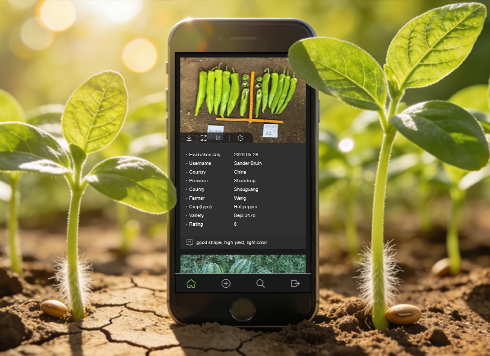 Kunshan TrialBook Mini-Program Custom Development
This project developed an English-only Tria ...
-
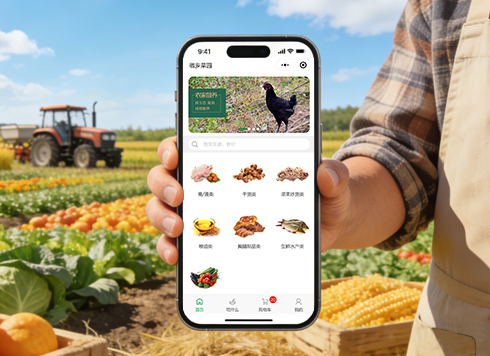 Agricultural Products WeChat Mini Program Custom Development
Lvran Di enhances agricultural sales via a ...
-
A Complete Guide to Mobile Custom Development: Process, Technology Selection, and Pitfall Avoidance
Date: Jul 29, 2026 Read: 119
-
Mobile App Development Full Process: From Requirements Confirmation to Launch - Key Steps
Date: Jul 27, 2026 Read: 108
-
How to Choose Your Mobile App Development Approach: A Complete Guide from Requirements to Delivery
Date: Jul 26, 2026 Read: 143
-
Mobile App Development Full Process Guide: Key Steps from Requirements to Launch and Common Pitfalls
Date: Jul 24, 2026 Read: 150
-
Complete Guide to Mobile Software Development: From Requirements to Delivery
Date: Jul 18, 2026 Read: 153