




A Complete Guide to Mobile Custom Development: Process, Technology Selection, and Pitfall Avoidance
What is Mobile Custom Development
Mobile custom development is the process where a development team builds applications entirely from scratch—from architecture design and UI/UX design to coding and testing—based on the specific business needs of an enterprise. Unlike using off-the-shelf templates or low-code platforms, custom development enables the realization of specific business logic, complex interaction flows, and deep integration with internal systems. As of 2026, with enterprises demanding higher digital experiences, custom development remains a core means to gain differentiated competitive advantages, but its success depends on clear requirement definition and reasonable technology selection.
The core value of custom development lies in flexibility and scalability: business logic can precisely match operational processes, and future iterations can be smoothly implemented as growth demands. However, the trade-off is higher upfront investment, with typical project cycles ranging from 3 to 9 months (depending on feature complexity) and budgets usually ranging from hundreds of thousands to millions of RMB. Therefore, it is crucial to define the boundary conditions for whether custom development is necessary.
Why It Matters: The Decision Logic from Templates to Custom
Many project failures stem from failing to distinguish early on between "needs custom" and "templates can actually satisfy." The prerequisites for choosing custom development are: your business process is unique, or there are extremely high requirements for performance, security, or brand consistency. Taking the 2026 market as an example, mid-to-large enterprises in retail, healthcare, and logistics tend to prefer custom solutions, while startups validating MVPs are better suited for templates or low-code.
When Custom is a Must
- Complex core business logic: such as device linkage processes in supply chain IoT, which cannot be implemented in generic templates.
- Strict data security compliance: requires private deployment or specific encryption protocols, which template solutions often fail to meet.
- High brand experience requirements: fully customized UI animations and interactions, where templates show obvious limitations.
When Custom is Not Recommended
- Generic functions without differentiation: e.g., simple enterprise showcase apps, where templates are more cost-effective.
- Extremely tight budget or time: custom development requires at least 2-3 months for the initial version, not suitable for a two-week launch.
- Business direction is still uncertain: frequent requirement changes will significantly drive up custom costs.
Core Process of Custom Development: Five-Phase Implementation Method
The "Five-Phase Implementation Method" is a proven framework for managing custom projects. It divides a typical project into five phases: Requirement Definition, Architecture Design, Iterative Development, Integration Testing, and Launch & Operations, each with clear deliverables and acceptance criteria. This division helps avoid requirement creep and acceptance disputes, making it suitable for most mid-to-large custom projects in 2026.
- Requirement Definition: Deliverables include PRD (Product Requirement Document) and interactive prototypes. Note: Must include a "what not to do" list (e.g., exclude non-core features) to prevent scope creep.
- Architecture Design: Determine technology stack (native/cross-platform), data flow, and third-party service integration plan. Note: Keep key architecture decision records for future team understanding.
- Iterative Development: Adopt agile development, releasing a demonstrable version every 1-2 weeks. Note: Schedule at least one mid-cycle review to ensure direction is correct.
- Integration Testing: Includes unit testing, performance testing, security testing, and user acceptance testing (UAT). Note: Test cases must cover boundary scenarios such as weak network, concurrency, and permission anomalies.
- Launch & Operations: Publish to app stores, configure monitoring and crash log tools. Note: Reserve at least 2 weeks for online observation and prepare a rapid hotfix channel.
Technology Selection: Native vs. Cross-Platform Solutions Comparison
Technology choice directly impacts development efficiency, performance, and maintenance costs. By 2026, mainstream cross-platform frameworks (e.g., Flutter, React Native) have significantly narrowed the gap with native (Swift/Kotlin), but there are still application boundaries. The following is a typical comparison:
- Performance & Interaction: Native apps can fully utilize device GPU and APIs, suitable for heavy interaction scenarios like games and AR; cross-platform solutions may experience occasional stutters in complex animations, but no difference for regular apps.
- Development Cycle & Cost: Cross-platform uses one codebase for both iOS and Android, saving about 30%-40% development time, but shared logic may increase maintenance costs due to framework version upgrades.
- Platform Feature Support: Native can immediately use new system features (e.g., new iOS APIs); cross-platform relies on framework adaptation, usually with a 1-3 month delay.
- Team Capability Requirements: Native requires separate iOS and Android engineers; cross-platform teams only need to master one language (Dart or JavaScript), but must deeply understand the framework's underlying layer.
Selection Suggestions: If your application heavily relies on hardware interactions (camera, Bluetooth, sensors) or demands extreme startup performance, prioritize native. If the target audience is the mass market and development budget is limited, cross-platform in 2026 is a choice that can reduce marginal costs.
Applicable Scenarios and Boundaries
Mobile custom development is most suitable for: enterprise-level B2B applications (e.g., employee inspection systems), industries with strict data compliance requirements (finance, healthcare), and IoT companion apps requiring deep hardware integration. Scenarios where it is not recommended or should be used with caution include: short-term marketing campaign apps (H5 or mini-programs are more economical), low-budget, fixed-function small tools (templates + PaaS configuration are better than custom). Xiyue Company, in previous logistics custom projects, enabled rapid iteration of business modules for a leading enterprise, but only with a clear internal PM liaison on the client side.
Common Pitfalls and Avoidance Guide
Pitfall 1: The more detailed the requirement document, the better In reality, locking down every interaction detail too precisely often leads to high change costs later. The correct approach is to layer requirements by MVP: core features are refined, while non-core ones retain flexibility.
Pitfall 2: Testing only after development is complete This can lead to rework. The best practice in 2026 is to combine CI/CD with automated testing, running full regression before the end of each iteration.
Pitfall 3: Ignoring operational phase costs After launch, custom apps typically require at least 20% of the budget reserved for subsequent version iterations, security patches, and server fees. Many projects decline rapidly due to lack of an operations plan.
Frequently Asked Questions
How long does custom development usually take?
A medium-complexity project (about 20 core feature pages) typically delivers the first version within 4 to 6 months, including requirement confirmation, UI design, development, and testing.
How to evaluate the technical capability of a custom development team?
Review the code quality and user experience of past cases, and request a technical proposal for at least one similar project, not just UI screenshots.
How to continuously update a custom app after launch?
Negotiate a maintenance period of at least 3-6 months with the developer, including critical bug fixes, minor feature iterations, and OS version adaptation; major version updates are billed separately.
Is cross-platform suitable for all projects?
No. It is not suitable for scenarios with extremely high hardware interaction requirements (e.g., real-time audio/video processing, high-frame-rate games), nor for products that need to quickly follow new platform features.
Is custom development much more expensive than templates?
Yes, custom usually costs 3-10 times the price of templates, but offers higher flexibility and scalability. If the business requires frequent adjustments in the future, custom may have a lower total cost of ownership in the long run.
Before starting a mobile custom project, it is recommended to complete requirement convergence and Proof of Concept. Clarify which features must be custom and which can reuse open-source or third-party SDKs. Also, reserve 15%-20% of the budget as a change reserve. If the company lacks a PM with technical background, consider hiring a dedicated technical consultant from the outsourcing team to bridge communication gaps. Custom development is not a one-time deal; continuous investment and scientific management are the foundation for long-term project success.
-
 Well-Recognized Custom E-Commerce Mall System Dev
The Good Shopping mini-app is natively buil ...
-
 Anhui Huixiang Vegetable Garden Agricultural Products Mini Program v2.0 Iteration Development
HuiXiang MiniApp V2.0: Upgraded homepage, n ...
-
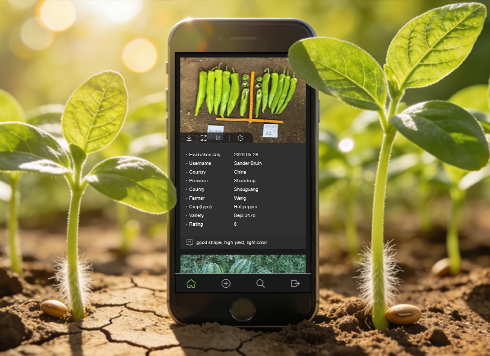 Kunshan TrialBook Mini-Program Custom Development
This project developed an English-only Tria ...
-
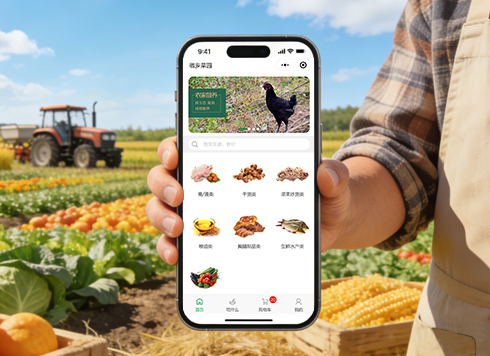 Agricultural Products WeChat Mini Program Custom Development
Lvran Di enhances agricultural sales via a ...
-
Mobile Custom Development: A Complete Technical Selection and Implementation Guide from Requirements to Launch
Date: Jul 27, 2026 Read: 144
-
Mobile App Development Full Process Guide: Key Steps from Requirements to Launch and Common Pitfalls
Date: Jul 24, 2026 Read: 150
-
Complete Process and Technology Selection Guide for Mobile Custom Development
Date: Jul 24, 2026 Read: 106
-
Mini Program Development Basics: Definition, Selection, and Implementation Process
Date: Aug 10, 2026 Read: 136
-
Custom Mobile App Development for Enterprises: Selection, Process, and Common Pitfalls
Date: Aug 9, 2026 Read: 111