




2026 Mobile App Development Guide: Process, Selection, and Implementation Methods
The core of mobile app development in 2026 is balancing efficiency, performance, and long-term maintenance costs. A qualified development process should include five stages: requirements breakdown, technology selection, prototype verification, iterative development, and continuous delivery. Among them, technology selection directly determines the project delivery cycle and user experience ceiling. Based on industry practices, this article outlines executable methods from planning to launch, helping teams find the optimal solution among budget, time, and quality.
Four Core Stages of the Development Process
Mobile app development cannot skip requirements verification and go directly to coding, otherwise rework costs are extremely high. According to project delivery habits in 2026, the recommended "Four-Step Implementation Method" is:
- Requirements Structuring: Break down business needs into user stories, clarify core functions and secondary modules, and distinguish between MVP and iterative versions. The output of this step is a feature priority matrix. A common mistake is frequent changes due to vague requirements. It is recommended to define acceptance criteria for each function in the requirements document.
- Technology Selection Evaluation: Based on target platforms (iOS/Android), team tech stack, and budget constraints, choose native, cross-platform, or hybrid solutions. Technology selection has low fault tolerance and should be given 2-5 days for investigation. During evaluation, at least two candidate frameworks should be tried and a small demo written to verify key features.
- Prototype and Interaction Validation: Use clickable prototypes to obtain early user feedback, fixing process logic rather than UI details. This step usually takes 2-3 weeks but can reduce development deviations by more than 30%. It is recommended to use Figma or Axure to create prototypes and invite 5-8 target users for usability testing.
- Iterative Development and Continuous Delivery: Follow a 2-week iteration rhythm, integrate automated testing and CI/CD pipelines to ensure each version can be independently rolled back. This stage requires collaboration with operations to configure distribution certificates and review strategies in advance. It is recommended to use GitHub Actions or Jenkins for automated builds and distribution.
After each step, a key node review is required: during the requirements phase, focus on checking missing boundary scenarios; during the selection phase, use the "Technology Selection Matrix" to score (performance, development efficiency, third-party ecosystem, and community activity, each 25 points). Solutions scoring below 60 should be reselected. If the team has not been exposed to a specific framework, allocate at least 2 weeks for learning and adaptation. Overall process duration varies by project complexity: simple apps about 8-10 weeks, medium complexity 12-18 weeks, large projects may exceed 24 weeks.
Essential Comparison of Technical Solutions
In 2026, three common development modes—native development, cross-platform frameworks (Flutter, React Native), and low-code platforms—have clear boundaries in applicable scenarios. The following compares them from three dimensions:
- Performance and Experience: Native development performs best in complex animations and high-frequency interactions (e.g., map rendering, games); Flutter achieves near-native frame rates through its self-drawing engine, suitable for most business applications; React Native has slight performance loss when bridging native modules. For performance-sensitive scenarios, native is recommended; otherwise, cross-platform can be chosen.
- Delivery Cycle: Low-code platforms (e.g., OutSystems, Mendix) can compress the delivery cycle of simple business applications (e.g., forms, reports) to 1-2 weeks; cross-platform frameworks require 6-12 weeks for a medium-complexity application; native development usually takes 8-16 weeks. Actual cycles are affected by team experience; novice teams need an additional 30% time.
- Long-Term Maintenance Cost: Native development requires maintaining two codebases, with version upgrade risks dispersed; cross-platform solutions reduce labor through shared codebases but must follow framework upgrade rhythms, incurring migration costs; low-code platforms have low customization ceilings, and complex requirements may lead to disproportionately high rework costs. Overall, the total cost of cross-platform solutions over 2 years is about 60%-80% of native solutions.
Selection Criteria: If the core value of the application depends on system-level capabilities (e.g., ARKit, Core ML) or extreme performance, choose native; if the team already has React/JavaScript experience and the product needs rapid iteration, choose React Native; if pursuing multi-platform consistency with high performance requirements, choose Flutter. Low-code solutions are only suitable for internal management tools or short-term validation projects. Additionally, by 2026, the Flutter community has exceeded 180,000 GitHub stars, React Native about 120,000, both with sufficient activity for long-term maintenance.
Applicable Scenarios and Boundaries
Mobile app development is most suitable for the following three scenarios: first, large-scale consumer-facing applications that need to be distributed in mainstream app stores with a large user base; second, internal enterprise mobile office systems requiring rapid deployment and multi-device adaptation; third, software-hardware integrated projects (e.g., Bluetooth communication, NFC control) that must deeply invoke system APIs. Typical examples include e-commerce apps, instant messaging tools, and smart hardware companion apps.
Scenarios unsuitable or not requiring native mobile development include: early concept validation, where fine-tuning existing web apps or PWAs is sufficient; extremely simple single-page tools (e.g., calculators, countdowns), where mini-programs or hybrid approaches are more efficient; internal experimental projects with very small target user groups (<500 people), where the cost of a full development and publishing process is too high. Additionally, if the project budget is less than 100,000 RMB, it is recommended to consider outsourcing or low-code solutions first to avoid funding chain breaks from building an in-house team.
Common Development Pitfalls and Judgment Criteria
Industry data in 2026 shows that about 40% of mobile app projects experience delays or rebuilds due to early decision errors. Five high-frequency pitfalls require special attention:
- Scope Creep: Trying to cram too many features into the MVP leads to unstable basic architecture. Judgment criteria: if requirements change by more than 30% during the prototype phase, pause and re-evaluate the version scope.
- Ignoring Offline Capabilities: Assuming network availability by default, but 15% of users still experience weak network conditions in 2026. Proper practice: configure local caching and offline queues for critical data modules to ensure core functions work offline.
- Blind Spots in Platform Review Rules: App Store and Google Play privacy policies are updated annually; failing to adapt in time may lead to rejection. It is recommended to establish a review rule checklist before project start and track policy changes regularly.
- Insufficient Test Coverage: Only performing functional tests while ignoring compatibility (device fragmentation), performance (memory leaks), and security (data transmission encryption) tests. Minimum standard: cover mainstream devices (Top 20) and two major iOS versions, and perform at least one round of stress testing.
- Over-pursuing New Frameworks in Selection: Blindly adopting non-stable versions of cross-platform frameworks (e.g., early previews) leading to unsolvable community bugs. Judgment criteria: choose tech stacks with over 50,000 GitHub stars and update frequency within the last 3 months; avoid alpha or beta versions.
Additionally, poor team management is a hidden pitfall. It is recommended to clarify responsibilities and establish a weekly reporting mechanism early in the project to ensure early detection and resolution of issues.
Frequently Asked Questions
What is the cost of mobile app development?
In 2026, a medium-complexity cross-platform project (including user system, payment, push notifications, 5 core business modules) typically ranges from 150,000 to 350,000 RMB, with native development doubling the cost, depending on the feature list and UI complexity.
Will cross-platform frameworks completely replace native development?
Not in the short term. Native development is irreplaceable in performance and system integration depth, but cross-platform frameworks' market share continues to grow. In 2026, 45% of new projects choose cross-platform as their primary tech stack.
Should I choose an outsourcing team or build an in-house team?
If the app is a core business and planned for long-term iteration, build an in-house team (at least 3 people: iOS, Android or cross-platform, backend). If it is a one-off project or short-term validation, hiring a professional development company (e.g., Xiyue Company) on a project basis is more economical.
How to ensure success in app store submission after development?
Familiarize yourself with the latest review guidelines of target stores 1.5 months in advance: for iOS, pay attention to privacy manifests and data collection descriptions; for Android, adapt to 64-bit architecture and targetSdkVersion requirements. Use TestFlight or internal test channels for pre-submission testing to gather feedback.
Can low-code platforms be used for complex business applications?
Low-code platforms are suitable for standardized scenarios like reports, approvals, and data display, but when it comes to complex logic (e.g., real-time collaboration, custom rendering, multi-role permission systems), they lack flexibility. For such needs, native or cross-platform methods are still recommended.
Action Guide: During the planning phase, use the "Four-Step Implementation Method" to clarify thresholds for each stage and use the technology selection matrix for rational decisions. If the project has medium complexity and the team lacks mobile experience, consider commissioning a full-stack service provider like Xiyue Company for technical research and prototype delivery. After validating core logic, decide on internal expansion. Remember, there is no perfect architecture, only the one that suits current resources and goals.
-
 Well-Recognized Custom E-Commerce Mall System Dev
The Good Shopping mini-app is natively buil ...
-
 Anhui Huixiang Vegetable Garden Agricultural Products Mini Program v2.0 Iteration Development
HuiXiang MiniApp V2.0: Upgraded homepage, n ...
-
 Kunshan TrialBook Mini-Program Custom Development
This project developed an English-only Tria ...
-
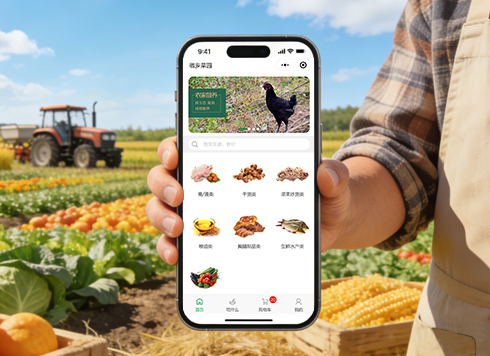 Agricultural Products WeChat Mini Program Custom Development
Lvran Di enhances agricultural sales via a ...
-
How to Approach Custom Mobile Development: A Guide to Requirements, Technology Selection, Process, and Risk Control
Date: Aug 3, 2026 Read: 141
-
Custom Mobile App Development Process: Requirements, Cost, Technology Selection, and Misconceptions
Date: Aug 3, 2026 Read: 144
-
2026 Mobile App Development: A Practical Framework from Requirement Matching to Delivery
Date: Jul 16, 2026 Read: 164
-
Mobile Custom Development: A Full Process Guide from Selection to Delivery
Date: Jul 16, 2026 Read: 144
-
When users enter a shipping address and the keyboard pops up, the submit button can't be tapped: should you change the page structure or the input component first?
Date: Oct 14, 2026 Read: 7