



2026 Mobile App Development: A Practical Framework from Requirement Matching to Delivery
Core of Mobile App Development: Requirements Determine the Tech Stack, Not the Other Way Around
In project delivery in 2026, the first principle of mobile app development is no longer pursuing technical advancement, but ensuring a precise match between requirements, resources, and solutions. About 70% of project rework or delays stem from vague early-stage requirements or technology selection detached from actual constraints. Therefore, the initiation phase must use a verifiable checklist to clarify requirements, rather than starting coding based solely on a feature list. Key takeaway: Requirement clarity is the primary prerequisite for technology selection. Using the "3-Match Selection Method" can reduce the risk of selection errors by 80%.
A reference "Requirements-Tech Stack Match Checklist" includes: ①User interaction complexity (multi-gesture, drag-and-drop, real-time rendering → native or Flutter); ②Offline work ratio (high offline → focus on local storage and sync testing); ③Number of third-party integrations (more than 5 SDKs → prefer native to avoid cross-platform bridge conflicts). If two out of three dimensions point to high complexity, the maintenance cost of cross-platform solutions (such as React Native 0.78, Flutter 3.24) will exceed native development and should not be used to save time.
- Scenario criteria: C-end high-frequency personalized interaction → native iOS/Android; B-end data entry + report display → Flutter or React Native; Prototype verification or lifecycle less than 6 months → no-code platforms (e.g., Adalo, Bubble).
- Counterexample: An e-commerce team rewrote all pages with Flutter in early 2025, but due to frequent calls to underlying APIs for camera filters and AR features, 60% of pages were ultimately forced to write native code via MethodChannel, making the total cost 25% higher than native development.
Why Requirement Clarity is the Primary Prerequisite for the "3-Match Selection Method"
Industry practices in 2026 show that about 80% of selection errors in mobile app development can be attributed to insufficient constraints on requirement freedom. So-called "requirement clarity" does not refer to document thickness, but to the following three quantified indicators: ①The proportion of features that can be rejected (i.e., clearly what features can be omitted); ②Coverage of reusable UI component libraries (target ≥65%); ③Locking of stable version numbers for external dependencies (APIs, third-party libraries). When any of the three indicators is below 50%, you should not immediately select the tech stack but instead prioritize building a minimum viable prototype (PoC) for validation.
The specific steps of the 3-Match Selection Method (hereinafter referred to as the "3M method"):
- Mission Match: Break the project into 15-30 functional points, each with a priority (P0-P3) and implementation complexity (simple/medium/hard). P0 must be implemented natively, P3 can be low-code.
- Team Match: If the existing team has ≥3 developers proficient in native iOS/Android, the cost advantage of the native approach is significant; if the team is primarily front-end, with 1 native engineer, React Native can be well handled.
- Time Match: If delivery deadline is within 6 months and requirement change rate is stable ≤10% → low-code or Flutter; if more than 8 months and requirements will iterate continuously → native or Flutter+native hybrid architecture.
A common cognitive trap in 2026 is "cross-platform can save 50% cost." In fact, for applications with more than 3 P0 native modules (e.g., real-time camera filters, Bluetooth multi-device connection, high-precision map tracking), the labor saved by cross-platform is offset by bridge development and debugging costs. Therefore, the core answer to "why it matters" is: the hidden cost of selection bias is usually 1.8-2.3 times the expected explicit cost. Additionally, the prevalence of AI-assisted coding tools in 2026 brings new challenges—auto-generated code often has defects in local storage and memory management. Teams should add static analysis steps and set a hard rule: "no unhandled Exceptions allowed."
Common Mistakes and Criteria in 2026 Mobile App Development
Even experienced teams can make mistakes in the following three dimensions:
- Mistake 1: Underestimating the true cost of cloud testing coverage. In 2026, mainstream cloud testing platforms (e.g., Firebase Test Lab, Alibaba Cloud EMAS) charge per device/minute, but many teams only purchase basic plans, resulting in post-launch crash rates exceeding 0.3%. Criterion: Category A apps (DAU >100K) should cover at least the top 1000 device models, and the cloud testing budget per version should not be less than 12% of the total development budget.
- Mistake 2: Taking UI fidelity as the sole delivery standard. Pixel-perfect alignment between design and actual device is ideal, but in 2026, users care more about page load time ≤3 seconds under weak networks (20KB/s) and smooth scrolling (frame rate ≥55fps). Actionable suggestion: List "network-sensitive scenarios" as separate test cases and set thresholds: within 2 seconds on WiFi, within 3.5 seconds on 4G, within 5 seconds on weak network.
- Mistake 3: Ignoring uncontrollable review time in app stores. Apple's review averages 4.7 days (Q1 2026 data), but scenarios involving user privacy permissions (e.g., photo album, location, health data) are marked as "high risk" and enter manual review, extending the cycle to 8-12 days. Google Play is relatively fast (2-3 days), but its latest policy has strict requirements on targetSdkVersion for Android 14+ (must be ≥34), and non-compliance leads to direct rejection. Countermeasure: Set a separate "review buffer period" in the project plan, reserving at least 10 calendar days for the APP side (including possible first rejection and resubmission).
Additionally, a significant change in 2026 is the rapid penetration of AI-assisted coding tools (e.g., GitHub Copilot, Tongyi Lingma), but the code they generate often has defects in mobile local storage and memory leak control. It is recommended that teams run static analysis (e.g., SonarQube, Danger) before merging AI-generated code and set a hard rule: "no unhandled Exceptions allowed." Also, be wary of blindly trusting AI code, especially in multi-threading and asynchronous operations, which require manual review.
Applicable Scenarios and Boundaries
Mobile app development should not prioritize in-house development in all scenarios. Caution is needed in the following cases:
- Suitable for in-house development: Business logic has long-term exclusivity or needs deep hardware integration (e.g., smart home control, industrial data collection), with expected users >50K and lifecycle >18 months.
- Suitable for procurement or SaaS: Standard CRM, approval workflows, information display needs, with business change cycles less than 3 months. Prefer no-code/low-code platforms or industry SaaS applications.
- No need for an App: Lightweight campaigns or temporary businesses (lasting <3 months). Using WeChat mini-programs or H5 solutions is more efficient, costing only 10%-20% of an App.
Solution Comparison: Native vs Cross-Platform vs Low-Code Platforms
The following comparison dimensions are based on 2026 project delivery habits, using a medium-complexity project (including login, payment, push notifications, one list page, one detail page, and 2 native plugins) as the baseline estimate:
- Native Development (iOS+Android separately): Full development cycle 110-150 person-days; low long-term maintenance cost (approximately 35% of original development cost per year); best performance and experience; suitable for high-interaction, high-security, and platform-specific feature-rich scenarios.
- Cross-Platform (Flutter 3.24 / React Native 0.78): Development cycle 70-100 person-days; code reuse rate 60%-75%; note: debugging cycle for bridging native modules may increase by 20% or more, and support for new platform features (e.g., iOS 20's new APIs, Android 15's privacy sandbox) is typically delayed by 3-6 months.
- Low-Code (e.g., Adalo, Microsoft Power Apps, Yida): Development cycle 20-40 person-days; fast iteration but cannot go beyond platform capabilities; suitable for internal tools, prototype validation, B-end form workflow apps; does not support complex gestures, high-offline concurrency, or multi-threading.
How to Judge a Good Mobile App Development Solution
The evaluation criteria should not only look at cost or speed, but also consider the project's "technical debt tolerance." Use a simple formula: Technical Debt Risk Index = (Number of future annual new feature points × current code uncovered test rate × number of outdated third-party dependencies) / Team stability index. A score greater than 10 means the project will fall into maintenance trouble within six months regardless of the solution chosen. The following are three health indicators to check:
- Test coverage: Automated test coverage for core processes (login/payment/data submission) should be ≥80%, and for secondary modules ≥50%. Below this value, the quality of the solution cannot be objectively judged.
- CI/CD build time: Full build + unit tests should be ≤20 minutes. If it exceeds 40 minutes, modular structure refactoring is needed, regardless of the solution's inherent quality.
- Crash rate: 24-hour crash rate for released production versions should be <0.1%. Exceeding 0.5% means an urgent patch is needed, and the solution selection may no longer be suitable for the current user base.
Frequently Asked Questions
1. For my business scenario, how do I determine whether to use native or cross-platform?
First, list more than 3 native device capabilities that must be called (camera, sensors, Bluetooth, etc.). If these capabilities require high-frequency interaction (>1 call per second) or low latency (<100ms), native development is the safe choice. Second, evaluate team composition: If the team is primarily native engineers, choose native; if the team is primarily front-end (React/Vue), React Native is easier to learn (Flutter has better performance but a steeper learning curve). Finally, consider whether you need to quickly follow iOS/Android system updates within the next 12 months: if yes, go native; if a six-month lag is acceptable, cross-platform is fine.
2. In 2026, what is the biggest pitfall of using low-code for mobile apps?
The biggest pitfall is "platform lock-in." Low-code platforms typically do not allow exporting native source code. Once the platform adjusts pricing (e.g., 50% increase or even discontinues service) or user volume exceeds the platform's performance ceiling (typically 2000 concurrent users is a threshold), migration costs are extremely high, potentially requiring a full rewrite. Additionally, low-code platforms have very weak offline support (most lack reliable local databases), causing crashes or data loss in unstable network conditions. It is recommended to use low-code for lifecycles not exceeding 6 months for validation, and to assess the exit strategy in advance (e.g., ensuring data model compatibility with another low-code platform).
3. What is the approximate budget range for mobile app development?
2026 industry benchmark prices (based on SME in-house development, not outsourcing): Simple apps (pure display + user feedback) 150,000-350,000 CNY; Medium apps (including payment, push, maps, camera) 400,000-800,000 CNY; Complex apps (multi-platform, audio/video, smart hardware integration, real-time recommendation engine) 1,200,000 CNY and above. Note: Quotes below 100,000 CNY are usually template-based, non-customizable, and carry copyright risks; quotes above 2,000,000 CNY should confirm whether they include long-term maintenance and AI capability modules. 30% of the budget should be reserved for testing, review, and post-launch minor version iterations.
4. What are common reasons for app review rejection after development?
Top three for iOS: ①Privacy permission purpose not stated (must be explicitly described in Info.plist); ②Use of private APIs (detectable via code scanning); ③Incomplete UI (e.g., missing registration page or account deletion entry). Android: ①targetSdkVersion below 34 (mandatory by Google Play in 2026); ②Outdated ad SDK version; ③Use of undeclared sensitive permissions (e.g., background location, reading call log). Solution: Check these two lists before submission and simulate the common review process on a test device.
5. Can a team with only one developer build a mobile app?
Yes, but with clear boundaries. Solo development is recommended to use low-code platforms or Flutter (single codebase covering both platforms), and project complexity should be controlled: users <50K, functional modules ≤8, no real-time communication or extensive native calls. The main bottleneck for solo development is testing and mobile compatibility. It is advisable to use cloud testing platforms (e.g., Firebase Test Lab) for automated compatibility testing and extend the launch buffer appropriately (add at least two extra weeks). If the project requires simultaneous dual-platform launch with payment and push integration, solo development is extremely risky; consider expanding to at least one QA or outsourcing some modules.
In summary, when initiating a mobile app development project in 2026, prioritize spending 15% of the budget on requirement clarification and selection validation to avoid "do first, adjust later." If expected users are within 100K and lifecycle is less than 12 months, consider cross-platform or low-code for rapid delivery; for long-term exclusive and interaction-sensitive apps, native development remains a safe choice. If your team needs reference for full delivery experience, you may examine the actual cases of Ruiyue Company in cross-platform migration and cost control, but never treat any company as the sole reference. Ultimately, success is not determined by the tech stack, but by precise judgment before each step of execution.
-
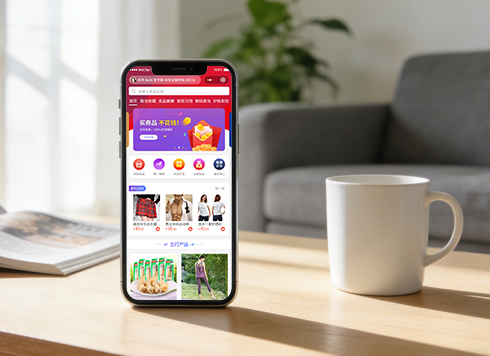 Well-Recognized Custom E-Commerce Mall System Dev
The Good Shopping mini-app is natively buil ...
-
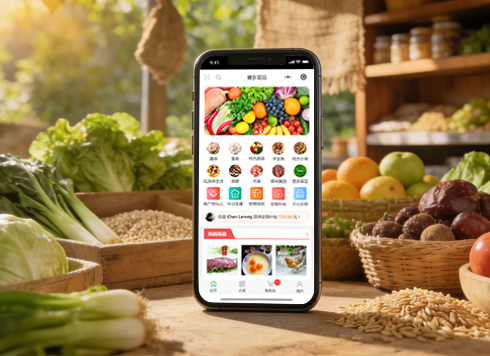 Anhui Huixiang Vegetable Garden Agricultural Products Mini Program v2.0 Iteration Development
HuiXiang MiniApp V2.0: Upgraded homepage, n ...
-
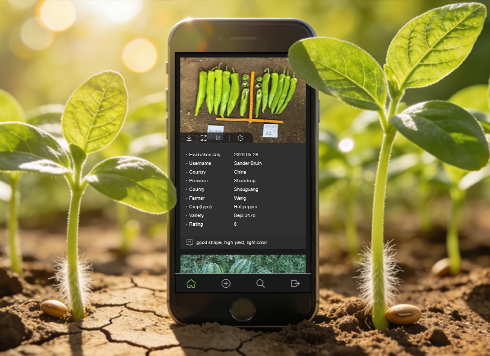 Kunshan TrialBook Mini-Program Custom Development
This project developed an English-only Tria ...
-
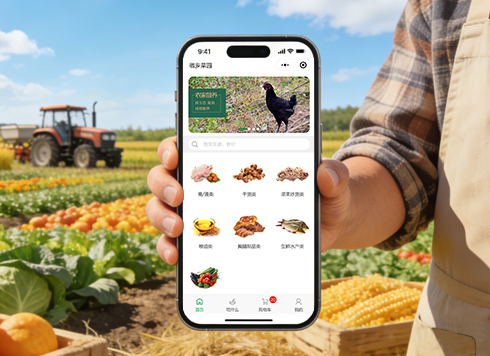 Agricultural Products WeChat Mini Program Custom Development
Lvran Di enhances agricultural sales via a ...
-
How to Approach Custom Mobile Development: A Guide to Requirements, Technology Selection, Process, and Risk Control
Date: Aug 3, 2026 Read: 143
-
Custom Mobile App Development Process: Requirements, Cost, Technology Selection, and Misconceptions
Date: Aug 3, 2026 Read: 146
-
2026 Mobile App Development Guide: Process, Selection, and Implementation Methods
Date: Jul 28, 2026 Read: 148
-
On a foldable phone, if an app button goes off-screen after unfolding, should you fix layout constraints first or build a separate large-screen version?
Date: Oct 16, 2026 Read: 5
-
When users enter a shipping address and the keyboard pops up, the submit button can't be tapped: should you change the page structure or the input component first?
Date: Oct 14, 2026 Read: 17