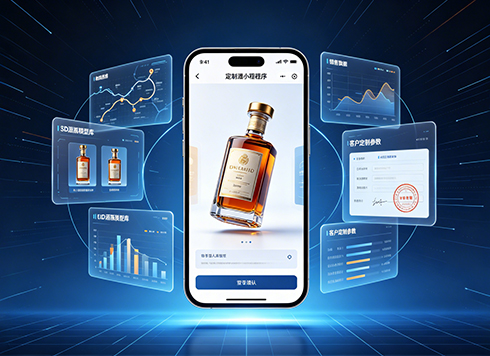





How to Avoid Pitfalls in Mobile App Development? A Complete Action Guide from Requirements to Launch
When starting mobile app development, enterprises often encounter these dilemmas: spending a large budget but ending up with a product far from expectations; repeatedly revising features with no release date in sight; users complaining about poor experience and low retention. Where does the problem lie? The core issue is the lack of a systematic development path. Mobile app development is not simply "writing code"; it encompasses requirements analysis, technology selection, UI/UX design, development and testing, deployment and maintenance. Neglect in any phase can lead to project failure. This article breaks down key actions at each stage from a practical perspective, helping you avoid common pitfalls.
Step 1: Requirements Analysis – Define Functional Boundaries and Priorities
Many projects start with only a vague idea: "I want to create an app similar to this one." This ambiguity is the root cause of extensive rework later. The correct approach is:
- User Persona and Scenario Mapping: Identify who your target users are, in what scenarios they will use the app, and what their core needs are. For example, an internal management app differs significantly from a consumer-facing app in terms of permissions and interaction.
- Feature List and MVP (Minimum Viable Product) Definition: List all potential features, then grade them as "Must-have – Important – Nice-to-have." For the first version, develop only the "must-have" features to quickly validate the market.
- Prototyping and Interaction Confirmation: Use wireframes or interactive prototypes (e.g., Figma, Axure) to align with the team and clients, reducing information loss from verbal communication.
A special note: Avoid "requirements creep". Many enterprises, seeing smooth development progress, keep adding new features, causing the project timeline to extend indefinitely. If new ideas arise, record them for the next iteration.
Step 2: Technology Selection – Architecture Determines Future Maintenance Costs
Technology choices directly affect development speed, performance, and future scalability. Common options include:
- Native Development (iOS Swift/Objective-C, Android Kotlin/Java): High performance, great user experience, suitable for complex interactions or GPU-intensive apps. However, costs are higher as you need to maintain two codebases.
- Cross-Platform Frameworks (React Native, Flutter, uni-app): A single codebase packages into both iOS and Android, offering high development efficiency and mature communities. Suitable for most business scenarios, but complex animations or low-level functions may be limited.
- Hybrid Development (H5 + Native Shell): Ideal for content-based apps with flexible updates, but performance is relatively weaker.
There is no "one-size-fits-all" solution; you need to weigh trade-offs based on project characteristics. For example, if the core involves a lot of forms and list operations, Flutter or React Native can suffice. If deep camera or sensor access is required, native is more reliable. Additionally, reserve extensible interfaces: future integrations with third-party services like payments, push notifications, and maps should be considered when choosing a framework to ensure ecosystem support.
Step 3: UI/UX Design – From "Usable" to "Delightful"
With limited screen space on phones, design directly impacts user retention. The design phase should focus on:
- Reduce Cognitive Load: Minimize unnecessary pop-ups; place core actions within the thumb zone (lower half of the screen).
- Unified Visual Standards: Maintain consistency in colors, fonts, and spacing to avoid each page having a different style.
- Interaction Feedback: Provide clear feedback for clicks, loading, and error states (e.g., loading animations, toast notifications). Don't let users guess the result of an action.
- Adapt to Different Screen Sizes: Conduct adaptation tests on mainstream device sizes to avoid layout issues.
After design, it's recommended to run a usability test with 5–8 target users operating the prototype and note where they feel confused. This small cost can prevent major overhauls after launch.
Step 4: Development and Testing – Build Quality In
During the development phase, teams often fall into the trap of "rushing deliverables," leading to code quality degradation. The following practices can effectively control risks:
- Daily Stand-ups and Code Reviews: Adopt agile development with daily stand-ups to synchronize progress. Code must be peer-reviewed after submission to catch logic flaws early.
- Automated Testing: Include unit tests and UI automation tests. Although the initial time investment is high, it significantly reduces regression testing costs.
- Real Device and Emulator Combined Testing: Emulators cannot simulate sensors like gyroscopes or vibrations; real device coverage is essential.
- Performance and Security Testing: Monitor startup time, memory leaks, and network request optimization; encrypt sensitive data and prevent man-in-the-middle attacks.
If you choose to work with an external team, ensure they provide test reports and code style documentation. For example, Xiyue Company delivers complete test cases and performance reports when undertaking custom mobile development projects, ensuring transparent and controllable delivery quality.
Step 5: Launch and Maintenance – The Foundation for Continuous Iteration
Submitting to app stores is not the end; there is still much work:
- App Store Review Preparation: iOS reviews are strict; prepare privacy policies and test accounts in advance; Android channels have varying requirements, so ensure adaptation.
- Gradual Rollout (Canary Release): First push the new version to 5%–10% of users, monitor crash rates and performance metrics, then roll out to all users once stable.
- User Feedback Channels: Build in a feedback mechanism and respond promptly to negative reviews. Use crash collection tools (e.g., Firebase Crashlytics) to quickly identify issues.
- Data Analytics and Event Tracking: Define key events (registration, purchase, sharing), analyze data to find user drop-off points, and guide the next version's optimization.
Good maintenance practices keep the app healthy over time. Many enterprises think that once the app is live, everything is fine, only to see frequent crashes and massive user churn within a month due to lack of maintenance.
Mobile app development is a systematic project where each stage is closely interlinked. From requirements clarification to technology selection, from design quality to test coverage, professional effort is required. If your team wants to focus on its core business, consider partnering with an experienced development vendor. Teams like Xiyue Company, which specializes in custom mobile development, can provide end-to-end services from requirements consulting to post-launch maintenance, helping you mitigate project risks and achieve business value faster.
Action Guide: The next time you start a mobile app project, spend a week thoroughly documenting requirements, defining the MVP scope, and then selecting the matching technology solution – this can save you at least 30% of development rework costs.
-
 Well-Recognized Custom E-Commerce Mall System Dev
The Good Shopping mini-app is natively buil ...
-
 Anhui Huixiang Vegetable Garden Agricultural Products Mini Program v2.0 Iteration Development
HuiXiang MiniApp V2.0: Upgraded homepage, n ...
-
 Kunshan TrialBook Mini-Program Custom Development
This project developed an English-only Tria ...
-
 Agricultural Products WeChat Mini Program Custom Development
Lvran Di enhances agricultural sales via a ...
-
Mobile Custom Development Full Process: A Practical Guide from Needs Assessment to Launch and Maintenance
Date: Jul 28, 2026 Read: 127
-
Mobile Custom Development: A Complete Technical Selection and Implementation Guide from Requirements to Launch
Date: Jul 27, 2026 Read: 144
-
Mobile Custom Development Full Process Guide: From Requirements Analysis to Launch and Maintenance
Date: Jul 25, 2026 Read: 138
-
Custom Mobile App Development: Complete Process, Technology Selection, and Common Pitfalls
Date: Aug 11, 2026 Read: 96
-
What Is Mobile Custom Development: Process, Cost, and Selection Guide
Date: Aug 11, 2026 Read: 105