




Are you always hitting pitfalls in custom app development? These 5 key questions will help you get it right once and for all.
In the wave of mobile internet, having a dedicated app has become an important way for businesses to expand. However, many entrepreneurs fall into various difficulties when initiating custom development projects due to lack of experience: budget overruns, feature redundancy, repeated modifications after launch... The root of these problems often lies in insufficient preparation at the early stage. Today, we focus on 5 key questions to help you clarify the thinking behind custom development and avoid repeated pitfalls.
Question 1: Does your app really need "customization"?
Many teams struggle at the beginning: should they choose a ready-made template app or invest more resources in customization? The answer depends on your business needs. Template apps are low-cost and quick to launch, but have the following limitations:
- Rigid features: Unable to adjust flexibly as business changes, with difficult later expansion.
- Homogeneous user experience: Interfaces resemble competitors, making it hard to build brand identity.
- Data security risks: Underlying architecture is not private, sensitive information may be accessed by third parties.
Custom development, while requiring higher upfront investment, offers full autonomy: from feature design to interface style, from server architecture to later maintenance, every aspect is tailored to your business. The key criterion to decide whether to opt for custom development is: does your business have unique processes, data, or interaction needs? If so, customization is a worthwhile investment.
Question 2: How to write a requirements document that is not "floating"?
The requirements document is the blueprint for custom development. Many projects fail because requirements are unclear or change frequently. To make the requirements document actionable, you need to do the following:
1. Distinguish core features from nice-to-haves
Use the MoSCoW method (Must have, Should have, Could have, Won't have) to categorize features. Prioritize the completeness of core features (e.g., user registration, payment, core business flow) and roll out secondary features in batches.
2. Use wireframes instead of text descriptions
Text requirements can lead to ambiguity. It is recommended to use tools like Axure or Figma to create low-fidelity wireframes so that the development team can intuitively understand page logic and interactions.
3. Define data boundaries clearly
User data, order data, log data involved in the app should be clearly marked in the document: which data needs to be stored, which needs to be encrypted, and which needs to be synced to the backend.
Many teams invest insufficient effort in the requirements phase, resulting in frequent changes during development, which doubles costs. A high-quality requirements document can save more than 30% of development time.
Question 3: Three "hidden killers" during the development process
Even with clear requirements, unexpected issues may arise during the development phase. Here are three common misconceptions and strategies to address them:
Misconception 1: Technology selection based solely on popularity
Many teams blindly pursue cross-platform frameworks like React Native or Flutter, ignoring native performance. The correct approach is to evaluate comprehensively based on the app's complexity, team tech stack, and target user device distribution. For apps that require extensive use of native APIs (e.g., camera, sensors), native development remains a safer choice.
Misconception 2: Ignoring backend architecture scalability
In the early stage with few users, the backend seems stable; once user numbers grow, database read/write pressure surges. Solution: adopt microservices architecture, load balancing, caching mechanisms, and reserve API interfaces for future integration with third-party services.
Misconception 3: Treating testing as a "formality"
Many teams only perform functional testing and neglect performance and compatibility testing. App crashes or lag after launch directly affect user retention. Suggested testing coverage:
- Functional testing: test cases should cover all business logic
- Performance testing: response time, memory usage, battery consumption
- Compatibility testing: major device models, different OS versions
- Security testing: data encryption, API anti-tampering
Question 4: How to find a reliable development team?
Team selection directly determines project success. It is recommended to evaluate from the following dimensions:
Look at case studies, not just quotes
Low prices often mean low quality. Ask the team to provide cases similar to your business type and contact the client to learn about their experience. A responsible team will proactively showcase case details and technical challenges, not just a few screenshots.
Focus on communication and collaboration process
Custom development is a highly collaborative process. Prefer teams that include project managers and product managers who can help you clarify requirements and control progress. If the team assigns only a technical contact for communication, later communication costs will be high.
Examine technical documentation standards
Ask the team to provide examples of past code standards and API documentation. A disciplined team values code readability and maintainability, which directly affects the efficiency of post-launch iterations.
For example, Xiyue Company provides clients with a complete "Requirements Analysis and Technology Selection Report" before starting custom development projects, helping clients identify risk points upfront. This practice significantly reduces project rework rates.
Question 5: How to seamlessly connect after launch?
App launch is not the end but the beginning. Many teams hand over the project to operations after development, leading to numerous problems. After custom development, three things need to be done:
- Logging and monitoring: Deploy APM (Application Performance Management) tools to monitor crash rates and API response times in real time.
- User feedback loop: Integrate feedback channels in the app, regularly analyze user reviews, and identify high-frequency issues.
- Version iteration plan: Based on market changes and user needs, plan minor version updates every 1-2 months to keep the app dynamic.
Custom app development is a long-term investment. Spending more effort in the early stages to lay a solid foundation will allow you to run faster later. Remember these 5 key questions: Confirm whether customization is truly needed, write clear requirements documents, avoid development pitfalls, choose the right team, and prioritize operational connection. Your app project success rate will greatly improve. If you are preparing for custom mobile development, take the time to clarify these points before talking to a team. A good start is half the battle.
-
 Well-Recognized Custom E-Commerce Mall System Dev
The Good Shopping mini-app is natively buil ...
-
 Anhui Huixiang Vegetable Garden Agricultural Products Mini Program v2.0 Iteration Development
HuiXiang MiniApp V2.0: Upgraded homepage, n ...
-
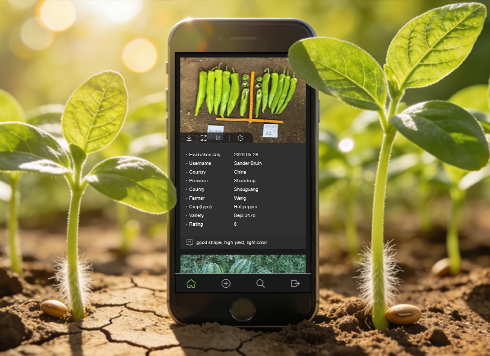 Kunshan TrialBook Mini-Program Custom Development
This project developed an English-only Tria ...
-
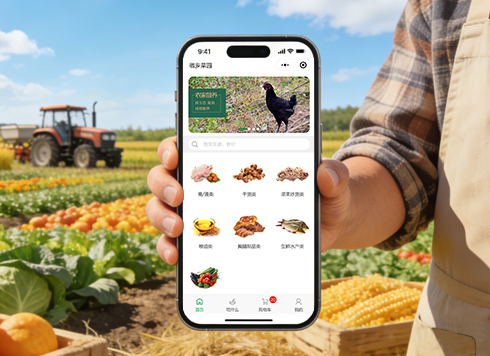 Agricultural Products WeChat Mini Program Custom Development
Lvran Di enhances agricultural sales via a ...
-
Custom Mobile Development: 2026 Project Process, Budget Ranges, and Selection Criteria
Date: Aug 9, 2026 Read: 141
-
Mobile App Custom Development Full Guide: Key Steps from Requirements to Launch
Date: Aug 8, 2026 Read: 102
-
Custom Mobile App Development: Process, Tech Selection, and Cost Control Guide
Date: Aug 6, 2026 Read: 160
-
How to Approach Custom Mobile Development: A Complete Process from Requirements to Delivery and Technology Selection Guide
Date: Aug 4, 2026 Read: 134
-
Custom Mobile Development: Complete Guide to Process, Selection, and Common Pitfalls
Date: Aug 1, 2026 Read: 159