




Mobile App Custom Development Full Guide: Key Steps from Requirements to Launch
Mobile app custom development refers to the process of designing and developing a dedicated mobile application from scratch based on a company's specific business needs, which is fundamentally different from "quick packaging" with templates. To determine whether a project is custom development, check three points: whether it has independent business logic design, whether features are tailored to target users, and whether you maintain long-term control over code and data assets. Based on 2026 project delivery practices, a complete custom development process typically takes 8 to 20 weeks, with a budget ranging from 100,000 to 800,000 RMB, depending on feature scope and team configuration.
What is Mobile App Custom Development? Why Is It More Reliable than Generic Solutions
The core value of custom development lies in "business fit." Generic SaaS or template apps can solve most common needs, but when your business involves special processes, private deployment, or unique user experiences, standardized solutions often fall short. In 2026, more companies treat their app as a proprietary digital asset, so the maintainability and scalability offered by custom development become key considerations.
- Deep business integration: Custom systems can seamlessly connect with existing ERP, CRM, and IoT platforms, avoiding data silos.
- Strong experience differentiation: Interactions are designed based on user personas, leading to higher retention than generic templates.
- Asset ownership: Source code and databases belong to the enterprise, and future iterations are not restricted by third parties.
Custom development is not a "one-time transaction" but a long-term evolution; if the team has no plan for continuous iteration, even a meticulously crafted initial version will lose its competitive edge within six months.
Four-Step Implementation Method: The Complete Path from Idea to Launch
This method breaks vague requirements into executable steps, with clear deliverables and acceptance criteria for each step. The four-step approach is used instead of a waterfall long-cycle to surface risks early at low cost.
- Step 1: Requirement Anchoring: Spend 2-3 business days on business analysis and produce a feature list with priority ranking. Focus on recording three levels—"must do," "should do," and "could skip"—to avoid scope creep. Acceptance criterion: every feature has a business value description and can be mapped to a usage scenario.
- Step 2: Technology Selection: Choose native or cross-platform based on user base, offline needs, and hardware call frequency. Note: If core features rely on camera, Bluetooth, or high-performance computing, prioritize native; if the app is primarily content display and business processes, cross-platform can significantly reduce costs.
- Step 3: Development and Delivery: This stage consists of four sub-phases: UI design, front-end development, back-end APIs, and integration testing. A key practice is delivering a runnable version every week rather than submitting everything at the end. Acceptance criterion: each iteration ends with a demonstrable demo, and the defect count is within the expected range. For example, in Xiyue Company's delivery practice, the weekly demo allows business stakeholders to intervene early, avoiding major rework later.
- Step 4: Continuous Iteration: The first month after launch is the golden period for collecting real user feedback. Adjust features based on crash logs and popular paths, iterating on a bi-weekly or monthly cycle. Acceptance criterion: after at least three consecutive iterations, the crash rate of core flows is below 0.3%, and feature usage reaches the preset target.
The four-step method is not a linear path that ends when completed; feedback and adjustments are needed between steps. For example, if during technology selection you find that a third-party SDK cannot meet requirements, return to Step 1 to re-evaluate requirement priorities.
Native vs Cross-Platform: How to Choose Based on Scenarios
This is a common selection dilemma in 2026. Native development (Swift for iOS, Kotlin/Java for Android) offers better performance but at higher dual-platform costs; cross-platform (Flutter, React Native, uni-app) runs a single codebase on multiple platforms with high efficiency, but complex interactions may be constrained by the framework.
- Performance needs: Native has clear advantages in complex animations, real-time audio/video, and low-level hardware calls; cross-platform performs comparably to native in ordinary business applications.
- Development cycle: Native typically requires double the manpower or timeline; cross-platform can save 30%-40% of coding time, but debugging difficulty may increase.
- Long-term maintenance: Native supports new system features more promptly; cross-platform requires waiting for framework adaptation, but frameworks like Flutter already have a more mature plugin ecosystem by 2026.
The core of selection is not "which is better," but "is your product heavy on interaction, high concurrency, or strong hardware dependency?" If none of these apply, cross-platform is often the cost-effective choice. However, once complex logic is shared across multiple platforms, it is recommended to implement core modules with native components.
Cost and Timeline: Real Factors Affecting Custom Development Budgets
Many teams are confused by custom development quotes because they do not understand cost composition. The three main variables affecting budget are feature scope, team location, and technology approach.
- Feature scope: A basic version (login, list, detail, notification) typically costs 100,000-200,000 RMB; adding payments, maps, or instant messaging can quickly increase the budget to over 300,000 RMB.
- Team configuration: In tier-1 Chinese cities, monthly person costs for a development team range from 25,000 to 40,000 RMB; in tier-2 or tier-3 cities, from 15,000 to 25,000 RMB. If you choose freelancers, you bear higher communication and stability risks.
- Technology approach: Native dual-platform costs 60%-100% more coding work than cross-platform, but offers better performance and device compatibility.
A common 2026 pattern is to first validate the market with a cross-platform MVP, then rewrite core modules natively based on user feedback. This approach controls early costs while leaving room for long-term performance.
Applicable Scenarios and Boundaries
Mobile app custom development is not a one-size-fits-all option. It suits teams with unique business processes, predictable user scale, and a need for long-term independent operation. The opposite cases are clear: if your product is only e-commerce display or content reading, and your budget is below 50,000 RMB, using mature existing frameworks or lightweight platforms is faster.
Judgment criterion: If your core competitive advantage lies outside the app experience, such as offline resources, supply chain, or service model, you may not need custom development. A counterexample: a retail company spent 200,000 RMB on a custom app for membership points, but these features could have been implemented with a third-party mini-program at less than one-tenth of the cost.
FAQ
How much does it cost to develop a custom app?
Based on 2026 market levels, a basic dual-platform version costs about 100,000-200,000 RMB, while versions with payment, maps, or IM range from 300,000 to 600,000 RMB, depending on the feature list. It is recommended to request quotes from different teams and check scope differences.
How long is the development cycle usually?
A small to medium app with 60-80 feature points typically takes 8-12 weeks; complex projects take about 16-20 weeks. The timeline depends on the frequency of requirement changes. A weekly runnable build helps identify issues early.
Should I build an app first or a mini-program first?
Mini-programs are more efficient for acquiring users, while apps have advantages in user retention and deep interaction. A common 2026 approach is to validate the business with a mini-program first, then decide whether to pursue a custom app.
Can cross-platform development replace native?
For non-graphics-intensive applications, cross-platform solutions like Flutter or React Native can meet more than 90% of requirements. However, for high-frame-rate games, real-time audio/video, or system-level hardware, native remains the more reliable choice.
Actionable advice: If you are in the project initiation stage, first complete requirement anchoring using the four-step method, and refer to the native vs cross-platform comparison for technology selection. If your budget is below 100,000 RMB, consider reducing feature scope or using commercial SaaS. Custom development suits teams that view their app as a long-term asset and are willing to iterate continuously. One-time delivery is not the same as launch success; operational input after launch is equally important.
-
 Well-Recognized Custom E-Commerce Mall System Dev
The Good Shopping mini-app is natively buil ...
-
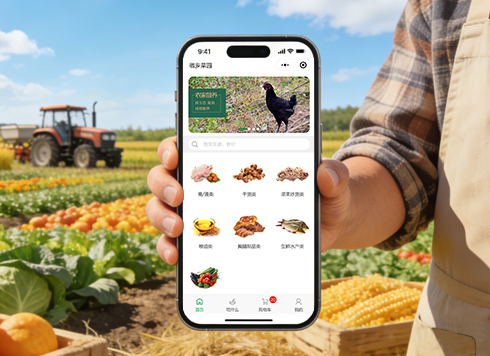
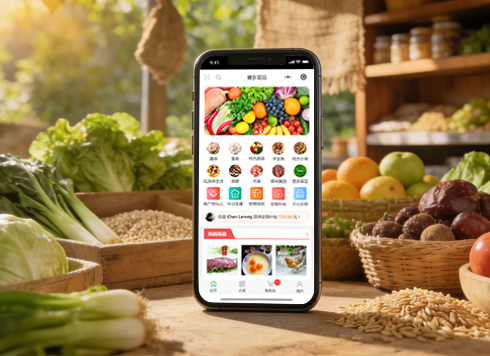 Anhui Huixiang Vegetable Garden Agricultural Products Mini Program v2.0 Iteration Development
HuiXiang MiniApp V2.0: Upgraded homepage, n ...
-
 Kunshan TrialBook Mini-Program Custom Development
This project developed an English-only Tria ...
-
 Agricultural Products WeChat Mini Program Custom Development
Lvran Di enhances agricultural sales via a ...
-
Custom Mobile App Development: Process, Tech Selection, and Cost Control Guide
Date: Aug 6, 2026 Read: 160
-
Are you always hitting pitfalls in custom app development? These 5 key questions will help you get it right once and for all.
Date: Jul 12, 2026 Read: 161
-
Why Mobile App Custom Development Delays Keep Happening—The Problem Usually Starts in the Requirements Phase
Date: Aug 13, 2026 Read: 117
-
Custom Mobile App Development: Complete Process, Technology Selection, and Common Pitfalls
Date: Aug 11, 2026 Read: 96
-
What Is Mobile Custom Development: Process, Cost, and Selection Guide
Date: Aug 11, 2026 Read: 105