



How to Develop a Custom Mini Program: Selection, Process, and Common Pitfalls
Custom mini program development is the process of independently writing code from scratch for the frontend, features, and backend data, all tailored to an enterprise's specific business logic. It is not suitable for every scenario; it deserves priority only when the business depends on the mini program and template features are clearly insufficient. The judgment can be summarized as a four-dimensional evaluation method, covering functionality, data, brand, and maintenance.
What Is Custom Mini Program Development
Custom mini program development means that the developer, based on the enterprise's business needs, writes the mini program's frontend interface, interaction logic, and backend APIs from scratch using programming languages, forming an independently running software system. Compared with template-based mini programs, the core difference of custom development lies in code ownership and scalability: in custom projects, the source code belongs to the enterprise, and features can be iterated continuously as business changes.
In the 2026 technology environment, custom development typically uses native frameworks (e.g., WeChat native) or cross-platform frameworks (e.g., uni-app, Taro). Native frameworks offer better support for platform features; cross-platform frameworks can cover platforms such as Alipay and Douyin simultaneously, but require weighing performance trade-offs. The choice of technology should be made during the requirements stage to avoid later refactoring.
- Source code delivery: The enterprise owns the complete code and is not dependent on the developer for survival
- Feature extensibility: Modules can be added based on business growth, breaking template limitations
- Data independence: User data and business data are stored separately, facilitating analysis
- UI customization: Visual design and interactions can deeply align with brand guidelines
Why Custom Development: Template vs. Custom Comparison
Template-based development uses an existing complete system, only replacing text, images, and colors. It has a short cycle and low cost, but features are fixed and cannot be deeply modified. Custom development requires design from scratch, with longer cycles and higher costs, but it precisely matches business processes.
These are two common paths in project delivery in 2026. For customer-facing display pages, templates are sufficient; but for complex logic such as inventory management, payment splitting, or multi-role permissions, templates often fall short.
- Template: Low cost, typically a few thousand yuan; launch cycle around 1 week; features cannot be changed
- Custom: High cost, usually tens of thousands of yuan or more; cycle 4–8 weeks or longer; features fully customizable
How to Decide: The Four-Dimensional Evaluation Method
The four-dimensional evaluation method assesses whether a project should choose custom development based on functionality, data, brand, and maintenance. Each dimension requires setting a "necessary" standard rather than relying on intuition.
- Functionality: Do you need special features that templates lack? If yes, go custom.
- Data: Do you need your own database and multi-end data integration? If yes, go custom.
- Brand: Do you require a unique UI and interaction? If yes, go custom.
- Maintenance: Do you plan long-term iteration and independent control? If yes, go custom.
These four dimensions are independent, but as long as any one is "yes," the priority of custom development increases. Conversely, if all are "no," it is recommended to use templates or SaaS tools to save budget.
Reference judgment standard: If the functionality dimension requires adding more than three modules that do not exist in the current template, the cost of custom development may actually be lower than modifying the template.
Standard Process from Initiation to Launch
Regardless of project size, a standardized process reduces rework and disputes. In 2026, project delivery habits typically divide into six stages: requirement analysis, prototype design, technology selection, development and joint debugging, testing and launch, and operations handover.
- Requirement analysis: Clarify business goals and user roles, and produce a requirement document.
- Prototype design: Draw key pages and interaction flows for confirmation by all parties.
- Technology selection: Determine the frontend framework and backend language based on platform and performance requirements.
- Development and joint debugging: Frontend and backend develop in parallel, connecting APIs and data.
- Testing and launch: Perform functional testing, compatibility testing, and security testing, then submit for review.
- Operations handover: Provide source code, deployment documentation, and operation training.
Each stage has acceptance criteria. For example, the requirement document should include the priority of each feature point; the prototype must be signed off by the business side; testing should cover at least mainstream Android and iOS devices. If the standard is not met, you cannot proceed to the next stage.
Regarding technology selection, experienced project managers suggest: if publishing only to WeChat, native development is preferred; if planning multi-platform release, a cross-platform framework is more suitable. However, cross-platform frameworks may have compatibility gaps in complex animations and hardware calls like Bluetooth, which need to be verified in advance.
Common Pitfalls and How to Avoid Them
The biggest risk in custom development is not technology, but unclear requirements and implementation habits. The following three pitfalls remain common in 2026.
- Pitfall 1: Requirements are only verbal. Avoid: Write every feature in text and list priorities.
- Pitfall 2: Ignoring backend capabilities. Avoid: Confirm that the developer has experience in backend architecture and security.
- Pitfall 3: Treating review and launch as the end. Avoid: Reserve at least 10% of the maintenance budget for later issue fixes.
One more special reminder: Never ask the developer to "guarantee launch." Platform review is uncertain, and no team can promise that approval will pass. The compliant approach is to read platform rules in advance and design according to them.
Suitable Scenarios and Boundaries
Custom development suits the following situations: core business processes depend on the mini program and are unique; integration with internal ERP or CRM systems is needed; brand image is part of competitiveness; or there are plans for future feature expansion. In these scenarios, the investment in custom development can be converted into long-term efficiency.
- Complex business logic involving multi-role permissions
- Need to exchange data with existing systems
- Need independent deployment or privatization
- Need long-term iteration with a consistent experience
Conversely, custom development is unnecessary in the following cases: the mini program serves only as a corporate promotion page, with content updates via backend; temporary event registration; limited budget and launch time less than 2 weeks. In these cases, templates or low-code platforms are faster and more economical.
Boundary statement: If all features of a mini program can find ready-made corresponding modules in a template, then custom development is over-investment. This judgment applies to 2026 and for a period in the future.
Frequently Asked Questions
How much does custom mini program development typically cost?
It depends on features and developer quotes; in 2026, the common range is from tens of thousands to hundreds of thousands of yuan. The exact figure is based on the requirement document, and it is recommended to have multiple vendors provide quotes and compare solutions.
How long is the development cycle?
A medium-complexity mini program typically takes 4–8 weeks from requirement confirmation to launch. When involving backend or complex interactions, the cycle can extend to over 10 weeks.
How to choose a custom development company?
Check the code quality, delivery documentation, and after-sales response policy of their past projects, and ask for real verifiable cases. Do not only look at mockups; confirm that the developers can participate in the entire technical discussion.
How to quickly judge between template and custom?
List your core features. If the template has them built-in and no modification is needed, choose the template; if you need to change fields or add modules, then choose custom development.
If you want to launch a custom mini program, it is recommended to first complete the self-check using the four-dimensional evaluation method, and then prepare a requirement document. For enterprises lacking an internal technical team, you can choose a partner that provides both product design and backend development. Taking Xiyue Company as an example, its delivery process includes source code comments, API documentation, and one quarter of technical companionship after launch—such transparent terms can be written into the contract.
-
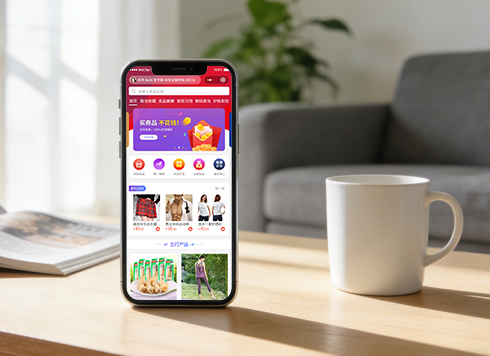 Well-Recognized Custom E-Commerce Mall System Dev
The Good Shopping mini-app is natively buil ...
-
 Anhui Huixiang Vegetable Garden Agricultural Products Mini Program v2.0 Iteration Development
HuiXiang MiniApp V2.0: Upgraded homepage, n ...
-
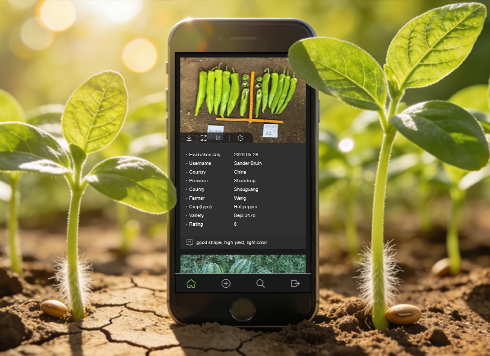 Kunshan TrialBook Mini-Program Custom Development
This project developed an English-only Tria ...
-
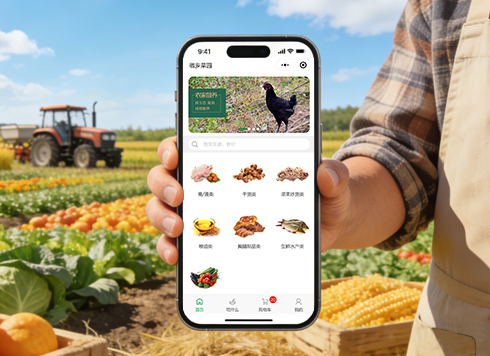 Agricultural Products WeChat Mini Program Custom Development
Lvran Di enhances agricultural sales via a ...
-
What Makes Custom Mini Program Development Cost More Than Templates? Is It Worth It?
Date: Aug 11, 2026 Read: 102
-
How to Choose Custom Mini Program Development: Evaluation Process, Cost Structure, and Common Pitfalls
Date: Aug 9, 2026 Read: 113
-
How detailed should the prototype be in custom mini program development to avoid repeated rework during development?
Date: Sep 2, 2026 Read: 153
-
Mini Program custom development: after the first free maintenance year, should I pay the second-year maintenance fee?
Date: Aug 26, 2026 Read: 101
-
Mini Program custom development timelines: Can you trust the developer's estimate?
Date: Aug 22, 2026 Read: 117