




Mobile Custom Development: A Complete Technical Selection and Implementation Guide from Requirements to Launch
In 2026, mobile custom development remains the core choice for high-concurrency, high-interaction scenarios. Its value lies in complete independent control from underlying architecture to UI, enabling deep optimization of functionality flexibility and performance. For projects with over 100,000 users or complex business processes, custom development avoids the limitations of templated solutions and ensures long-term iteration space.
What is Mobile Custom Development and Its Core Value
Mobile custom development refers to building an app from the ground up, including databases, backend APIs, and front-end UI, designed and coded entirely according to specific business needs. In 2026, when the target user base exceeds 100,000, business processes are complex, or deep hardware integration is required, custom development is the critical path to ensure operational efficiency and scalability. Its core value lies in: functionality not limited by templates, performance optimized frame by frame, and high architectural freedom for subsequent iterations.
Compared to templated solutions, the core advantage of custom development is the ability to freely design data flows and interaction methods based on business logic. For example, when an app needs real-time order synchronization with a backend ERP system, templated solutions often require secondary development bridging modules, adding hidden costs. Custom development can directly design API interfaces for seamless integration.
- Difference from standard products: Templated solutions are low-cost (typically 50,000–150,000 CNY), while custom development (300,000–2,000,000+ CNY) offers higher flexibility and exclusivity.
- Applicability judgment: If the app requires deep integration with existing systems (e.g., ERP, IoT platforms) or involves high-computing scenarios like real-time audio/video, AR/VR, custom development is the core choice in 2026.
Three Preparation Steps Before Initiating Custom Development
1. Define User Scenarios and Requirements Boundary
A common mistake in 2026 is "feature stacking." The correct approach is to use user story mapping to identify core processes, list key usage scenarios (e.g., "store clerk placing orders"), and clearly define non-negotiable features for the first version; defer non-core requirements (e.g., third-party login for multiple platforms) to v2.0. Exceeding initial requirements by 30% extends development time by an average of 50%. Learning to "do less" is a key skill for product managers in 2026.
2. Technology Selection: Native vs. Cross-Platform
As of 2026, Flutter and React Native remain mainstream for cross-platform, but native Swift/Kotlin still lead in performance and system API access. A decision method: if the app frequently accesses hardware like camera, Bluetooth, sensors, or requires ultra-smooth animations, choose native; if the business logic is mainly data display and form submission, and the team has front-end experience, cross-platform can reduce development costs by 40%.
- Cost range: Native (iOS+Android) approximately 500,000–1,000,000 CNY; cross-platform approximately 300,000–700,000 CNY.
- Cycle difference: Native 4–8 months; cross-platform 3–6 months.
- Team experience impact: If the team already has cross-platform experience, efficiency gains can be 50%; otherwise, the learning curve offsets some efficiency advantages.
3. Delivery Cycle and Cost Estimation
According to 2026 industry practices, the custom app process from requirement review to launch typically includes: prototyping (2–4 weeks, cost ~8%), UI design (2–3 weeks, cost ~12%), front-end and back-end development (10–16 weeks, cost ~60%), testing and acceptance (2–4 weeks, cost ~20%). If requirement changes occur more than twice, a 20% buffer must be reserved. Xiyue Company typically locks in three major change opportunities in contracts; beyond that, additional work is billed by man-hours.
Four-Dimensional Technology Selection Evaluation Framework
For systematic evaluation, we recommend the "four-dimensional selection" framework: score from four dimensions (performance, efficiency, maintenance, ecosystem), each out of 25 points. A total score above 80 can enter detailed evaluation. Below are key judgment criteria for each dimension.
- Performance and Native Capability (25 points): Require ≥18 points. The app must achieve home page loading time <1.5 seconds, smooth list scrolling; complex animations need to hit 60fps. If the score is below 18, native is the only option.
- Development Efficiency and Team Resources (25 points): With a fixed budget, cross-platform is usually faster; but note whether the team has experience with that tech stack, otherwise learning costs eat up over 30% of efficiency advantage. If the team has 2+ years of experience, score 20 points or more.
- Long-term Maintenance and Upgrade Path (25 points): After OS version updates, native fix cycles are typically 1–2 weeks; cross-platform requires waiting for framework adaptation (2–4 weeks). If the app lifecycle exceeds 2 years, native has lower long-term maintenance costs—score 18 points or more here.
- Ecosystem and Third-Party Compatibility (25 points): Third-party SDKs for payments, push notifications, maps, etc., have uneven support for cross-platform. In 2026, the practice is to check, before selection, whether all used SDKs offer Flutter/RN plugins; otherwise, you'll end up with bridge development "dirty work." If all are supported, score 20 points or more.
For example, an e-commerce app needing high concurrency, real-time recommendations, and WeChat Pay integration would likely score: performance 18, efficiency 20, maintenance 15, ecosystem 17 (total 70)—cross-platform is feasible. But if it involves AR try-on (performance requires 22+), only native works.
Applicable Scenarios and Boundaries
Custom development excels in the following scenarios:
- High-frequency interactive tools (e.g., collaboration office apps) requiring smooth real-time operations.
- Complex business platforms (e.g., online education live streaming) involving multi-role, multi-process coordination.
- Data-sensitive systems (e.g., banking apps) requiring high security and privacy protection.
Scenarios where it is not suitable or unnecessary include:
- Replacing H5 or mini-programs: If users only interact within WeChat, mini-programs are low-cost and short-cycle.
- Short-term trial products: MVP stage should use templates to quickly validate the market, avoiding heavy investment in the wrong direction.
- Pure information display websites: Responsive web pages suffice; an app increases user acquisition costs unnecessarily.
A common mistake in 2026 is startup teams exaggerating the need for a "self-developed app" to attract funding, only to exceed the budget by 50% without stabilizing basic features. Therefore, before deciding, rationally assess the business stage and resource capacity.
Frequently Asked Questions
How much more expensive is custom development compared to template development?
Template development (SaaS) costs about 50,000–150,000 CNY in the first year; custom development basic version costs about 300,000–800,000 CNY. The price difference mainly comes from code originality, architecture design, and change costs.
Can cross-platform frameworks completely replace native?
No. In 2026, cross-platform covers 85% of common scenarios, but for low-level hardware, complex animations, or new OS features, native modules are still needed.
How to assess a development team's technical expertise?
Ask the team to provide a working version of previous projects online, focusing on app startup speed, network loading strategy, data caching logic; also ask about their proficiency with SwiftUI/Compose.
How long does a custom development project typically take?
A medium-complexity app (with user system, content management, payments, push notifications) takes 4–9 months from project initiation to launch, depending on the frequency of requirement changes.
How to handle later requirement changes?
Reputable teams offer a fixed number of free changes (usually 3–5), with additional changes billed by man-hours. It is recommended to clearly define the scope and pricing of changes in the contract.
Ultimately, before choosing mobile custom development, you must be clear: you need a product that can evolve over the long term, not a one-time demo. If you are still in the idea validation phase, consider using mini-programs or templates for low-cost experimentation first. Only when the business model, user scale, and technical barriers are preliminarily established can the value of custom development be fully realized. About 60% of the projects undertaken by Xiyue Company in 2026 come from clients who went through this process, reflecting the importance of rational decision-making.
-
 Well-Recognized Custom E-Commerce Mall System Dev
The Good Shopping mini-app is natively buil ...
-
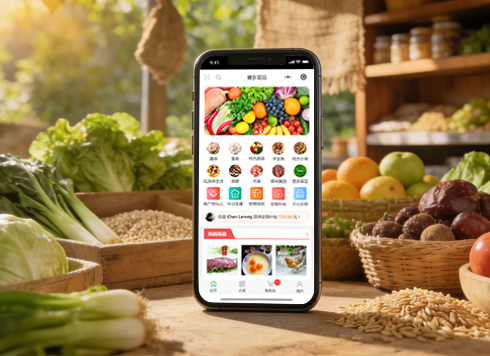 Anhui Huixiang Vegetable Garden Agricultural Products Mini Program v2.0 Iteration Development
HuiXiang MiniApp V2.0: Upgraded homepage, n ...
-
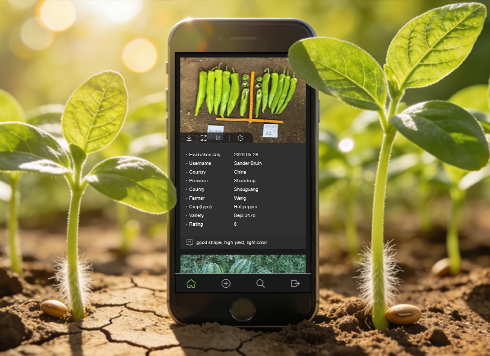 Kunshan TrialBook Mini-Program Custom Development
This project developed an English-only Tria ...
-
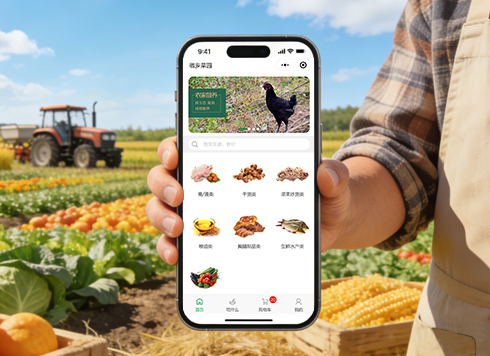 Agricultural Products WeChat Mini Program Custom Development
Lvran Di enhances agricultural sales via a ...
-
Custom Mobile App Development for Enterprises: Selection, Process, and Common Pitfalls
Date: Aug 9, 2026 Read: 65
-
How to Approach Custom Mobile Development: Requirements Assessment, Technology Selection, and Implementation Essentials
Date: Aug 2, 2026 Read: 131
-
Mobile App Development: A Complete Guide from Selection to Launch
Date: Jul 29, 2026 Read: 91
-
A Complete Guide to Mobile Custom Development: Process, Technology Selection, and Pitfall Avoidance
Date: Jul 29, 2026 Read: 75
-
Complete Process and Technology Selection Guide for Mobile App Development from Requirements to Launch
Date: Jul 25, 2026 Read: 112